news
Transforming Society
PODCAST: The Human Cost of AI in War
Analysis
A podcast examines how AI-driven warfare can hide civilian harm and weaken accountability, drawing on Luke Moffett’s book *Algorithms of War*. It matters because precise weapons can still hit the wrong targets, kill civilians and fuel further conflict when humans rely on flawed data and automated decisions.
Moffett opens with the 2021 Kabul drone strike that killed aid worker Zamarai Ahmadi and seven children after US forces misidentified his car as an ISIS bomb vehicle. He argues that precision only describes how closely a weapon hits its intended point; it does not show whether the target was correctly identified or prevent large bombs from destroying surrounding homes.
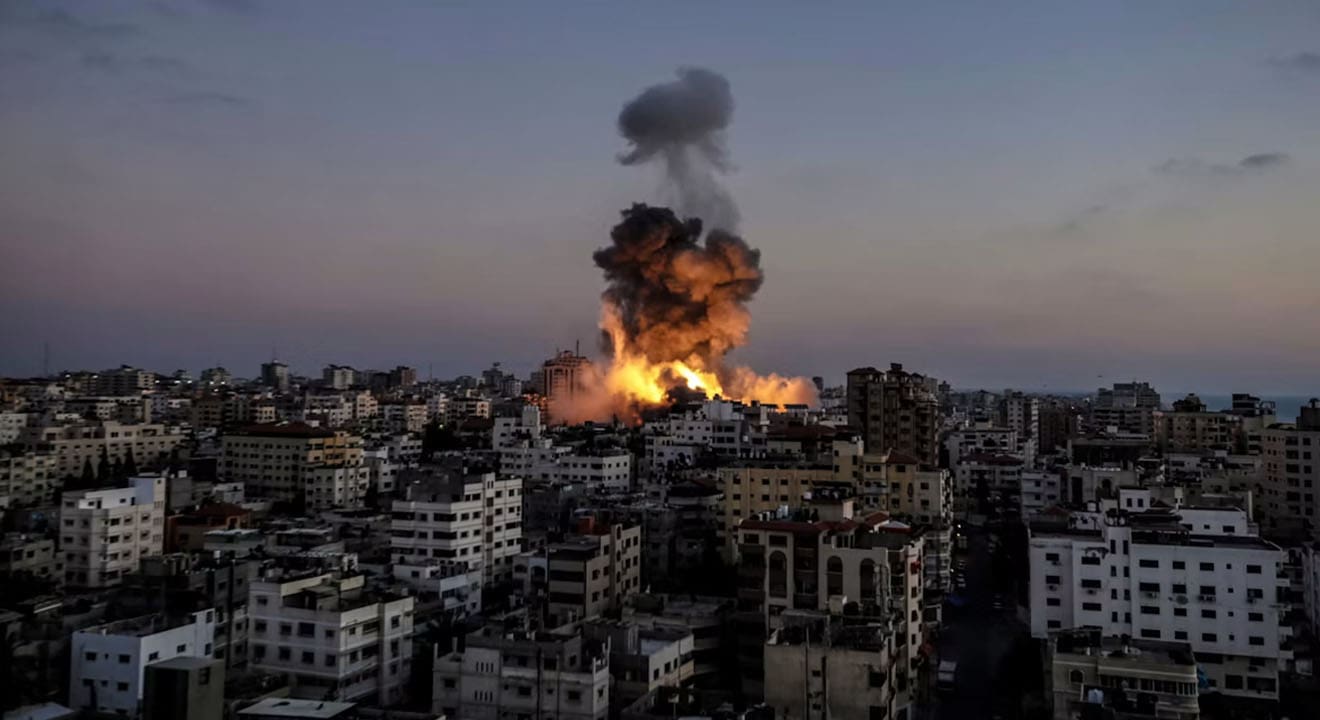
The discussion covers the limits of international humanitarian law, the expanded civilian protections in the 1949 Geneva Conventions, and the difficulty of enforcing them. It also examines AI’s use in bombing campaigns in Gaza and elsewhere, including systems that can hallucinate, spread errors across connected tools and produce targets from assumptions rather than facts.
Moffett says accountability must remain human, civilian protection must guide military decisions, and greater transparency is needed. He warns that AI could make warfare worse but ends with hope that people can challenge harmful systems, hold decision-makers responsible and keep humanity at the centre of war.
Takeaways
- The central distinction is between precision and accuracy: a weapon may hit a chosen point exactly while the underlying identification of the target is wrong.
- The Kabul strike is used to show how opaque data-driven targeting can turn ordinary behavior—such as driving or collecting water—into evidence of hostile intent.
Article timeline
Build this article’s timeline
Extract dated events, key actors, and open questions using the same timeline analysis available in Signal.
Log in to build
Timeline generation is available to signed-in community members.
Primary-source excerpts
Login to contribute excerpts from the source.
Five Ws
🤖 4 AI prefills · 1 still unanswered
Who
Richard Kemp, Luke Moffett, Zamarai Ahmadi, and Queen's University Belfast
What
A podcast examines how AI-driven warfare can hide civilian harm and weaken accountability, drawing on Luke Moffett’s book *Algorithms of War*.
When
When did this happen, or what is the timeframe?
Where
Kabul, Afghanistan, and Gaza
Why
Centers on AI in modern warfare, automated surveillance and targeting systems, and civilian harm
Login to answer and earn XP for each gap you fill.
AI Warfare And Targeting artificial intelligence, algorithms, drones, surveillance, targeting Civilian Harm And Accuracy civilian casualties, Zamarai Ahmadi, misidentification, precision, accuracy Accountability And Humanitarian Law accountability, international humanitarian law, Geneva Conventions, Hague law, oversight AI Governance And Future Risks AI governance, autonomous weapons, LLMs, military escalation, UN
Key Phrases:
AI in modern warfare99% automated surveillance and targeting systems96% civilian harm96% human cost of AI in conflict95% accountability for AI-enabled decisions94% precision versus accuracy92% civilian protection91% international humanitarian law90% AI literacy86% drone strike on Zamarai Ahmadi88%
43
Manipulation Score: Medium
How much this article uses emotional framing vs. straight reporting
Loaded Language
4825%
Absolutist
2415%
Threat/Panic
5825%
Us vs Them
3515%
Engagement Bait
1820%
Manipulation score look right?
Factual Claims (5)
medium
military
The 2021 Kabul drone strike killed aid worker Zamarai Ahmadi and seven children after US forces misidentified his vehicle as an ISIS bomb vehicle.
It was actually a civilian and seven children were killed
low
military
Weapon precision indicates how closely a weapon hits its intended point, not whether the target was correctly identified.
The difficulty is what are you hitting? ... precision isn’t accuracy.
low
legal
The 1949 Geneva Conventions expanded protections for civilians, but enforcement remains difficult.
after the Second World War, you have the four Geneva Conventions, and they add this fourth convention around protecting civilians
medium
technology
AI systems used in warfare can hallucinate, propagate errors across connected systems and generate targets from assumptions rather than verified facts.
it makes stuff up. It hallucinates. And so we’re using that ... those problems can cascade
low
military
The discussion argues that human accountability, civilian protection and greater transparency are necessary as AI reshapes warfare.
humanity and a people cantered approach are essential to ensure accountability and strengthen civilian protection
Comments
Login to view and post comments.