The Greater Seattle Space Economy: Competitive Position, Industry Assets, Workforce, and Growth Opportunities
Announcement
A 2026 Greater Seattle Partners report finds that Greater Seattle’s commercial space economy produces an estimated $8.1 billion in output and supports about 34,200 jobs. The region matters because it combines aerospace manufacturing with cloud computing, AI, software, and automation, giving it a distinct position in the growing space industry.
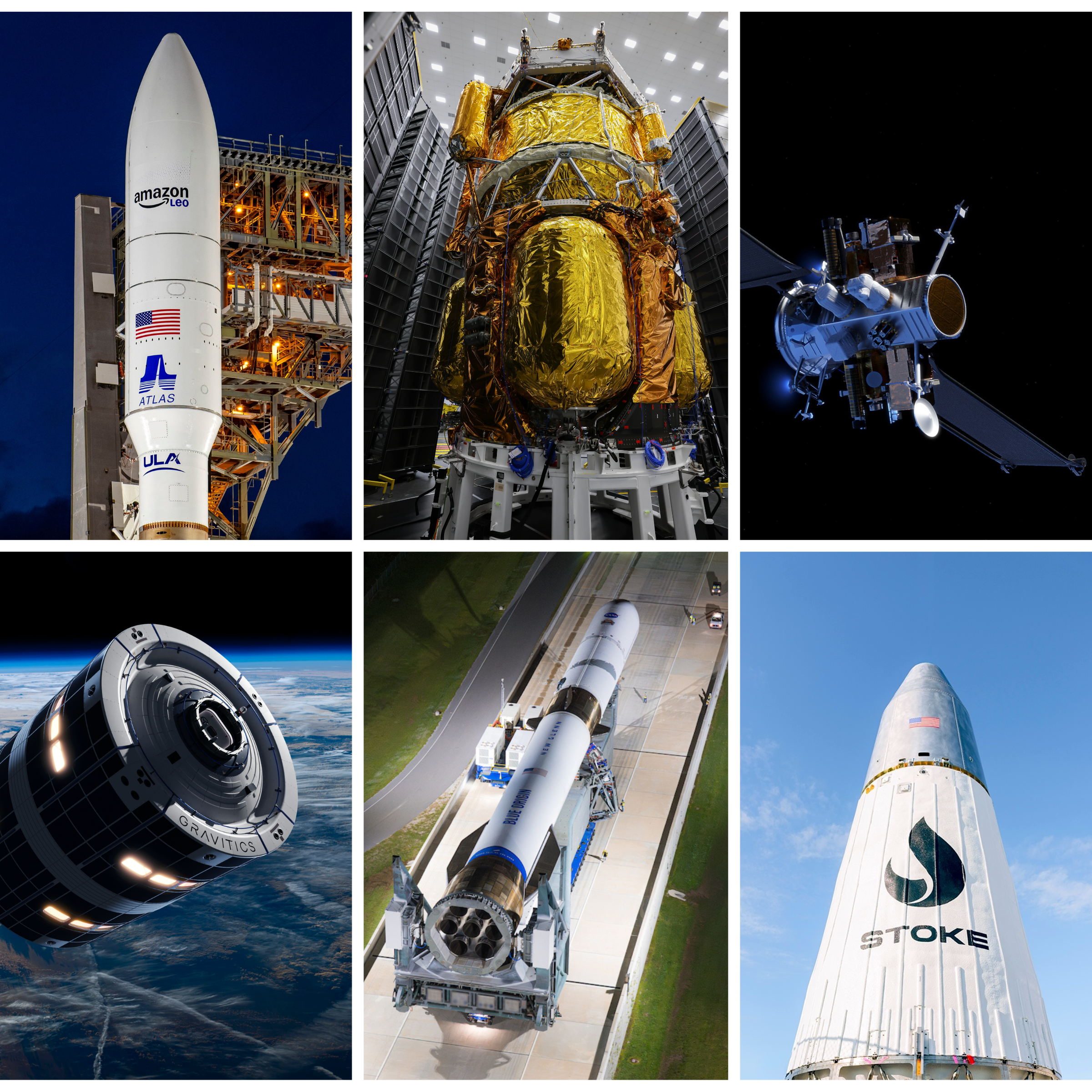
Washington manufactured 68% of active satellites in orbit, while Greater Seattle hosts major companies including Amazon Leo, SpaceX/Starlink, Blue Origin, Boeing, and Stoke Space. The region’s 16 identified space-focused startups have raised about $3.48 billion, ranking third among nine benchmark U.S. metro areas.
Greater Seattle has 115,130 broad aerospace jobs and 5,456 jobs in guided missile and space vehicle manufacturing, with industry concentration about 4.8 times the national average. Publicly announced 2026 federal awards to regional space companies total at least $143.9 million, excluding Blue Origin’s potential $700 million Mars telecommunications contract because the local share is unclear.
The report highlights growth opportunities in orbital servicing, autonomous spacecraft, orbital computing, AI infrastructure, and advanced manufacturing. It warns that workforce shortages, facility capacity, infrastructure, operating costs, incentives, and federal customer access could limit expansion.
Its priorities are to scale workforce and suppliers, strengthen national and international positioning, and improve industry data. The report concludes that Greater Seattle should build on its aerospace-and-technology combination rather than copy launch-focused or human-spaceflight hubs.
Takeaways
- The region’s space advantage is presented less as launch capacity and more as the combination of satellite manufacturing, cloud infrastructure, AI, and automation.
- The report’s $143.9 million federal-award baseline excludes Blue Origin’s potential $700 million Mars telecommunications contract because Greater Seattle’s share is not yet established.
Article timeline
Build this article’s timeline
Extract dated events, key actors, and open questions using the same timeline analysis available in Signal.
Log in to build
Timeline generation is available to signed-in community members.
Primary-source excerpts
Login to contribute excerpts from the source.
Five Ws
🤖 4 AI prefills · 1 still unanswered
Who
Victoria DePalma, Greater Seattle Partners, Space Northwest, and Lightcast
What
A 2026 Greater Seattle Partners report finds that Greater Seattle’s commercial space economy produces an estimated $8.1 billion in output and supports about 34,200 jobs.
When
When did this happen, or what is the timeframe?
Where
Greater Seattle, Washington state, and United States
Why
Centers on Greater Seattle commercial space economy, satellite manufacturing, and aerospace manufacturing and advanced technology
Login to answer and earn XP for each gap you fill.
Regional Space Economy Greater Seattle, economic output, jobs, commercial space, satellite manufacturing Aerospace Technology Ecosystem Boeing, Amazon, Microsoft, cloud computing, artificial intelligence Space Companies Investment SpaceX, Blue Origin, Amazon Leo, Stoke Space, startups Workforce Development aerospace workforce, engineering talent, manufacturing jobs, technicians, apprenticeships Federal Demand Future Growth NASA, Space Force, Department of Defense, federal contracts, orbital computing
Key Phrases:
Greater Seattle commercial space economy100% satellite manufacturing98% aerospace manufacturing and advanced technology96% commercial space ecosystem94% orbital computing93% autonomous spacecraft91% spacecraft propulsion systems90% satellite connectivity88% orbital servicing and mobility87% Guided Missile and Space Vehicle Manufacturing86%
People: Victoria DePalma
Organizations: Greater Seattle Partners3 Space Northwest2 Lightcast2 Crunchbase2 Boeing5 Amazon Microsoft SpaceX2 Starlink2 Blue Origin4
12
Manipulation Score: Low
How much this article uses emotional framing vs. straight reporting
Loaded Language
1425%
Absolutist
515%
Threat/Panic
825%
Us vs Them
415%
Engagement Bait
2020%
Manipulation score look right?
Factual Claims (5)
medium
economic
A 2026 Greater Seattle Partners report finds that Greater Seattle’s commercial space economy produces an estimated $8.1 billion in output and supports about 34,200 jobs.
Greater Seattle’s commercial space economy generates an estimated $8.1 billion in direct economic output and supports approximately 34,200 jobs
high
technology
Washington manufactured 68% of active satellites in orbit, while Greater Seattle hosts major companies including Amazon Leo, SpaceX/Starlink, Blue Origin, Boeing, and Stoke Space.
Washington state manufactured 68% of all active satellites in Earth orbit
medium
economic
The region’s 16 identified space-focused startups have raised about $3.48 billion, ranking third among nine benchmark U.S. metro areas.
These 16 space-focused startups have attracted approximately $3.48 billion in recorded funding, placing Greater Seattle third among the nine benchmark metropolitan areas
medium
economic
Greater Seattle has 115,130 broad aerospace jobs and 5,456 jobs in guided missile and space vehicle manufacturing, with industry concentration about 4.8 times the national average.
Within the more specialized Guided Missile and Space Vehicle Manufacturing industry, Greater Seattle supports 5,456 jobs and has an industry concentration approximately 4.8 times the national average
medium
economic
Publicly announced 2026 federal awards to regional space companies total at least $143.9 million, excluding Blue Origin’s potential $700 million Mars telecommunications contract because the local shar
The report identifies at least $143.9 million in publicly announced 2026 federal contract awards to Greater Seattle-based space companies.
Comments
Login to view and post comments.