The Evolution of Iran’s Asymmetric Air Defence Strategy | Al Jazeera Centre for Studies
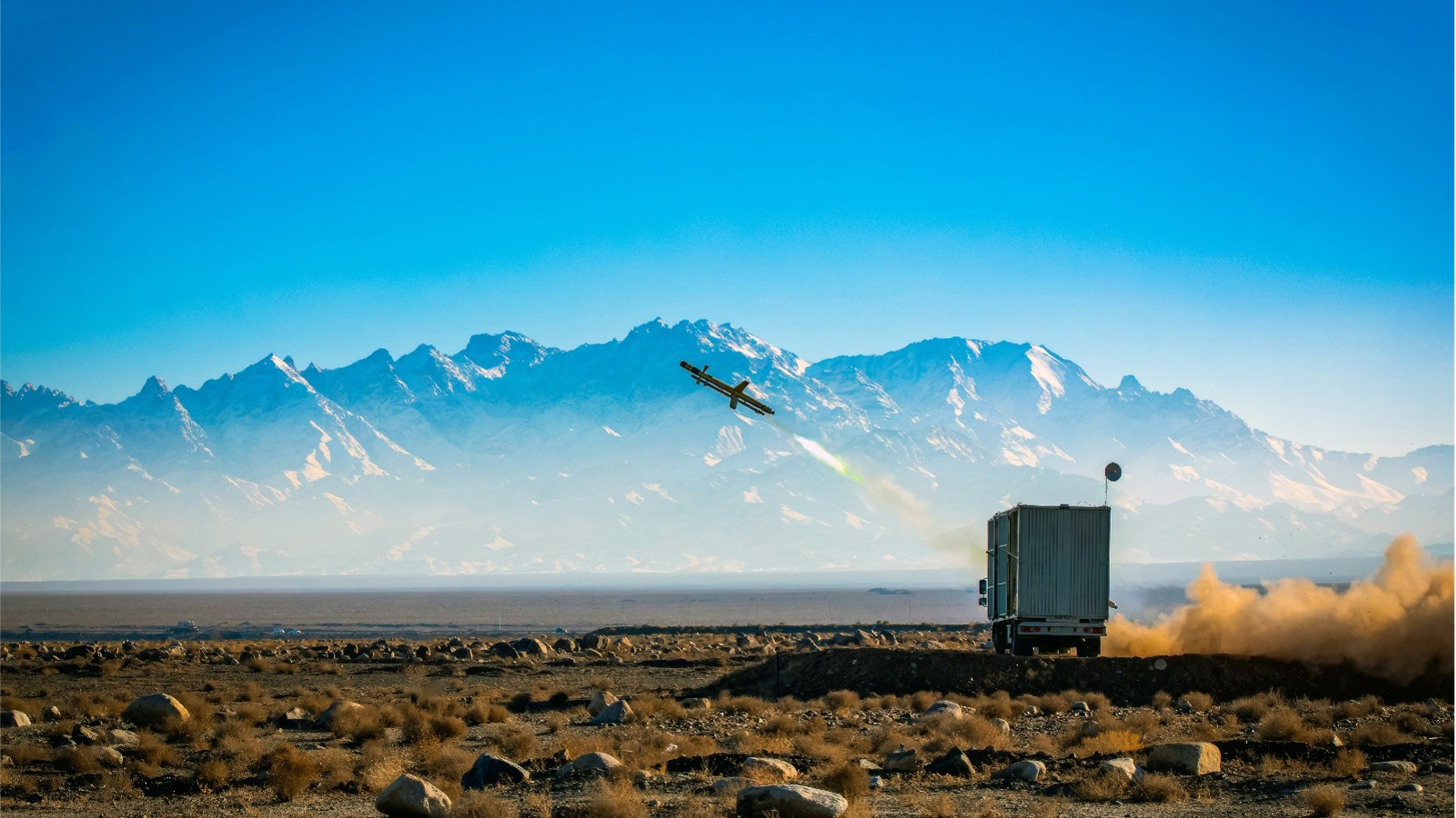
Iran is reportedly reshaping its air-defence strategy after Israel’s 12-day campaign exposed the vulnerability of its expensive, centralised network. Israel exploited access through Syrian airspace, air-launched ballistic missiles, electronic warfare, and covert drone and proxy operations to destroy more than 100 Iranian air-defence systems and establish air superiority over western Iran. Precision strikes against radars, command centres, and missile batteries created gaps in Iran’s mountainous terrain, enabling Israeli aircraft and UAVs to attack targets deep inside the country.
Iran’s conventional system failed despite decades of investment, while its ageing fighter fleet could not effectively challenge modern Israeli aircraft. Damage to its defence industry also made rapid reconstruction impractical. Yet Iran reportedly performed much better during the subsequent Operation Epic Fury, damaging Israeli and US aircraft and intercepting numerous combat and surveillance drones, including claimed losses of more than 150 UAVs.
The article attributes this improvement to a new, decentralised model influenced by Ukraine’s wartime experience. Instead of relying primarily on large radar installations and fixed command networks, Iran is combining commercial off-the-shelf electro-optical sensors, artificial intelligence, dispersed communications, passive detection, and inexpensive loitering interceptors. This architecture is intended to preserve parts of the detection-to-interception cycle even when major radars and command nodes are destroyed.
The emerging approach could reduce costs, complicate enemy targeting, and allow smaller states or non-state actors to contest technologically superior air forces. It may therefore influence future global air-defence planning.
Article timeline
Build this article’s timeline
Extract dated events, key actors, and open questions using the same timeline analysis available in Signal.
Log in to build
Timeline generation is available to signed-in community members.
Primary-source excerpts
Login to contribute excerpts from the source.
Five Ws
🤖 4 AI prefills · 1 still unanswered
Who
Bashar al-Assad, Islamic Revolutionary Guard Corps (IRGC), Tasnim News Agency, and Israeli Air Force (IAF)
What
Iran is reportedly reshaping its air-defence strategy after Israel’s 12-day campaign exposed the vulnerability of its expensive, centralised network.
When
When did this happen, or what is the timeframe?
Where
Iran, Middle East, and Natanz
Why
Centers on decentralised AI-enabled air defence networks, commercial-off-the-shelf electro-optical sensors, and low-cost loitering interceptors
Login to answer and earn XP for each gap you fill.
Iranian Air Defence Adaptation Iran, air defence, decentralisation, artificial intelligence, commercial sensors Israeli Air Campaign Israel, IAF, Rising Lion, air superiority, SEAD Standoff Strike Systems air-launched ballistic missiles, ALBMs, ROCKS, Air-LORA, Sparrow Air Defence Network Failure radar, command and control, blind spots, communication, mountainous terrain Operational Performance Shift Operation Epic Fury, interceptions, F-35, F-15, MQ-9
Key Phrases:
decentralised AI-enabled air defence networks98% commercial-off-the-shelf electro-optical sensors93% low-cost loitering interceptors92% anti-access/area denial strategy91% Suppression of Enemy Air Defences90% air-launched ballistic missiles89% Operation Rising Lion87% Operation Epic Fury85% Iranian integrated air defence network85% Israeli air superiority82%
People: Bashar al-Assad
Organizations: Islamic Revolutionary Guard Corps (IRGC) Tasnim News Agency Israeli Air Force (IAF)13 Islamic Republic of Iran Air Force (IRIAF) Aman Mossad United States7
48
Manipulation Score: Medium
How much this article uses emotional framing vs. straight reporting
Loaded Language
5525%
Absolutist
4215%
Threat/Panic
5825%
Us vs Them
3815%
Engagement Bait
2220%
Manipulation score look right?
Factual Claims (10)
high
military
Iran is reportedly adopting decentralised, AI-enabled air-defence networks using commercial sensors and low-cost loitering interceptors.
high
military
The IRGC launched a loitering missile near the Natanz nuclear facility.
high
geopolitical
Israeli aircraft established an operational corridor through Syrian and Iraqi airspace for operations against Iran.
high
military
Air-launched ballistic missiles such as ROCKS, Air-LORA, and Sparrow were used to neutralise Iranian air-defence targets.
medium
military
An S-300 battery at Isfahan Airbase was targeted following Operation True Promise 1 in April 2024.
high
military
Israeli military assessments indicate that more than one hundred Iranian air-defence systems were targeted during the 12-day conflict.
high
military
The Israeli Air Force achieved air supremacy over western Iran within days.
medium
military
Iran's conventional air-defence network failed to meet expectations and suffered extensive damage during the 12-day war.
high
military
During Operation Epic Fury, Iranian defences allegedly damaged multiple Israeli and American aircraft and shot down a US F-15 in Iranian territory.
high
military
Iran claims to have destroyed more than 150 UAVs, including 24 American MQ-9 drones.
Comments
Login to view and post comments.