news
Task & Purpose
Space Force wants to embed more guardians into the joint force
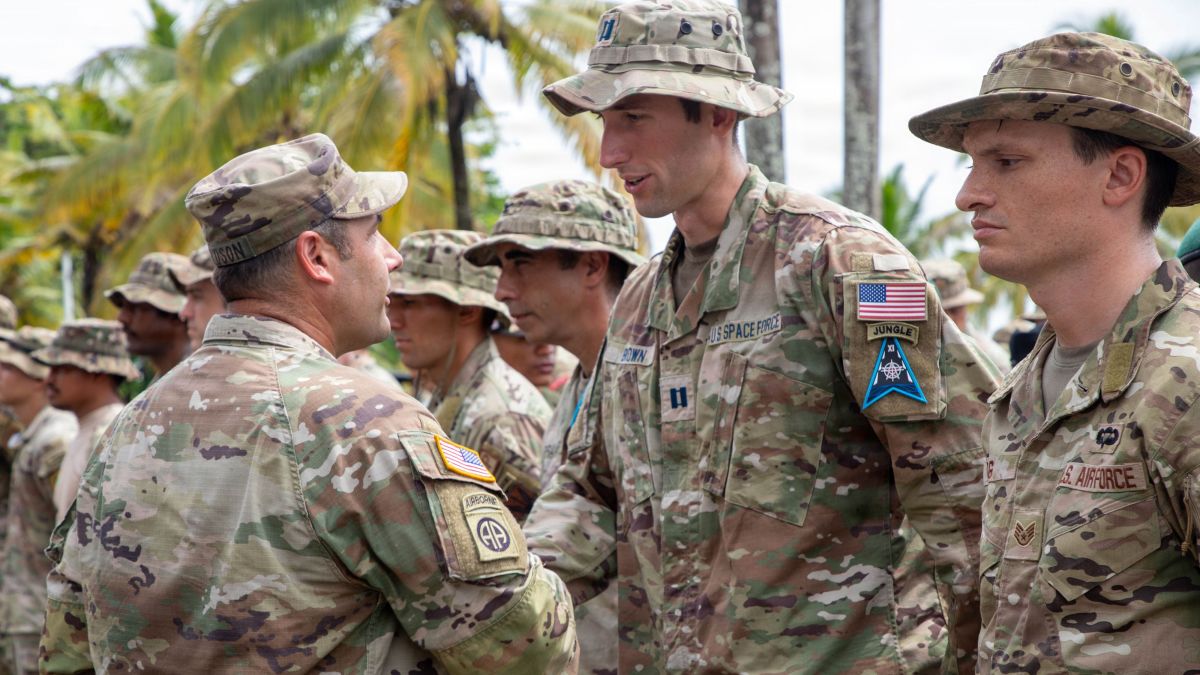
Space Force Chief of Space Operations Gen. Douglas Schiess has outlined priorities to expand the service’s role in frontline military operations. In a message to personnel, Schiess emphasized integrating more “combat-effective” guardians into combatant commands at scale, arguing that sufficient space forces are essential to achieving space superiority and supporting battlefield success.
The Space Force, currently the smallest military branch, aims to double its personnel. Schiess called for a sustained pipeline of guardians with specialized training and advanced equipment, enabling them to provide space expertise directly to joint forces wherever needed. He also stressed rapid acquisition to keep pace with emerging threats.
The service has highlighted its contributions to several major U.S. operations, including Operation Absolute Resolve, which reportedly involved attacks on Venezuela and the capture of President Nicolás Maduro, and Operation Epic Fury, the opening phase of the continuing war with Iran. Following the Venezuela operation, the Space Force created dedicated command elements for U.S. Northern and Southern Commands. It also recently established a component field command under U.S. Special Operations Command to standardize how it organizes, trains, equips, and deploys forces for special operations.
Schiess further identified orbital warfare capabilities as a priority. The Space Force is developing kinetic, jamming, and other electromagnetic weapons for use in space. Air Force Secretary Troy Meink recently disclosed that some “space control weapons” are already in orbit, though officials have not specified their types or capabilities.
Article timeline
Build this article’s timeline
Extract dated events, key actors, and open questions using the same timeline analysis available in Signal.
Log in to build
Timeline generation is available to signed-in community members.
Primary-source excerpts
Login to contribute excerpts from the source.
Five Ws
🤖 4 AI prefills · 1 still unanswered
Who
Douglas Schiess, Nicolás Maduro, Chance Saltzman, and United States Space Force
What
Space Force Chief of Space Operations Gen.
When
When did this happen, or what is the timeframe?
Where
Panama, Venezuela, and Iran
Why
Centers on U.S. Space Force, combatant commands, and space superiority
Login to answer and earn XP for each gap you fill.
Force Expansion Integration personnel growth, guardians, combatant commands, frontline roles, force integration Combat Operations Support battlefield success, Operation Absolute Resolve, Operation Epic Fury, combat credibility, Northern Command Special Operations Organization Special Operations Command, component field command, organizes, trains, equips Orbital Weapons Development orbital warfare, space control weapons, on-orbit weapons, kinetic weapons, jamming
Key Phrases:
U.S. Space Force99% combatant commands91% space superiority94% combat-effective guardians88% spacepower battlefield success86% rapid acquisitions79% Operation Absolute Resolve87% Operation Epic Fury84% orbital warfare96% on-orbit weapons95%
28
Manipulation Score: Low
How much this article uses emotional framing vs. straight reporting
Loaded Language
1825%
Absolutist
1215%
Threat/Panic
3525%
Us vs Them
815%
Engagement Bait
520%
Manipulation score look right?
Factual Claims (10)
medium
military
Space Force intends to send more guardians to support combatant commands in frontline roles.
low
military
Space Force is currently the smallest branch of the U.S. military.
medium
military
Space Force has goals to double its personnel size.
medium
military
Space Force seeks to integrate combat-effective guardians into the wider force at scale to achieve space superiority.
high
geopolitical
Operation Absolute Resolve involved U.S. forces attacking Venezuela and capturing President Nicolás Maduro.
medium
military
Space Force established dedicated command elements for U.S. Northern Command and U.S. Southern Command after Operation Absolute Resolve.
high
military
Guardians supported Operation Epic Fury, described as the first phase of an ongoing war with Iran.
medium
military
Space Force established a component field command under U.S. Special Operations Command.
high
military
Space Force is developing orbital-warfare weapons, including kinetic systems and electromagnetic-warfare tools.
high
military
Space Force already has space-control weapons in orbit.
Comments
Login to view and post comments.