Chinese Scientists Develop “Bone Glue” for Shattered Fractures
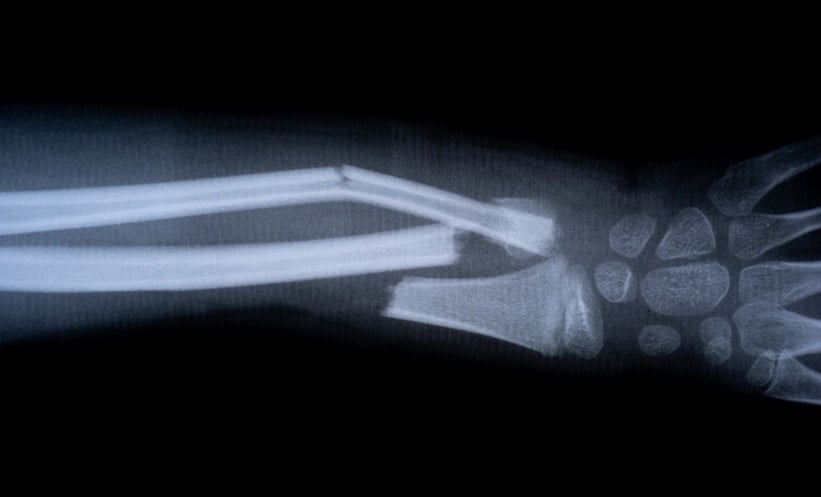
A Chinese research team has developed an injectable “bone glue” designed to improve surgical treatment of comminuted fractures, in which bones break into multiple fragments. The material is a dual-biomimetic hydrogel composed of caffeic acid-grafted collagen, aminated laponite and tetra-PEG-SC. This formulation provides substantial flexibility and strength, tolerating up to 98% compression and 600% tensile deformation. It is intended to maintain adhesion in blood-rich surgical environments while stabilising irregular bone fragments.
In preclinical studies involving rabbit radius and porcine femur fractures, the hydrogel produced more than twice the biomechanical and radiological performance of commercial cyanoacrylate adhesives. Beyond mechanical fixation, it appeared to support bone regeneration by reducing oxidative stress and promoting M2 macrophage polarisation, an immune response associated with tissue repair.
Comminuted fractures are challenging to treat because numerous small fragments can be difficult to secure with conventional plates and screws, increasing the risks of delayed healing, non-union and mal-union. A bioactive adhesive could potentially simplify fixation, encourage bone growth and reduce recovery time or complications.
However, the technology remains experimental. It has only been evaluated in animal models and is not approved for human use. Additional studies are needed to establish its safety, durability, effectiveness and immune effects before regulatory assessment and clinical trials. If these findings translate to humans, the hydrogel could provide a valuable adjunct or alternative to conventional fixation for complex fractures.
Article timeline
Build this article’s timeline
Extract dated events, key actors, and open questions using the same timeline analysis available in Signal.
Log in to build
Timeline generation is available to signed-in community members.
Primary-source excerpts
Login to contribute excerpts from the source.
Five Ws
🤖 5 AI prefills · all filled
Who
European Medical Group LTD, European Medical Journal, and Creative Commons
What
A Chinese research team has developed an injectable “bone glue” designed to improve surgical treatment of comminuted fractures, in which bones break into multiple fragments.
When
2025 and 2026
Where
China
Why
Centers on dual-biomimetic bone adhesive, osteoimmunomodulatory capabilities, and comminuted fractures
Login to answer and earn XP for each gap you fill.
Bone Adhesive Composition dual-biomimetic hydrogel, caffeic acid-grafted collagen, aminated laponite, tetra-PEG-SC, organic-inorganic network Fracture Stabilization comminuted fractures, bone fragments, fracture fixation, rabbit radius, porcine femur Osteoimmune Healing bone healing, oxidative stress, M2 macrophages, immune modulation, osteoregeneration Orthopaedic Clinical Potential metal plates, screws, surgical complexity, recovery time, irregular fragments Preclinical Translation preclinical research, animal studies, human use, clinical trials, regulatory review
Key Phrases:
dual-biomimetic bone adhesive99% osteoimmunomodulatory capabilities96% comminuted fractures95% injectable bone glue93% caffeic acid-grafted collagen91% aminated laponite88% tetra-PEG-SC86% M2 macrophage polarisation85% bone-healing promotion84% immune response modulation82%
Locations: China
18
Manipulation Score: Low
How much this article uses emotional framing vs. straight reporting
Loaded Language
2225%
Absolutist
815%
Threat/Panic
325%
Us vs Them
015%
Engagement Bait
1820%
Manipulation score look right?
Factual Claims (10)
medium
scientific
A research team from China created an injectable dual-biomimetic bone adhesive for comminuted fractures.
medium
scientific
The adhesive is made from caffeic acid-grafted collagen, aminated laponite, and tetra-PEG-SC.
medium
scientific
The material withstands up to 98% compression and 600% tensile deformation.
medium
health
The adhesive can hold bone fragments in place in a blood-rich surgical field.
high
health
In rabbit radius and porcine femur fracture tests, treated bones showed over double the biomechanical and radiological performance of bones fixed with commercial cyanoacrylate adhesives.
medium
scientific
The adhesive reduced oxidative stress and promoted M2 macrophage polarisation around fracture sites.
low
health
Comminuted fractures have many small fragments and elevated risks of non-union or mal-union.
low
health
Traditional metal plates and screws have limitations for small or irregular bone fragments.
low
legal
The technology is preclinical and has not been approved for human use.
medium
legal
Further animal studies and regulatory review are needed before clinical trials can begin.
Comments
Login to view and post comments.