news
TWZ
Army Explains How Merops Interceptor Drone Became Program Of Record In Just 142 Days
The U.S. Army formally established the Merops counter-drone system as a program in 142 days, faster than its standard 180-day target. The achievement reflects efforts to accelerate acquisition and move combat-proven technologies into the hands of U.S. troops and allies.
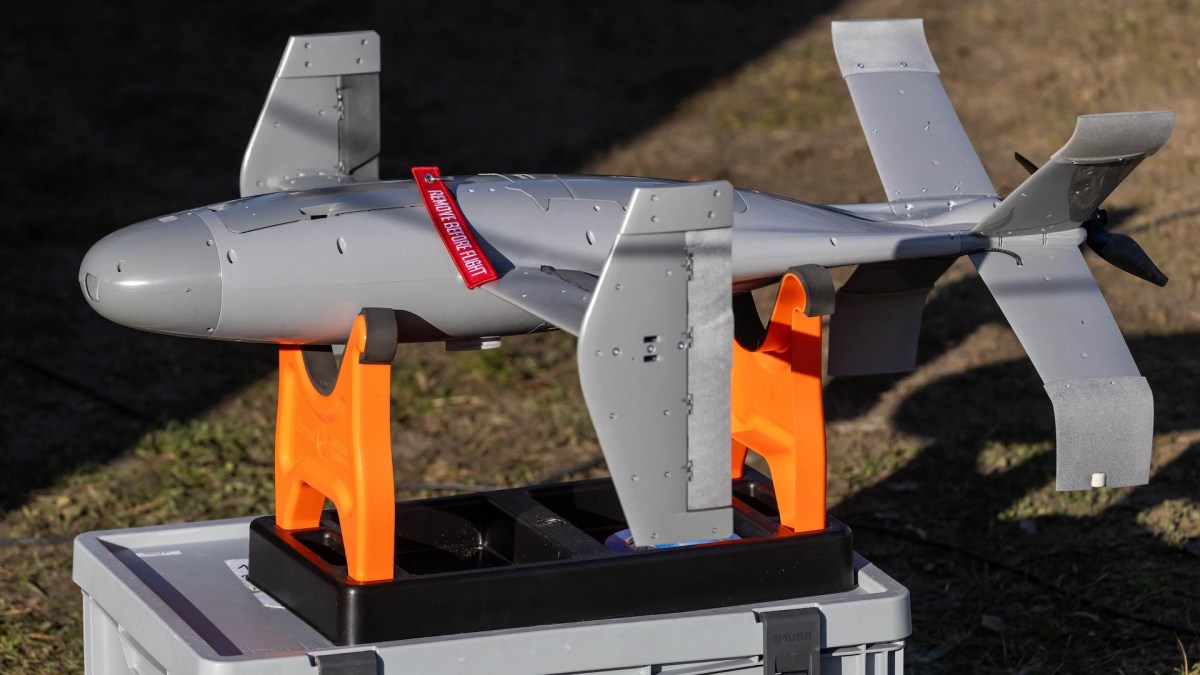
Merops uses relatively inexpensive Surveyor interceptor drones to detect and destroy long-range, one-way attack drones such as Iran’s Shahed-136. Interceptors can operate autonomously or under remote control and defeat targets through direct impact or a proximity-fuzed warhead. The system emerged from the U.S.-backed Project Eagle initiative and gained attention after demonstrating effectiveness in Ukraine.
Following urgent requests prompted by drone incursions affecting NATO partners, Army personnel delivered Merops to allied forces in roughly 21–22 days, short of the requested 14-day deadline. The Joint Interagency Task Force later procured 13,000 interceptors, while mobile firing teams were deployed to another theater, likely U.S. Central Command, where American forces face Iranian drone attacks.
Initial costs were about $15,000 per interceptor, with estimates potentially falling below $10,000—or eventually $3,000–$5,000—with increased production. This offers a more economical alternative to using expensive surface-to-air missiles against comparatively cheap attack drones.
Army officials caution that Merops’ effectiveness depends on operational conditions, including terrain and employment tactics. The program also illustrates a broader acquisition reform effort designed to avoid the “valley of death” between urgent fielding and long-term funding, testing, production, and sustainment.
Article timeline
Build this article’s timeline
Extract dated events, key actors, and open questions using the same timeline analysis available in Signal.
Log in to build
Timeline generation is available to signed-in community members.
Primary-source excerpts
Login to contribute excerpts from the source.
Five Ws
🤖 4 AI prefills · 1 still unanswered
Who
Christopher Hill, Eric Schmidt, Daniel Driscoll, and United States Army
What
The U.S.
When
When did this happen, or what is the timeframe?
Where
Washington, D.C., Middle East, and Lipa, Poland
Why
Centers on Merops counter-UAS system, one-way attack drones, and rapid acquisition and fielding
Login to answer and earn XP for each gap you fill.
Merops Counter-Drone System Merops, interceptor drones, counter-UAS, Surveyor, Shahed-136 Rapid Army Acquisition rapid fielding, 142 days, G-TEAD, acquisition, program transition Drone Defense Economics low cost, interceptor price, production scale, air defense economics, missiles Operational Deployment Challenges Ukraine, CENTCOM, NATO partners, Middle East, desert Long-Term Program Support valley of death, funding, production, program office, transition partner
Key Phrases:
Merops counter-UAS system100% one-way attack drones97% rapid acquisition and fielding95% Shahed-136 drones94% airborne interceptor drones92% low-cost air defense interceptors91% Project Eagle initiative86% Global Tactical Edge Acquisition Directorate85% valley of death84% counter-unmanned aerial systems83%
People: Christopher Hill9 Eric Schmidt Daniel Driscoll5 Luis Garcia Jacob Kohrs Carla Perez Ramirez Artur Widak2
Organizations: United States Army13 Association of the United States Army Global Tactical Edge Acquisition Directorate3 Swift Beat NATO5 Joint Interagency Task Force United States Central Command2 United States Marine Corps3 2nd Marine Division Google
18
Manipulation Score: Low
How much this article uses emotional framing vs. straight reporting
Loaded Language
1225%
Absolutist
1015%
Threat/Panic
2825%
Us vs Them
815%
Engagement Bait
620%
Manipulation score look right?
Factual Claims (10)
medium
military
The U.S. Army turned the Merops interceptor drone into a formal program in 142 days.
high
military
Merops was used to defend against Iranian barrages of Shahed-136 one-way attack drones in the Middle East.
medium
technology
The system was developed under the U.S.-backed Project Eagle initiative, with contributions from Swift Beat.
medium
technology
Merops uses Surveyor drones with onboard sensors and can operate autonomously or under remote control.
medium
military
The Army provided the capability to NATO partners within approximately 21 or 22 days.
high
military
The Joint Interagency Task Force procured 13,000 Merops interceptors.
high
military
The Army purchased 13,000 interceptors within approximately eight days after the conflict with Iran began.
high
economic
The interceptor cost about $15,000, with possible future prices below $10,000 or between $3,000 and $5,000 for larger orders.
high
military
Ukraine has used Merops alongside domestically produced interceptor drones against Russian Shahed/Geran drones.
medium
military
The Army's standard process aims to decide whether a capability becomes a program within 180 days.
Comments
Login to view and post comments.