news
DefenseScoop
American Army forces in South Korea adapting to new drone threats
The U.S. 8th Army in South Korea is adapting its training, modernization, and operational planning in response to lessons from drone and missile warfare in Ukraine and the Middle East. Officials speaking at the annual AUSA convention said one-way attack drones have become a persistent battlefield threat, requiring improved air defenses, revised tactics, and continued experimentation.
Lt. Gen. Joe Hilbert said the Army is studying how adversaries use drones, missiles, and other strike capabilities, while assuming North Korea is learning from the same conflicts. Reports indicate Russia may have shared jet-powered drone technology with North Korea, though Hilbert declined to confirm any transfer. He noted that North Korea is already sending forces to support Russia in Ukraine.
The 8th Army benefits from training on the terrain it would defend, allowing it to adapt observed battlefield methods to conditions on the Korean Peninsula. Its planning extends beyond drones to broader strike warfare and the importance of operational-level maneuver.
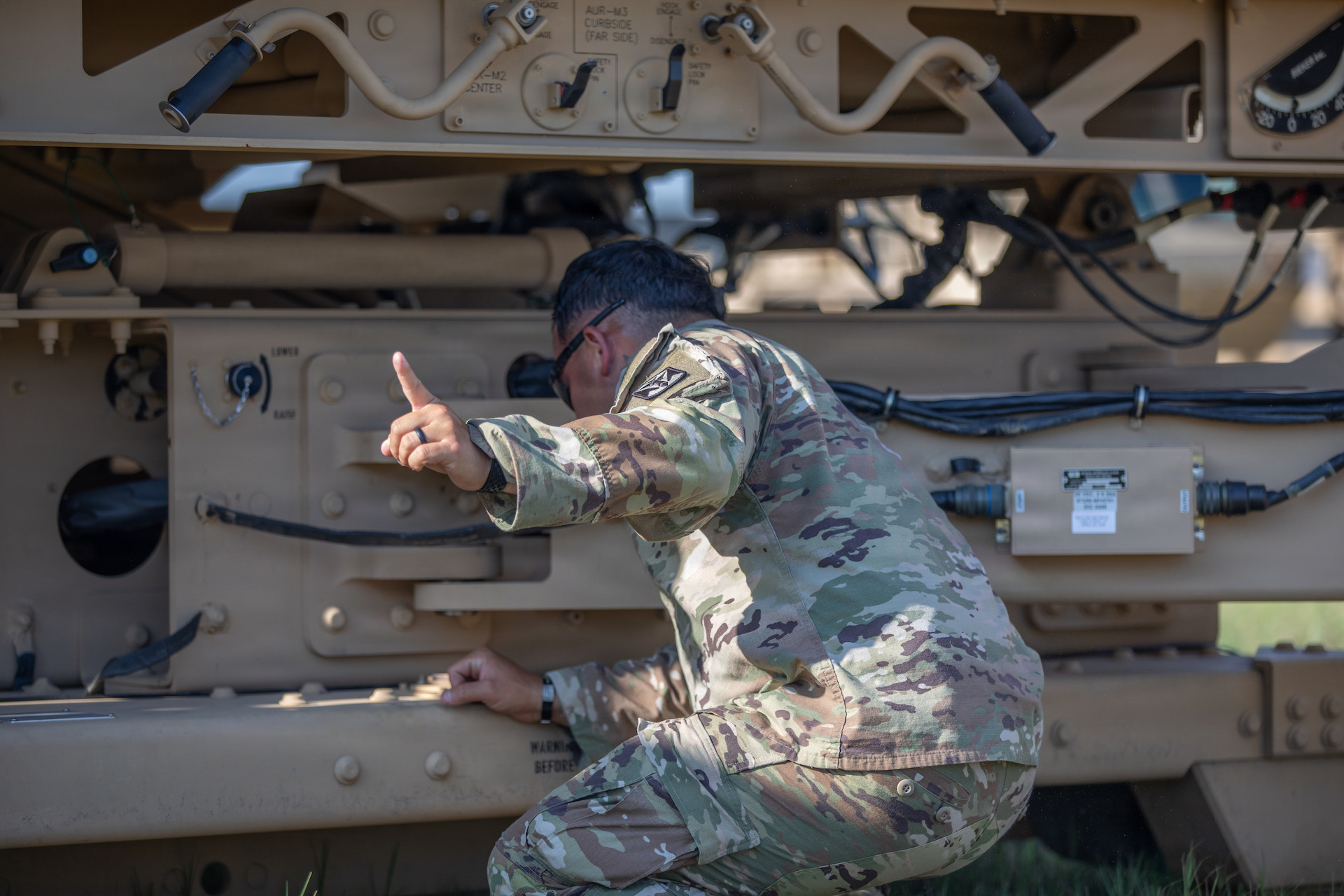
Col. Rosanna Clemente, commander of the 35th Air Defense Artillery Brigade, emphasized that U.S. air-defense units are preparing for adversaries to locate and target their systems. Soldiers practice rapidly relocating equipment to preserve ballistic-missile-defense coverage. They are also adopting passive defenses, including deception, concealment, dispersal, and creating uncertainty about the location of key capabilities.
U.S. forces are integrating technologies such as IBCS-enabled Patriot systems and the Integrated Fire Protection Capability. These tools are intended to connect sensors and weapons through a common interface, enabling commanders to select the best sensor and shooter for each threat.
Article timeline
Build this article’s timeline
Extract dated events, key actors, and open questions using the same timeline analysis available in Signal.
Log in to build
Timeline generation is available to signed-in community members.
Primary-source excerpts
Login to contribute excerpts from the source.
Five Ws
🤖 4 AI prefills · 1 still unanswered
Who
Joe Hilbert, Volodymyr Zelenskyy, Rosanna Clemente, and United States Army
What
The U.S.
When
When did this happen, or what is the timeframe?
Where
South Korea, Korean Peninsula, and Middle East
Why
Centers on one-way attack drones, integrated air and missile defense, and drone warfare
Login to answer and earn XP for each gap you fill.
Drone Warfare Lessons drones, one-way attack drones, Ukraine, Iran, swarm operations Air Defense Modernization air defense, missile defense, modernization, Patriot, IBCS Training And Adaptation training, experimentation, tactics, procedures, lessons learned Defensive Survivability mobility, survivability, repositioning, deception, hardening
Key Phrases:
one-way attack drones98% integrated air and missile defense97% drone warfare95% U.S. 8th Army94% North Korean swarm operations92% Russia-Ukraine war91% air defense systems90% Integrated Battle Command System89% Integrated Fire Protection Capability87% ballistic missile defense coverage86%
29
Manipulation Score: Low
How much this article uses emotional framing vs. straight reporting
Loaded Language
1225%
Absolutist
1815%
Threat/Panic
4825%
Us vs Them
2215%
Engagement Bait
820%
Manipulation score look right?
Factual Claims (10)
medium
military
The U.S. 8th Army deployed in South Korea is incorporating lessons from drone warfare as it prepares for potential conflicts on the peninsula.
high
military
Drones and missiles have played a major role in the U.S. conflict with Iran and the Russia-Ukraine war.
high
military
North Korea has reportedly conducted exercises practicing swarm operations combining attack drones with missiles and other weapons.
medium
military
One-way attack drones are becoming an ever-present reality on battlefields.
medium
military
The 8th Army is incorporating lessons from Operation Epic Fury and Ukraine into training, modernization, and experimentation.
high
technology
Russia may have provided North Korea with jet-powered drone technology used against Ukraine.
high
geopolitical
North Korea is sending forces to fight in Ukraine on behalf of Russia.
medium
military
U.S. air defenders in Korea are training to reposition systems rapidly to preserve ballistic missile defense coverage.
medium
technology
U.S. forces in Korea are integrating Integrated Battle Command System technology, including IBCS-enabled Patriot and IFPC capabilities.
medium
technology
IBCS allows air defenders to select the best sensor and best shooter through a unified interface.
Comments
Login to view and post comments.