news
DefenseScoop
AI to help make logistics less predictable and vulnerable to adversaries, Transcom commander says
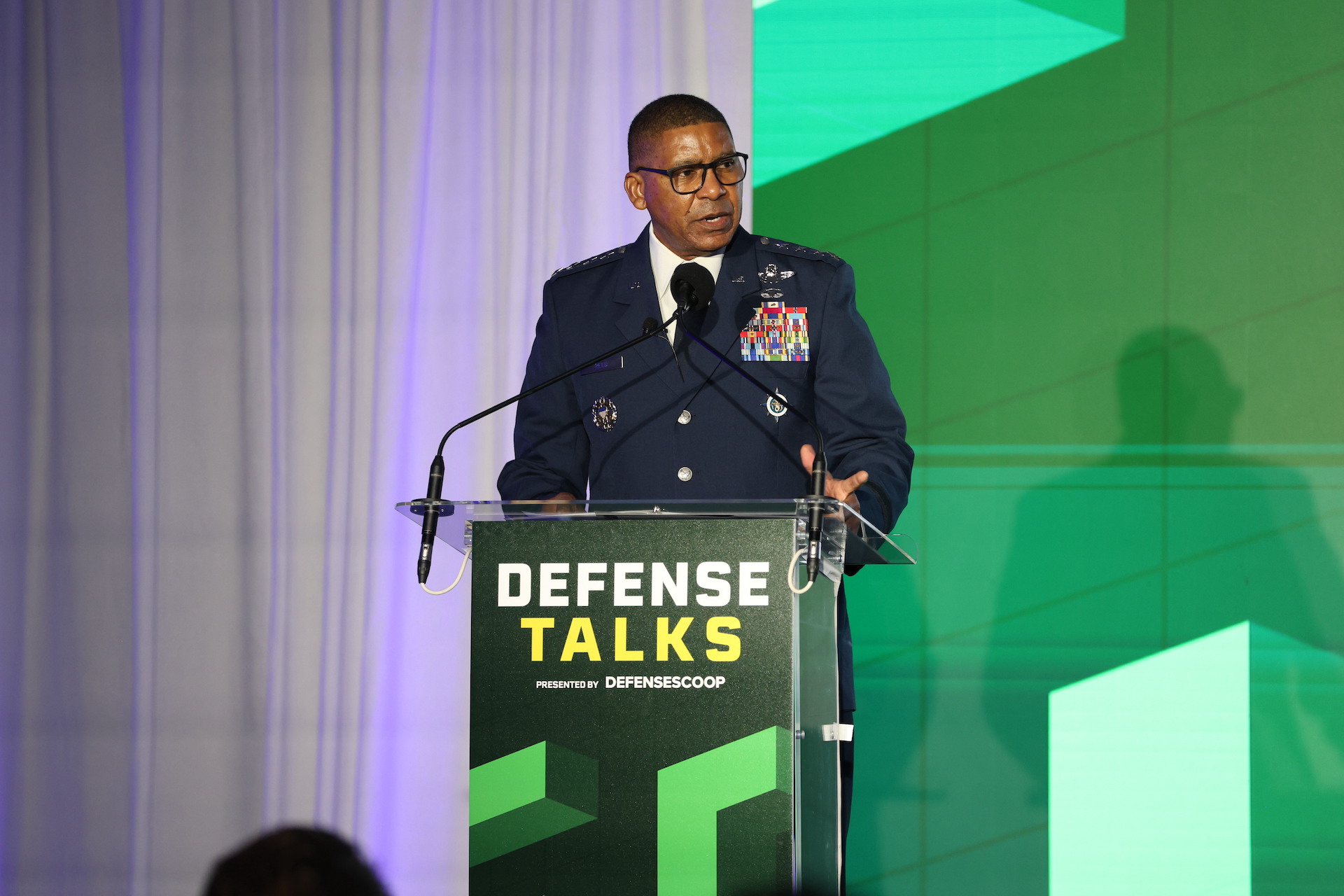
Gen. Randall Reed, head of U.S. Transportation Command, warned that highly predictable, efficiency-focused supply chains have created a “self-induced vulnerability” that adversaries can exploit, particularly with artificial intelligence. Speaking at the DefenseScoop DefenseTalks conference, Reed said military logistics systems built around precise schedules, trusted data, just-in-time delivery, and minimal waste are increasingly fragile because AI enables opponents to analyze and disrupt them.
He argued that adversaries could contest logistics throughout the military, government, and commercial supply chain, using AI to multiply disruptions, manipulate algorithms, and generate misleading information that could prompt catastrophic decisions. This risk is especially serious in environments involving ambushes, communications failures, and contested transportation routes.
Reed said the U.S. should use AI to make logistics less predictable and more resilient. AI-enabled personnel and systems could support randomized routing, autonomous operations, predictive demand planning, and early identification of operational problems. Other technologies, including Internet of Things sensors, digital twins, and blockchain, could improve cargo tracking, simulate supply networks, and protect data.
However, Reed acknowledged major obstacles to implementation, including limited data, unreliable synthetic data, and the need for substantial computing capacity across the supply chain, from factories to frontline units. To address these challenges, Transcom is developing a secure, authoritative data layer. The goal is to ensure that U.S. forces can continue delivering ammunition, batteries, medical supplies, and other necessities—even under sustained attack and disrupted communications—more effectively than an adversary.
Article timeline
Build this article’s timeline
Extract dated events, key actors, and open questions using the same timeline analysis available in Signal.
Log in to build
Timeline generation is available to signed-in community members.
Primary-source excerpts
Login to contribute excerpts from the source.
Five Ws
🤖 3 AI prefills · 2 still unanswered
Who
Randall Reed, United States Transportation Command, and DefenseScoop
What
Gen.
When
When did this happen, or what is the timeframe?
Where
Where did this occur?
Why
Centers on artificial intelligence in military logistics, U.S. Transportation Command, and self-induced vulnerability
Login to answer and earn XP for each gap you fill.
AI-Driven Logistics Warfare artificial intelligence, military logistics, adversaries, disruption, arms race Supply Chain Vulnerability predictability, fragility, just-in-time delivery, self-induced vulnerability, routing Autonomous Logistics Resilience randomized routes, autonomy, predictive planning, network healing, communications degradation Military Data Infrastructure data scarcity, synthetic data, computing power, secure data layer, IoT sensors
Key Phrases:
artificial intelligence in military logistics98% U.S. Transportation Command96% self-induced vulnerability94% predictable supply chains92% randomized push logistics91% adversarial disruption of logistics90% hallucinated intelligence88% predictive demand planning86% autonomous route randomization84% Internet of Things sensors82%
People: Randall Reed8
48
Manipulation Score: Medium
How much this article uses emotional framing vs. straight reporting
Loaded Language
4825%
Absolutist
4215%
Threat/Panic
6825%
Us vs Them
3515%
Engagement Bait
1820%
Manipulation score look right?
Factual Claims (10)
medium
military
Gen. Randall Reed is the head of U.S. Transportation Command.
medium
military
Predictable supply chains optimized for efficiency can create self-induced vulnerabilities.
high
military
Adversaries can analyze and exploit regular military logistics processes using AI.
high
military
Adversaries may contest logistics at any point across military, government, and external supply chains.
high
technology
AI could manipulate algorithms and cause military logisticians to make catastrophic decisions based on hallucinated intelligence.
medium
technology
AI can support randomized routing, autonomous operations, and prediction of operational friction.
medium
technology
AI can enable predictive demand planning and network healing.
medium
technology
Internet of Things sensors can track cargo, digital twins can create virtual replicas, and blockchain can secure data.
medium
technology
Military AI implementation faces data scarcity, flawed synthetic data, and substantial computing requirements.
medium
military
The U.S. military is building a secure, authoritative data layer for logistics operations.
Comments
Login to view and post comments.