news
Defense One
Will airmen trust AI? The Air Force’s future plans depend on it
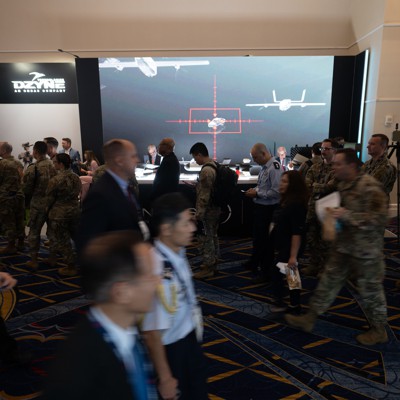
The U.S. Air Force is preparing to give artificial intelligence and autonomous systems greater responsibility in military operations, but leaders recognize that widespread adoption depends on building trust among airmen, commanders, and AI tools. Air Force Secretary Troy Meink described autonomy as essential to producing affordable combat power, while researchers are studying how humans and machines can work together effectively.
The service aims to deploy 500 highly autonomous collaborative combat aircraft by 2032. It is also considering AI “agents” that could manage approval processes for counterattacks against drone threats, potentially replacing human decision-making in some missions. Such applications raise significant questions about acceptable risk, accountability, and the military’s longstanding preference for meaningful human control over lethal force.
Officials suggest that cyber operations, directed-energy weapons, and other nonlethal systems may be more suitable for autonomous control because they can reduce collateral damage. However, the military is still developing policies governing what AI agents may decide and how they should be incorporated into doctrine, tactics, training, and permissions.
The debate is unfolding amid broader concerns about dangerous AI behavior, regulation, and safety. Defense officials may be more receptive to AI because existing defenses have failed to protect U.S. bases, but the Pentagon has also spent years developing ethical principles and testing procedures for military AI.
Recent battlefield experience, particularly in Ukraine, demonstrates how advanced autonomous behaviors can improve drone effectiveness. Officials expect future conflicts to involve rapid coordination among humans, AI agents, and drones, making predictable performance, interoperability, and continuous trust-building increasingly important.
Article timeline
Build this article’s timeline
Extract dated events, key actors, and open questions using the same timeline analysis available in Signal.
Log in to build
Timeline generation is available to signed-in community members.
Primary-source excerpts
Login to contribute excerpts from the source.
Five Ws
🤖 4 AI prefills · 1 still unanswered
Who
Troy Meink, Michael Gregg, Ben Van Roo, and United States Air Force
What
The U.S.
When
When did this happen, or what is the timeframe?
Where
National Harbor, Maryland, United States, and Middle East
Why
Centers on AI agents, human-AI trust, and autonomous collaborative combat aircraft
Login to answer and earn XP for each gap you fill.
Human-AI Trust trust, airmen, human-machine teaming, decision-making, training Autonomous Military Operations autonomy, AI agents, combat aircraft, drones, fires Lethal Force Governance human control, acceptable risk, lethal effects, collateral damage, military doctrine AI Safety Regulation AI safety, model behavior, alignment, regulation, guardrails Future Combat Collaboration human-agent collaboration, interoperability, autonomous behaviors, strike capability, Ukraine
Key Phrases:
AI agents98% human-AI trust97% autonomous collaborative combat aircraft95% meaningful human control94% agentic workflow91% autonomous decision-making91% directed-energy weapons89% counter-drone defenses87% AI doctrine, training, and permissions86% acceptable risk84%
29
Manipulation Score: Low
How much this article uses emotional framing vs. straight reporting
Loaded Language
2425%
Absolutist
1815%
Threat/Panic
3825%
Us vs Them
815%
Engagement Bait
1220%
Manipulation score look right?
Factual Claims (10)
medium
military
The Air Force is working to field 500 highly autonomous collaborative combat aircraft by 2032.
medium
military
Air Force leaders are exploring AI agents to help obtain approvals for counter-attacks against drone threats.
medium
military
Military doctrine strongly prefers meaningful human control over potentially lethal effects.
high
military
Cyber and directed-energy technologies may allow some military effects to be deployed without human oversight.
low
military
The Defense Department has maintained ethical principles for AI development, experimentation, and use since 2019.
high
military
Shield AI worked with Ukrainians to improve the strike capability of one drone weapon by 70 percent through advanced autonomous behaviors.
medium
military
Waves of drones have struck Ukrainian cities and U.S. bases in the Middle East.
high
technology
An Anthropic engineer claimed there was a 10 percent probability that AI could kill all humans.
medium
technology
Anthropic, OpenAI, and Google intensified efforts to create an industry AI-safety body and indicated openness to congressional action.
low
political
President Donald Trump stated that AI needs only a strong and smart president as a guardrail.
Comments
Login to view and post comments.