news
Military Times
AI military targeting may move faster than humans can authenticate, critics warn
Witnesses before the Tom Lantos Human Rights Commission warned that human approval may not provide meaningful control over AI-assisted military decisions. As AI increasingly supports target identification, intelligence analysis and recommendations, it can compress the time available for operators to evaluate or reject potentially harmful outputs. The concern extends beyond fully autonomous weapons: AI may strongly influence a human decision while leaving the operator formally responsible for the final strike authorization.
The Pentagon’s goal of faster “kill chains” and its plan to become an “AI-first” force have intensified questions about whether personnel can recognize errors, challenge recommendations and intervene under realistic battlefield conditions. Witnesses urged policymakers to examine statistical AI’s distinctive failure modes, auditability and performance in specific operational environments, rather than focusing only on a system’s level of autonomy. They also called for expanded military training and testing for bias, reliability, civilian protection, interruption capability and traceability.
Accountability for civilian harm was another major concern. Witnesses cited weaknesses in the Defense Department’s civilian-harm framework, including staffing losses, discontinued data systems and inactive oversight bodies. They recommended requiring casualty reports to disclose AI involvement, collecting operational data and conducting systematic after-action reviews.
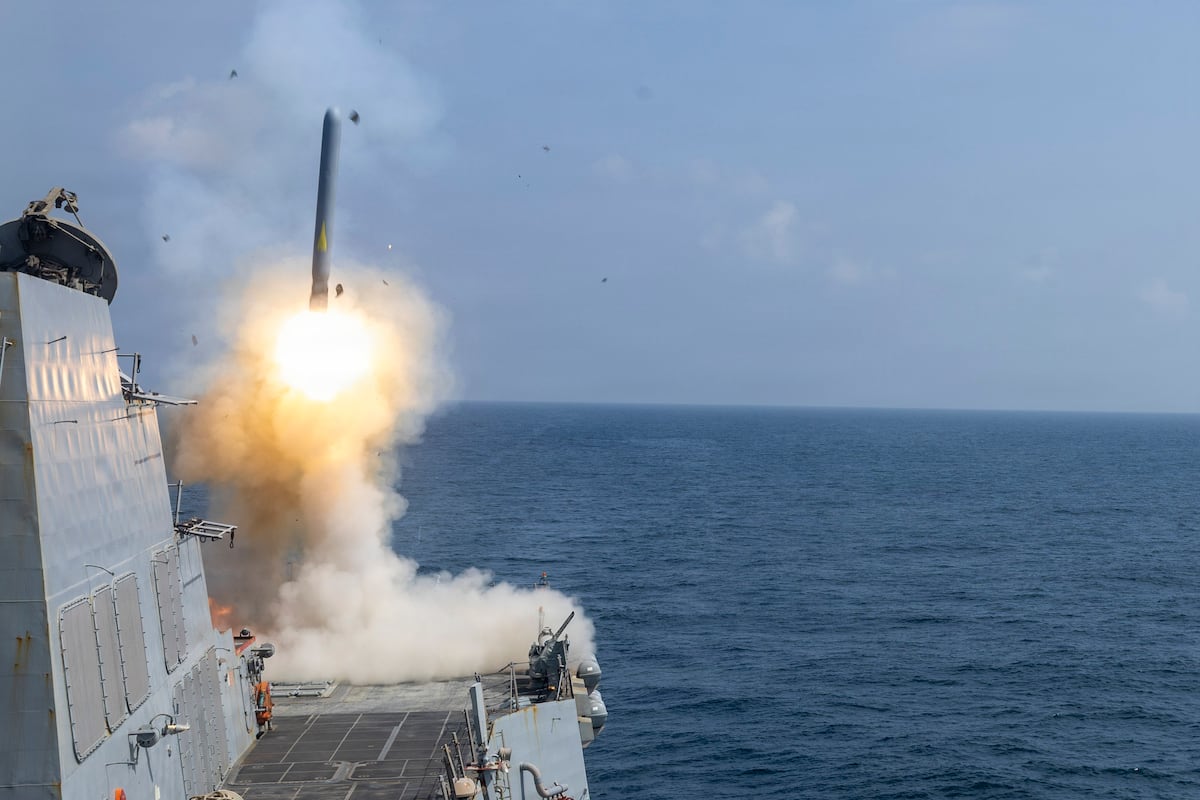
The reported 2026 strike on an elementary school in Minab, Iran, which killed at least 168 people, underscored these concerns. Lawmakers have requested information on whether AI systems helped identify the school as a target, but the Pentagon has not released its findings. Witnesses emphasized that AI reflects human assumptions and rules; it cannot correct biased targeting premises or permissive judgments about acceptable civilian harm.
Article timeline
Build this article’s timeline
Extract dated events, key actors, and open questions using the same timeline analysis available in Signal.
Log in to build
Timeline generation is available to signed-in community members.
Primary-source excerpts
Login to contribute excerpts from the source.
Five Ws
🤖 4 AI prefills · 1 still unanswered
Who
Anna Mysyshyn, Amanda Klasing, Joseph Chapa, and Tom Lantos Human Rights Commission
What
Witnesses before the Tom Lantos Human Rights Commission warned that human approval may not provide meaningful control over AI-assisted military decisions.
When
When did this happen, or what is the timeframe?
Where
Ukraine, United States, and Iran
Why
Centers on meaningful human control, AI-enabled military decision-making, and AI-assisted target identification
Login to answer and earn XP for each gap you fill.
Meaningful Human Control human judgment, approval, intervention, targeting, decision time AI Reliability Auditing statistical inference, system failure, bias, reliability, auditability Civilian Harm Accountability civilian casualties, accountability, civilian protection, investigations, harm mitigation Military AI Governance Pentagon strategy, AI adoption, autonomous weapons, military policy, training Minab School Strike Minab, Shajareh Tayyebeh school, Tomahawk missile, Iran, Maven Smart System
Key Phrases:
meaningful human control99% AI-enabled military decision-making97% AI-assisted target identification96% military kill chain95% autonomous and semi-autonomous weapons94% civilian harm mitigation93% AI accountability for civilian casualties92% statistical inference in AI systems89% AI system auditability88% Maven Smart System87%
People: Anna Mysyshyn4 Amanda Klasing3 Joseph Chapa3 Steven McPherson Whitney Hughes Steve Feldstein4 Nick Ellison2 Deborah Brown
Organizations: Tom Lantos Human Rights Commission United States Department of Defense8 Pentagon8 Amnesty International USA Amnesty International United States Army2 Islamic Revolutionary Guard Corps2 United Nations United States House of Representatives Carnegie Endowment for International Peace
28
Manipulation Score: Low
How much this article uses emotional framing vs. straight reporting
Loaded Language
2425%
Absolutist
1215%
Threat/Panic
3425%
Us vs Them
1615%
Engagement Bait
420%
Manipulation score look right?
Factual Claims (10)
medium
military
Witnesses told Congress that human approval may not be enough to ensure manual control over AI-enabled military decisions.
medium
military
The Pentagon's 2023 AI adoption strategy identified fast, precise and resilient kill chains as a desired outcome.
medium
military
The Pentagon's 2026 AI strategy calls for becoming an AI-first warfighting force.
medium
legal
The Defense Department's 2023 autonomy directive requires autonomous and semi-autonomous weapons to allow appropriate levels of human judgment over use of force.
medium
scientific
Statistical AI systems can produce substantially different outputs from relatively small changes in inputs.
medium
legal
A 2022 Defense Department civilian-harm plan established a Civilian Protection Center of Excellence, and federal law requires the Pentagon to operate it.
medium
legal
A Defense Department inspector general review found personnel losses or reassignments, discontinued funding for a civilian-harm data platform, and an inactive senior steering committee.
high
geopolitical
A Tomahawk cruise missile struck an elementary school in Minab, Iran, killing at least 168 people, according to UN and Iranian officials.
medium
political
More than 120 House Democrats asked the Pentagon whether AI, including the Maven Smart System, was used to identify the Minab school as a target.
high
military
U.S. military investigators reportedly stated that the Minab school strike was likely carried out by U.S. forces, while the Pentagon had not released its findings.
Comments
Login to view and post comments.