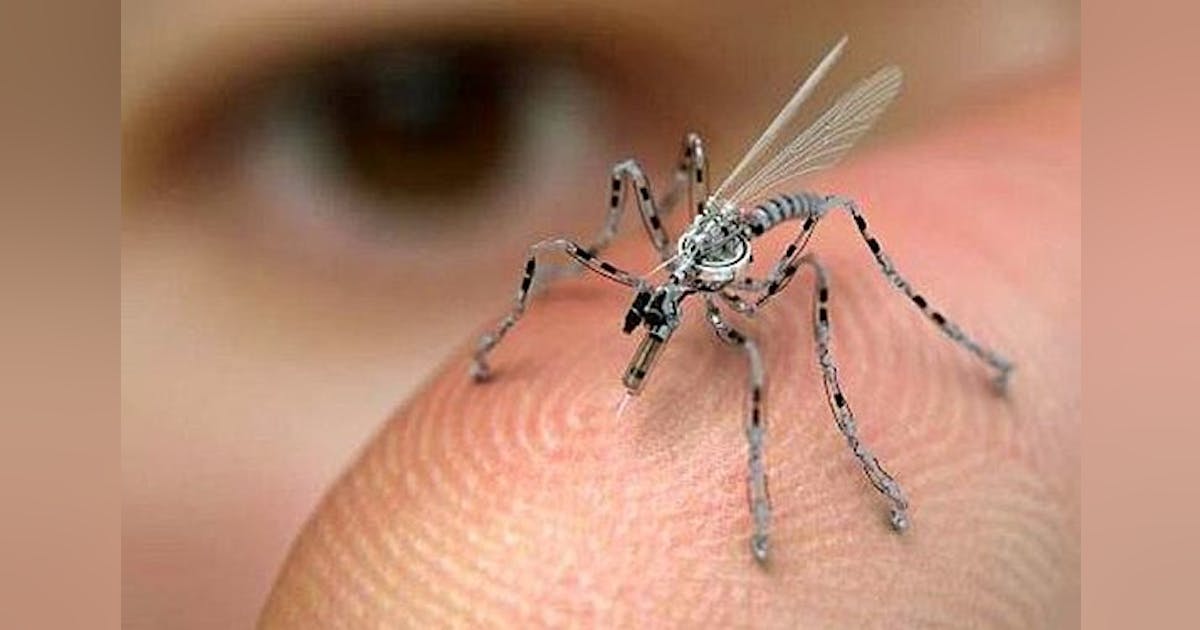
DARPA chooses two to develop insect-size robots for complex jobs like disaster relief and hazardous inspection
DARPA’s Microsystems Technology Office has awarded two contracts for the SHort-Range Independent Microrobotic Platforms (SHRIMP) program, which aims to advance untethered insect-scale robots, also described as micro-to-milli robotic platforms. The contracts were issued to Honeywell International’s Automation and Control Solutions division in Golden Valley, Minnesota, for up to $3.6 million, and to Rutgers University in New Brunswick, New Jersey, for up to $1.3 million. These awards support separate technical areas within the program.
SHRIMP focuses on developing new actuators and multi-mode power systems for very small robots that can operate without tethers. Key technical challenges include mobility, manipulation, actuator materials, energy storage, endurance, conversion circuitry, and engineering for extremely small size, weight, and power constraints. DARPA notes that while insect-scale robotics has benefited from progress in MEMS, additive manufacturing, piezoelectric actuators, and low-power sensors, no complete micro- or milli-robotic system currently exists that can perform complex tasks effectively.
Most existing micro-robots still depend on physical, optical, magnetic, or RF tethers for power, control, or processing, which limits their usefulness. Honeywell and Rutgers will work on fundamental actuator and power components and demonstrate their progress at a NIST first responder robotics test facility. The program has base phases plus options for second and third phases.
Article timeline
Build this article’s timeline
Extract dated events, key actors, and open questions using the same timeline analysis available in Signal.
Log in to build
Timeline generation is available to signed-in community members.
Primary-source excerpts
Login to contribute excerpts from the source.
Five Ws
🤖 5 AI prefills · all filled
Who
Defense Advanced Research Projects Agency, DARPA, and DARPA Microsystems Technology Office
What
DARPA’s Microsystems Technology Office has awarded two contracts for the SHort-Range Independent Microrobotic Platforms (SHRIMP) program, which aims to advance untethered insect-scale robots, also described as micro-to-milli robotic platfo…
When
25 Feb. 2019
Where
Arlington, Va., Golden Valley, Minn., and New Brunswick, N.J.
Why
Centers on SHort-Range Independent Microrobotic Platforms (SHRIMP), DARPA Microsystems Technology Office, and insect-scale robots
Login to answer and earn XP for each gap you fill.
DARPA SHRIMP Contracts DARPA, SHRIMP, contracts, Honeywell, Rutgers Insect-Scale Robotics insect-scale, micro-robots, milli-robots, robotic platforms, mobility Actuator Engineering actuators, force generation, efficiency, strength-to-weight, work density Power and SWaP power storage, conversion circuitry, endurance, SWaP, size Enabling Technologies MEMS, additive manufacturing, low-power sensors, RF tethers, magnetic tethers
Key Phrases:
SHort-Range Independent Microrobotic Platforms (SHRIMP)100% DARPA Microsystems Technology Office93% insect-scale robots97% micro-to-milli robotic platforms90% small size, weight, and power (SWaP)92% actuator technologies89% power storage and conversion88% microelectromechanical systems (MEMS)84% piezoelectric actuators80% low-power sensors74%
Organizations: Defense Advanced Research Projects Agency4 DARPA9 DARPA Microsystems Technology Office Honeywell International Inc. Honeywell Automation and Control Solutions2 Rutgers University3 U.S. National Institute of Standards and Technology National Institute of Standards and Technology NIST Army
8
Manipulation Score: Low
How much this article uses emotional framing vs. straight reporting
Loaded Language
525%
Absolutist
1015%
Threat/Panic
325%
Us vs Them
215%
Engagement Bait
2020%
Manipulation score look right?
Factual Claims (10)
medium
other
DARPA awarded two contracts over the past two weeks for the SHRIMP project.
medium
technology
SHRIMP is developing new actuators and multi-mode power for future untethered insect-scale robots.
medium
economic
DARPA awarded a potential $3.6 million contract to Honeywell ACS in Golden Valley, Minnesota.
medium
economic
DARPA awarded a potential $1.3 million contract to Rutgers University on 25 Feb. 2019.
medium
technology
There are no complete micro- or milli-robotic systems able to perform complex jobs proficiently.
medium
technology
Most micro- and milli-robots rely on physical, optical, magnetic, or RF tethers for power, control, and processing.
medium
technology
Researchers will demonstrate the technologies at a first responder robotics test facility at NIST.
low
technology
Insect-scale robotics has benefited from MEMS, additive manufacturing, piezoelectric actuators, and low-power sensors.
medium
technology
Power storage and conversion are intended to enable insect-scale robots to operate without tethered power, control, or processing.
low
economic
The contracts have base phases and options for second and third phases.
Comments
Login to view and post comments.