Autonomy, Decision Making, and Loss of Control
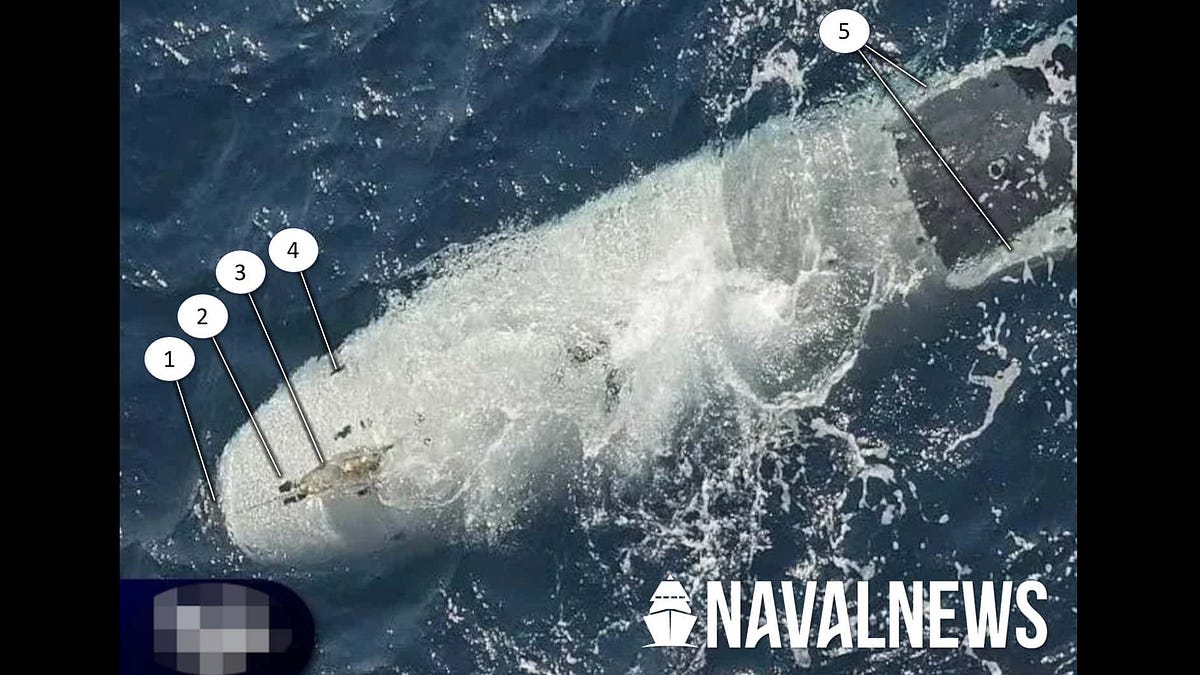
The article argues that the reported Iranian capture of an Anduril Dive-LD unmanned underwater vehicle highlights major gaps in how the U.S. thinks about autonomy in military systems. Although the Dive-LD is described as an attritable autonomous underwater vehicle designed for intelligence, surveillance, mine warfare, and other risky missions, its loss matters because a complete captured system could reveal operational details, weaknesses, and potentially sensitive technologies to adversaries such as Iran, China, or Russia.
The author says the incident exposes limits in Department of Defense Directive 3000.09, which focuses on safety, cyber survivability, anti-tamper measures, and minimizing unintended engagements. But the directive does not fully address real-world problems such as malfunction, capture, contested communications, jamming, spoofing, and the possibility that an autonomous system may need to make decisions when human oversight is unavailable.
A central theme is “bounded autonomy”: low-risk missions could be fully autonomous, while high-risk missions should require stronger human control. The article stresses that autonomous systems are not people and cannot be held morally accountable, so commanders remain responsible for their actions. It also raises a difficult question about whether autonomous vehicles should be programmed to scuttle or zeroize themselves if capture seems imminent, since such safeguards could also be exploited by enemies.
Overall, the piece argues that autonomy in warfare requires clearer rules about delegation, failure, and control before future conflicts make these problems unavoidable.
Article timeline
Build this article’s timeline
Extract dated events, key actors, and open questions using the same timeline analysis available in Signal.
Log in to build
Timeline generation is available to signed-in community members.
Primary-source excerpts
Login to contribute excerpts from the source.
Five Ws
🤖 5 AI prefills · all filled
Who
Anduril, Department of Defense, and Pentagon
What
The article argues that the reported Iranian capture of an Anduril Dive-LD unmanned underwater vehicle highlights major gaps in how the U.S.
When
Sep 10, 2026 and 2012
Where
Iran, Beijing, and Moscow
Why
Centers on autonomous systems, bounded autonomy, and Department of Defense Directive 3000.09
Login to answer and earn XP for each gap you fill.
Autonomous Systems autonomy, UUV, AUV, Dive-LD, weapon systems Contested Communications jamming, spoofing, electronic warfare, communications degradation, deception Capture and Security capture, anti-tamper, cybersecurity, cyber survivability, zeroize Human Delegation decision making, delegation, commanders, accountability, risk thresholds
Key Phrases:
autonomous systems98% bounded autonomy96% Department of Defense Directive 3000.0995% contested signals environment93% human-on-the-loop91% Dive-LD90% jamming and spoofing89% zeroize84% cyber survivability83% operational resilience82%
Organizations: Anduril3 Department of Defense3 Pentagon2 Reuters United States2 Iran2 Beijing Moscow USD(P) USD(A&S)
Events: capture of the Dive-LD2
24
Manipulation Score: Low
How much this article uses emotional framing vs. straight reporting
Loaded Language
1825%
Absolutist
2215%
Threat/Panic
2825%
Us vs Them
1415%
Engagement Bait
2020%
Manipulation score look right?
Factual Claims (10)
medium
geopolitical
Iranian media announced Iranian defense forces captured an unmanned underwater vehicle (UUV) resembling an Anduril Dive-LD.
low
technology
Anduril says the Dive-LD is an autonomous underwater vehicle (AUV).
low
legal
DoD Directive 3000.09 covers the employment of autonomous systems and was updated from a 2012 directive.
medium
technology
The Dive-LD can operate for up to ten days at depths of up to 6,000 meters.
medium
military
The Dive-LD can be used for IPOE, ISR, mine warfare, and precision placement.
medium
military
A Pentagon spokesperson confirmed the loss of the UUV and said it had no sensitive data or equipment onboard.
medium
technology
Anduril said the Dive-LD was designed to operate where loss of the vehicle is an expected possibility.
medium
geopolitical
The capture of a complete system could let Iran and possibly Beijing and Moscow inspect a U.S. operational system for weaknesses.
low
legal
Directive 3000.09 says verification should cover system safety, anti-tamper mechanisms, cyber survivability, operational resilience, and cybersecurity.
high
military
In a highly contested communications environment, autonomous weapons may need to make final decisions if human approval is unavailable.
Comments
Login to view and post comments.