Deception is the Point
The article argues that deception has long been a decisive military tool and remains highly relevant today. It begins with World War II Allied deception operations—especially Bodyguard, Fortitude, and Mincemeat—which were designed to mislead Nazi Germany about the location of the D-Day invasion. A major part of that effort was the fake First Army Group, “commanded” on paper by General Patton and supported by false radio traffic, inflatable equipment, forged insignia, and planted press stories. These measures helped convince Germany that the invasion might come elsewhere, buying time and protecting Allied forces in Normandy.
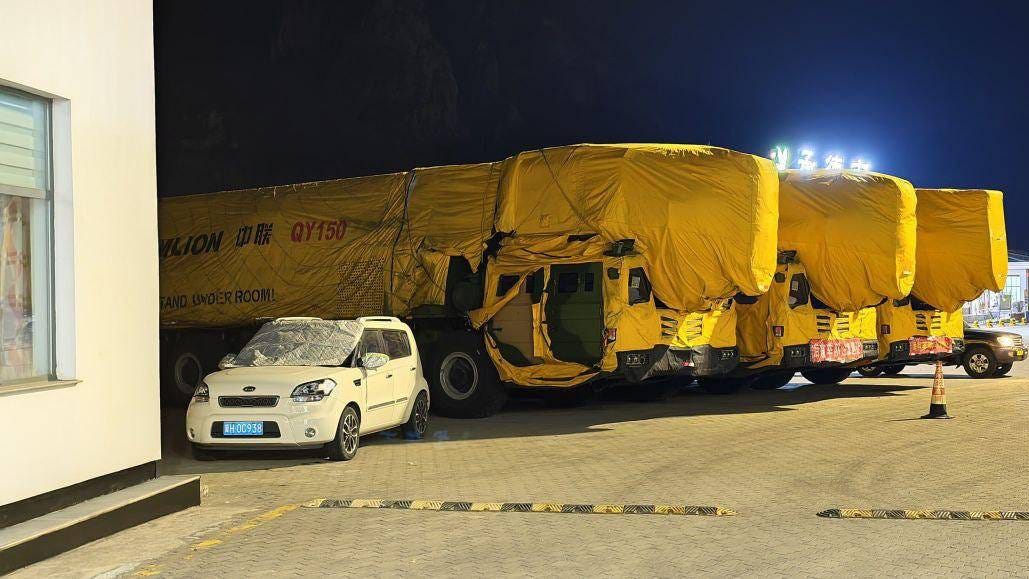
The author then connects this history to China’s current military behavior toward Taiwan. The PLA’s large-scale “Justice Mission 2025” exercise around Taiwan is presented as part of a pressure campaign, with propaganda clearly signaling hostility toward Taiwan’s ruling party and missile forces. More importantly, the article highlights the PLA’s use of deception, including disguising mobile ICBM launchers as Zoomlion construction cranes and experimenting with containerized missile launchers on ships. These methods are intended to confuse surveillance systems, complicate targeting, and raise U.S. costs.
The central lesson is that deception does not need to fool everyone; it only needs to create doubt and force an adversary to waste time, resources, and attention. The author argues that low-tech deception remains effective even in an era of advanced ISR, space, cyber, and AI-enabled intelligence. For the U.S., deception should be treated as a serious strategic advantage in future conflict.
Article timeline
Build this article’s timeline
Extract dated events, key actors, and open questions using the same timeline analysis available in Signal.
Log in to build
Timeline generation is available to signed-in community members.
Primary-source excerpts
Login to contribute excerpts from the source.
Five Ws
🤖 4 AI prefills · 1 still unanswered
Who
Rommel, Ben McIntyre, Ian Fleming, and Allied Commanders
What
The article argues that deception has long been a decisive military tool and remains highly relevant today.
When
When did this happen, or what is the timeframe?
Where
Europe, France, and Normandy
Why
Centers on Operation Fortitude, Operation Bodyguard, and Operation Mincemeat
Login to answer and earn XP for each gap you fill.
WWII Deception Operation Fortitude, Bodyguard, Mincemeat, Normandy, Patton Taiwan Military Exercise PLA, PLAN, Taiwan, Justice Mission 2025, Eastern Theater Command Modern Camouflage ICBM launchers, Zoomlion cranes, ISR, space-based surveillance, camouflage Strategic Asymmetry decision space, misallocation, bandwidth, risk acceptance, asymmetry
Key Phrases:
Operation Fortitude98% Operation Bodyguard96% Operation Mincemeat95% military deception94% PLA deception93% Taiwan invasion scenario90% ISR89% mobile ICBM launchers88% Zoomlion cranes86% First Army Group84%
People: Rommel Ben McIntyre Ian Fleming Patton2 Lin Xianqyang Wang Houbin Tony Stark Secretary of Defense Rock
Organizations: Allied Commanders Nazi Germany2 Allies5 German high command British First Army Group2 PLA6 PLAN3 PRC4 DPP
42
Manipulation Score: Medium
How much this article uses emotional framing vs. straight reporting
Loaded Language
2225%
Absolutist
2815%
Threat/Panic
4525%
Us vs Them
3815%
Engagement Bait
3020%
Manipulation score look right?
Factual Claims (10)
medium
geopolitical
In 1943, Allied commanders saw invasion of Europe as the only option to defeat Nazi Germany.
medium
military
The Allies used Operations Bodyguard, Fortitude, and Mincemeat to deceive Nazi Germany about the invasion.
medium
military
Operation Mincemeat was at least partly designed by Ian Fleming.
medium
military
Patton was chosen to lead the fake First Army Group as part of the deception.
medium
military
The First Army Group existed only on paper, on radio traffic, and in inflatable form.
medium
military
On December 29, China’s PLA and PLAN started a massive exercise around Taiwan called Justice Mission 2025.
medium
military
The exercise was outside the normal exercise window and was the first under new Eastern Theater Command leadership.
high
military
Lin Xianqyang was reportedly detained in March, along with Rocket Force Commander Wang Houbin.
medium
military
The PRC claims the exercise is the largest it has conducted to date.
high
military
The PLA is disguising some mobile ICBM launchers as Zoomlion cranes.
Comments
Login to view and post comments.