news
POWER Magazine
U.S. Army Mobilizes $2.2B Janus Program to Deploy More Than 20 Commercial Microreactors
The U.S. Army has committed up to $2.2 billion over five years to develop and operate more than 20 commercial nuclear microreactors at military bases, marking a major push to move advanced nuclear technology from prototypes into real-world service. On Aug. 26, the Army selected five developers and five initial sites under the Janus program: Antares Nuclear at Fort Bragg, North Carolina; BWXT Advanced Technologies at Fort Campbell, Kentucky; General Atomics Electromagnetic Systems at Fort Hood, Texas; Radiant Industries at Fort Benning, Georgia; and Westinghouse Government Services at Fort Drum, New York.
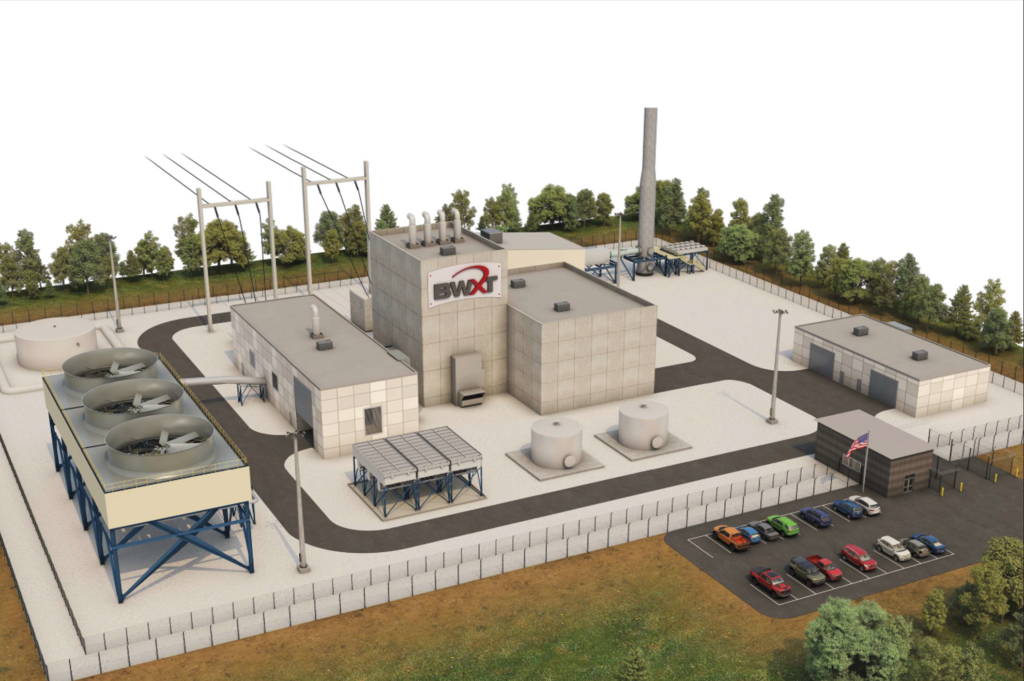
The largest disclosed deal went to Radiant, which could receive up to $750 million to deploy 15 factory-built, 1-MWe Kaleidos microreactors by 2030, starting with three units at Fort Benning. Antares will deploy three R1 microreactors at Fort Bragg. BWXT plans a 20-MWe version of its BANR reactor at Fort Campbell, aiming for construction in late 2028 and operation in the early 2030s. General Atomics will continue development of its liquid-metal-cooled GA-TES reactor at Fort Hood, and Westinghouse will deploy its eVinci microreactor at Fort Drum, though details on output and schedule were not disclosed.
The reactors will be owned, built, and operated by the companies under fixed-price, milestone-based Other Transaction Authority agreements negotiated through the Defense Innovation Unit. The program follows presidential executive orders issued in May 2025 that made the Army the Pentagon’s lead agency for installing nuclear energy and required at least one Army-regulated reactor to be operating by Sept. 30, 2028. Army officials said the effort is intended to create commercially viable reactor products while balancing technical risk across multiple designs.
Article timeline
Build this article’s timeline
Extract dated events, key actors, and open questions using the same timeline analysis available in Signal.
Log in to build
Timeline generation is available to signed-in community members.
Primary-source excerpts
Login to contribute excerpts from the source.
Five Ws
🤖 2 AI prefills · 3 still unanswered
Who
Who are the key actors in this story?
What
The U.S.
When
When did this happen, or what is the timeframe?
Where
Where did this occur?
Why
Centers on commercial nuclear microreactors, Janus program, and fixed-price, milestone-based Other Transaction Authority agreements
Login to answer and earn XP for each gap you fill.
Army Nuclear Program U.S. Army, Janus, military installations, executive orders, Sept. 30, 2028 Vendor Reactor Deployments Antares, BWXT, General Atomics, Radiant, Westinghouse Microreactor Technologies TRISO, heat pipes, sodium, helium, liquid metal Milestone Contracting fixed-price, milestones, hardware progress, risk management, NASA COTS
Key Phrases:
commercial nuclear microreactors100% Janus program98% fixed-price, milestone-based Other Transaction Authority agreements94% TRISO fuel93% Department of War Innovation Unit90% Idaho National Laboratory88% Sept. 30, 2028 deadline87% Other Transaction Authority86% military installations84% reactor developers82%
8
Manipulation Score: Low
How much this article uses emotional framing vs. straight reporting
Loaded Language
625%
Absolutist
1015%
Threat/Panic
225%
Us vs Them
315%
Engagement Bait
1820%
Manipulation score look right?
Factual Claims (10)
medium
economic
The U.S. Army has mobilized up to $2.2 billion for a five-year effort to build and operate more than 20 commercial nuclear microreactors.
medium
military
The Army selected five reactor developers and five initial sites for the Janus program.
low
military
The selected sites are Fort Bragg, Fort Campbell, Fort Hood, Fort Benning, and Fort Drum.
medium
economic
Radiant Industries will receive up to $750 million to deploy 15 factory-built, 1-MWe Kaleidos microreactors by 2030.
medium
military
Antares Nuclear will deploy three R1 sodium heat-pipe microreactors at Fort Bragg.
medium
technology
BWXT plans a 20-MWe version of its BANR reactor at Fort Campbell and is targeting construction in late 2028 and operation in the early 2030s.
medium
technology
General Atomics will advance its GA-TES reactor toward potential deployment at Fort Hood.
low
technology
Westinghouse Government Services will deploy its eVinci microreactor at Fort Drum, but the company has not disclosed output, schedule, or contract value.
medium
legal
The agreements are fixed-price, milestone-based Other Transaction Authority contracts negotiated through DIU.
high
legal
A presidential executive order in May 2025 designated the Army as the Pentagon's executive agent for installing nuclear energy and required at least one Army-regulated reactor operating by Sept. 30, 2
Comments
Login to view and post comments.