news
19FortyFive
Why the U.S. Navy Quit Building a Mach 7 Railgun with a 100 Mile Range
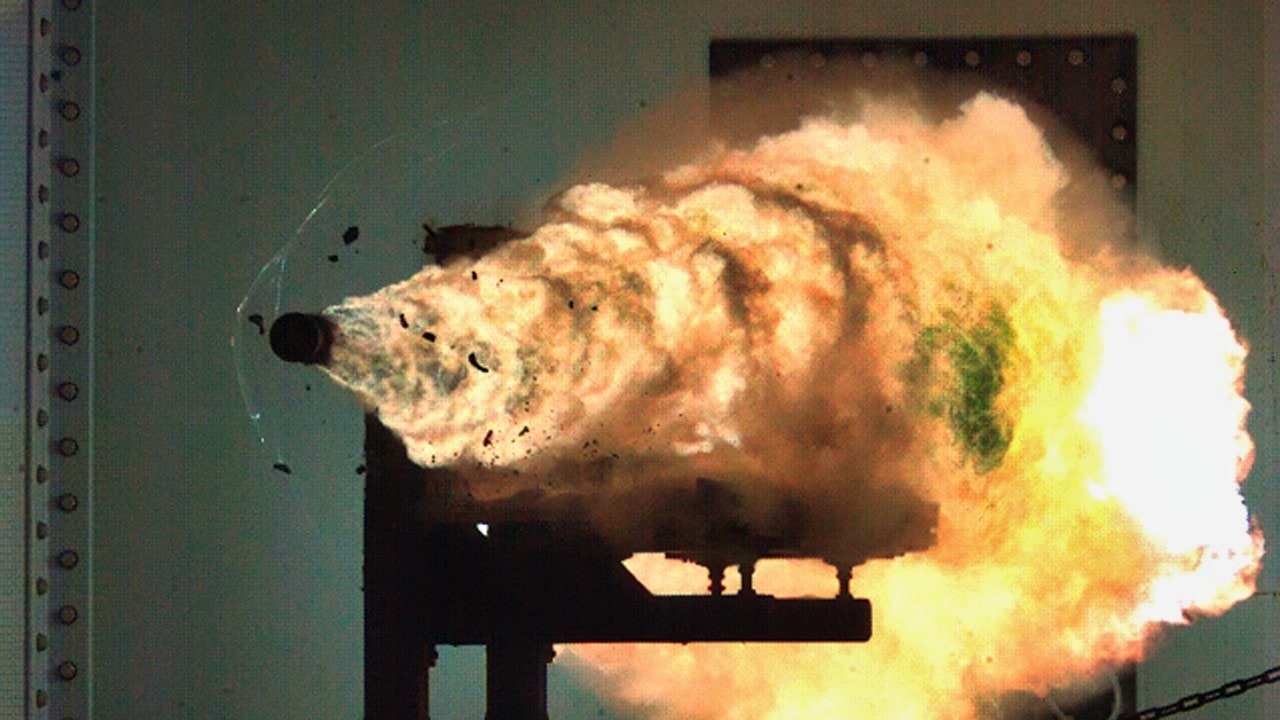
The U.S. Navy’s electromagnetic railgun (EMRG) was once promoted as a revolutionary ship weapon that could fire projectiles at Mach 7, reach ranges of more than 100 nautical miles, and use cheaper, gunpowder-free ammunition. The Navy began work on the program in 2005 and spent more than $500 million over about 15 years developing it. Early tests were impressive: in 2008, the railgun achieved a 10.64-megajoule shot at 2,520 meters per second, and in 2010 it set a 33-megajoule world record.
Despite these milestones, the program was canceled in 2021. Navy leaders concluded that the railgun faced major technical and operational problems, including extreme barrel wear, intense heat, heavy cooling demands, and enormous electrical power requirements. In practice, the barrel might have needed replacement after only 12 to 24 rounds, far less durable than conventional naval guns. Only a few ships, such as the Zumwalt-class destroyers, could possibly provide enough power, and even then at the expense of other systems.
The strategic environment also changed. China and other rivals developed long-range hypersonic anti-ship missiles that could outrange the railgun’s projected combat radius and threaten ships forced to close in for a shot. As a result, the Navy shifted its focus to hypersonic missiles, lasers, electronic warfare, and hypervelocity projectiles for existing guns. The railgun is now viewed as a cautionary example of a promising defense technology that failed to overcome engineering and acquisition challenges.
Article timeline
Build this article’s timeline
Extract dated events, key actors, and open questions using the same timeline analysis available in Signal.
Log in to build
Timeline generation is available to signed-in community members.
Primary-source excerpts
Login to contribute excerpts from the source.
Five Ws
🤖 4 AI prefills · 1 still unanswered
Who
John Richardson, Tim Scott, Nicholas Huynh, and U.S. Navy
What
The U.S.
When
When did this happen, or what is the timeframe?
Where
Dahlgren, Va., Dahlgren, and Mediterranean Sea
Why
Centers on electromagnetic railgun, hypersonic missiles, and Naval Surface Warfare Center Dahlgren Division
Login to answer and earn XP for each gap you fill.
Railgun Technology railgun, electromagnetic, muzzle velocity, megajoules, Mach 7 Program Cancellation cancelled, shelved, research, development, investment Engineering Limitations barrel, heat, cooling, power, materials Hypersonic Competition hypersonic, missiles, China, YJ-series, outrange Navy Weapon Shift lasers, electronic warfare, hypervelocity projectile, conventional guns, Zumwalt
Key Phrases:
electromagnetic railgun100% hypersonic missiles98% Naval Surface Warfare Center Dahlgren Division93% Office of Naval Research92% directed energy systems88% hypervelocity projectile87% anti-ship hypersonic missiles86% Valley of Death84% combat system integration challenges80% Zumwalt-class destroyers79%
Organizations: U.S. Navy14 Office of Naval Research4 Department of the Navy Naval Surface Warfare Center2 Naval Surface Warfare Center Dahlgren Division Military.com Congress Defense News American University George Washington University
Locations: Dahlgren, Va.2 Dahlgren Mediterranean Sea Rota, Spain Europe Africa San Diego2 Coronado, Calif. Japan2 China4
Events: COVID-19 pandemic
41
Manipulation Score: Medium
How much this article uses emotional framing vs. straight reporting
Loaded Language
4825%
Absolutist
3415%
Threat/Panic
3925%
Us vs Them
1815%
Engagement Bait
5520%
Manipulation score look right?
Factual Claims (10)
medium
military
The U.S. Navy's electromagnetic railgun fired a record 10.64 MJ shot at Dahlgren on Jan. 31, 2008.
medium
military
The 2010 Navy railgun test achieved a world-record 33 megajoule shot.
medium
military
The railgun was intended to reach more than 200 nautical miles at Mach 7.
medium
economic
The Navy spent more than $500 million on the railgun program over about 15 years.
low
legal
The railgun program was shelved or cancelled in 2021.
medium
military
Railgun barrels burned out after only a few dozen rounds and required frequent refurbishment.
medium
technology
The railgun required so much electricity that most naval ships could not support it.
low
military
The Navy shifted focus to hypersonic missiles, lasers, and hypervelocity projectiles.
medium
geopolitical
China fielded long-range hypersonic anti-ship missiles that outranged railgun concepts.
medium
technology
Japan later developed its own working railgun model.
Comments
Login to view and post comments.