The Ukrainians Beat the U.S.
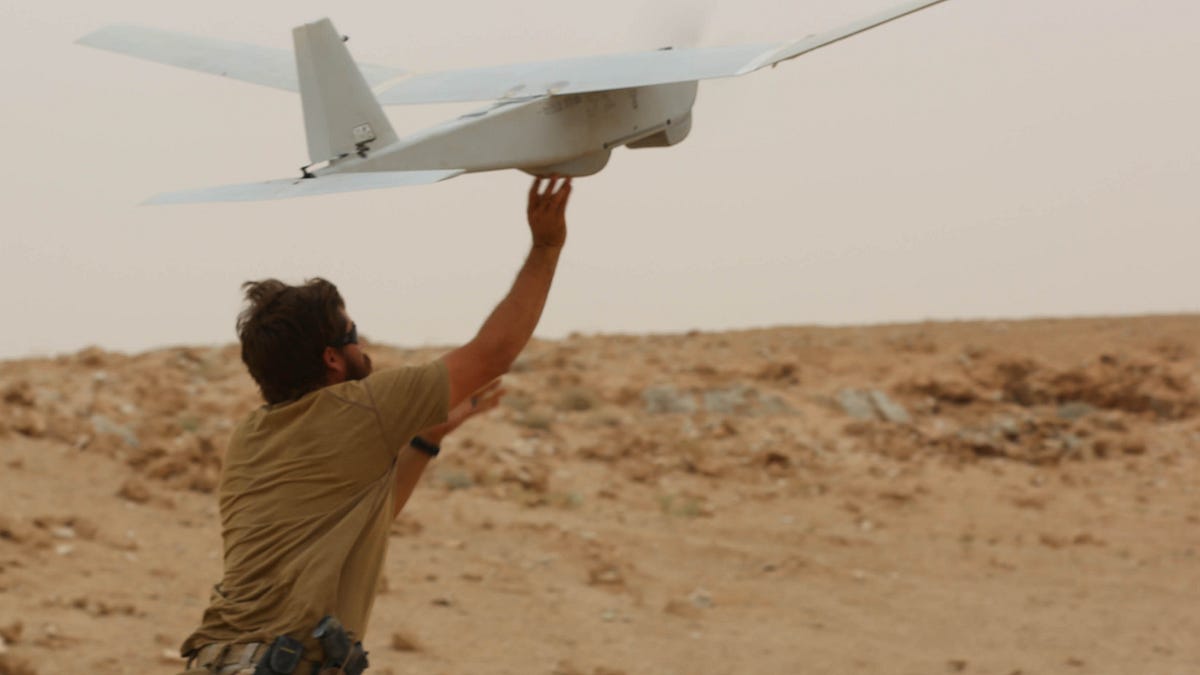
The article argues that the U.S. Army’s recent loss to Ukrainian soldiers during Exercise Combined Resolve should not be seen as proof that the Army cannot adapt to drone warfare. The author says the U.S. military, especially special operations forces, has used drones effectively for years to spot targets, direct artillery, and support operations in places like Syria and against ISIS.
Instead, the loss is presented as a predictable training outcome. The 3rd Armored Brigade Combat Team had not recently experienced large-scale combat, while the Ukrainian forces had four years of real battlefield experience. Since the Ukrainians were defending and had far more combat knowledge, their victory was not surprising. The author also notes that the Army repeated the exercise and that the U.S. unit improved over the two-week period by becoming more effective with electronic warfare, more survivable, and better able to adapt.
The main concern, according to the author, is not tactical weakness but industrial capacity. The U.S. may struggle to produce enough munitions, drones, electronic warfare systems, and other critical weapons quickly enough for a major conflict. Dependence on Chinese-made parts is highlighted as a serious strategic risk. The article concludes that the real challenge is strengthening the defense industrial base, not questioning soldiers’ ability to learn and train.
Article timeline
Build this article’s timeline
Extract dated events, key actors, and open questions using the same timeline analysis available in Signal.
Log in to build
Timeline generation is available to signed-in community members.
Primary-source excerpts
Login to contribute excerpts from the source.
Five Ws
🤖 4 AI prefills · 1 still unanswered
Who
Tony Stark, U.S. Army, 1st Cavalry Division, and 412th Regiment of Unmanned Systems Forces
What
The article argues that the U.S.
When
When did this happen, or what is the timeframe?
Where
United States, Syria, and China
Why
Centers on U.S. Army, 3rd Armored Brigade Combat Team, and Combined Resolve
Login to answer and earn XP for each gap you fill.
Drone Warfare drones, unmanned systems, UAVs, artillery, targeting Army Training Performance U.S. Army, training, exercise, Combined Resolve, OPFOR Ukraine Combat Experience Ukraine, combat experience, large-scale operations, defense, seasoned force Defense Industrial Capacity munitions, production, industrial base, interceptors, air defense
Key Phrases:
U.S. Army97% 3rd Armored Brigade Combat Team96% Combined Resolve90% Ukrainian soldiers89% drone warfare95% electronic warfare93% defense industrial base92% munitions production90% long-range standoff weapons84% air defense systems83%
People: Tony Stark
18
Manipulation Score: Low
How much this article uses emotional framing vs. straight reporting
Loaded Language
1225%
Absolutist
1815%
Threat/Panic
2225%
Us vs Them
1015%
Engagement Bait
2520%
Manipulation score look right?
Factual Claims (10)
low
military
The U.S. Army’s 3rd Armored Brigade Combat Team, 1st Cavalry Division participated in exercise Combined Resolve.
medium
military
The OPFOR included Ukrainian soldiers from the 412th Regiment of Unmanned Systems Forces.
medium
military
3rd Brigade lost resoundingly in the exercise.
medium
military
The U.S. Army is unable to adopt drones for warfare is incorrect.
medium
military
U.S. soldiers used drones extensively in Syria in the early and mid-2010s to direct artillery and target ISIS fighters.
low
military
3rd Armored Brigade has not been engaged in four years of large-scale combat operations.
low
military
The Ukrainians have four years of large-scale combat experience.
medium
military
The Army reran the training scenario and the brigade improved over two weeks.
medium
economic
The U.S. is struggling to produce top-end interceptors, air defense systems, and long-range standoff weapons.
high
geopolitical
The U.S. may become reliant on Chinese parts for defense production in a future conflict.
Comments
Login to view and post comments.