news
Nextgov.com
US AI labs are emerging target for foreign spies, experts warn Congress
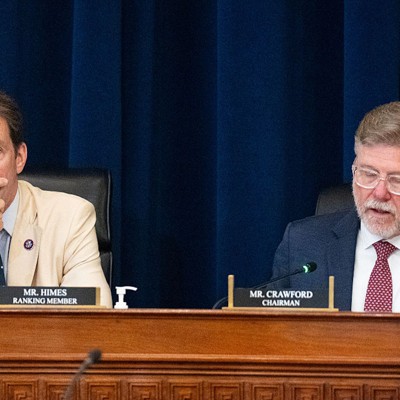
Former U.S. officials told the House Intelligence Committee that American agencies are not doing enough to protect the country’s advanced AI industry from Chinese espionage. At a hearing on emerging threats, they warned that China is using intelligence-gathering methods to steal proprietary U.S. AI technology and accelerate its military and economic development. Speakers argued that counterintelligence must be rethought because the key assets are increasingly held by private companies, not just the government.
Frank Cilluffo said foreign adversaries, especially China’s Ministry of State Security, are targeting frontier AI firms. He noted that access to U.S. AI research helps rivals avoid the time and cost of developing similar capabilities. The hearing also tied AI to broader national security risks, including cyberattacks, autonomous drones, and foreign influence operations.
H.R. McMaster said counterintelligence has lagged behind because U.S. resources were heavily focused on counterterrorism after Sept. 11, leaving China’s infiltration efforts less monitored. Ben Buchanan, a former White House AI adviser, said AI will also change how counterintelligence is conducted, including cyber operations and detection of human spies. He criticized recent easing of restrictions on advanced chip exports to China and urged stronger enforcement against smuggling.
Seth Jones added that many states lack the capacity to track Chinese spying. While the White House has taken steps to protect AI and quantum research, witnesses said there is still no dedicated counterintelligence framework for AI comparable to recent quantum directives.
Article timeline
Build this article’s timeline
Extract dated events, key actors, and open questions using the same timeline analysis available in Signal.
Log in to build
Timeline generation is available to signed-in community members.
Primary-source excerpts
Login to contribute excerpts from the source.
Five Ws
🤖 4 AI prefills · 1 still unanswered
Who
Frank Cilluffo, H.R. McMaster, Donald Trump, and House Intelligence Committee
What
Former U.S.
When
When did this happen, or what is the timeframe?
Where
United States and China
Why
Centers on proprietary American AI technology, counterintelligence, and foreign espionage
Login to answer and earn XP for each gap you fill.
AI Counterintelligence counterintelligence, espionage, foreign threats, proprietary AI, intelligence community National Security AI national security, cyberattacks, autonomous drones, foreign influence, intelligence hearing China Technology Competition China, technological gaps, chip exports, smuggling, structural advantage Quantum Protection Policy quantum computing, executive orders, FBI, research protection, foreign spying
Key Phrases:
proprietary American AI technology98% counterintelligence96% foreign espionage95% House Intelligence Committee92% distillation operations91% frontier model companies89% national security agencies87% advanced chip exports84% quantum technology directives82% cyber operations80%
Organizations: House Intelligence Committee2 United States intelligence community4 China's Ministry of State Security Auburn University McCrary Institute for Cyber and Critical Infrastructure White House3 United States AI companies Biden administration Trump administration Defense and Security Department
28
Manipulation Score: Low
How much this article uses emotional framing vs. straight reporting
Loaded Language
1825%
Absolutist
2215%
Threat/Panic
3525%
Us vs Them
2415%
Engagement Bait
2020%
Manipulation score look right?
Factual Claims (10)
medium
geopolitical
Former officials told the House Intelligence Committee that U.S. agencies have not kept pace with China’s push to obtain advanced American AI technology.
medium
geopolitical
The U.S. intelligence community needs more resources to protect American AI companies from foreign espionage.
high
geopolitical
China will use intelligence-gathering techniques to steal proprietary AI technology and advance military and economic goals.
low
social
The hearing focused on emerging threats to the U.S. in the 25 years since the Sept. 11, 2001 attacks.
medium
technology
AI is playing a growing role in cyberattacks, autonomous drones, and foreign influence operations.
high
geopolitical
U.S. officials have assessed that China has stolen proprietary national security information, including data on military aircraft.
high
technology
The White House and major U.S. AI companies have accused Chinese firms of conducting distillation operations using advanced American-made AI models.
medium
geopolitical
The counterintelligence threat has lagged behind and U.S. counterterrorism efforts after Sept. 11 drew resources away from tracking China.
low
social
Private companies are now broader counterintelligence targets.
medium
legal
The White House has not established a dedicated counterintelligence framework equivalent to the quantum technology directives.
Comments
Login to view and post comments.