In First, TRANSCOM Operationalized AI Agents to Support Epic Fury
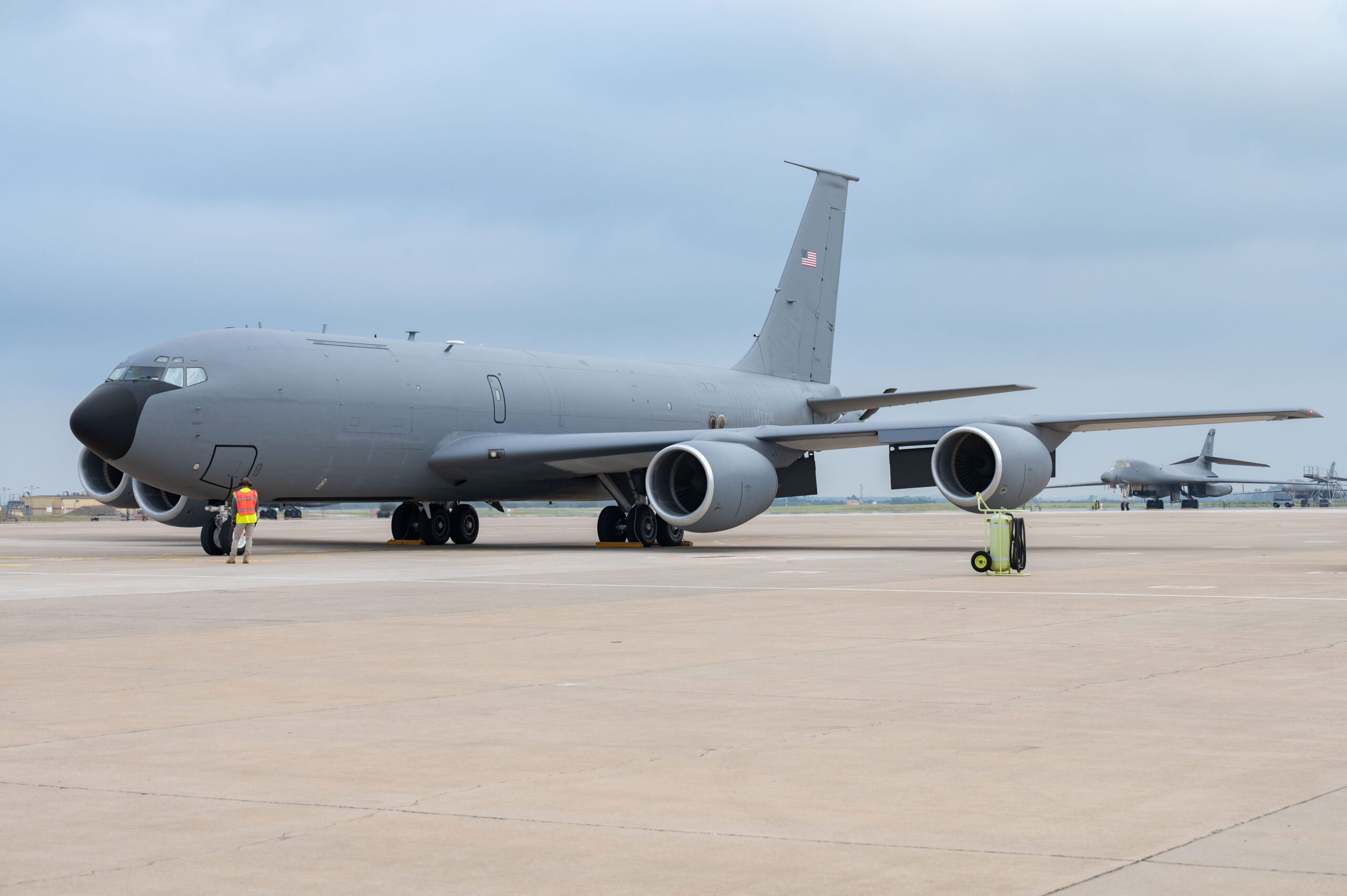
U.S. Transportation Command (TRANSCOM) used artificial intelligence agents in an operational first during Operation Epic Fury, after Spain abruptly closed its airspace and military bases to U.S. aircraft supporting strikes on Iran. The March decision forced more than a dozen KC-135 refuelers to leave Spain, where Morón Air Base and Naval Station Rota had been key logistics hubs for the buildup.
According to TRANSCOM chief data and AI officer Ryan Samuelson, planners quickly used AI tools to assess alternative airfields and calculate capacity constraints such as parking limits, ground handling, access, basing, and overflight restrictions. He said the AI produced an optimized picture in minutes or hours, a task that previously would have taken days. The goal was to determine where tankers could be moved and how much capacity existed across the region.
TRANSCOM Commander Gen. Randall Reed said AI is already changing how the command supports combat operations by providing options, predictive insights, and validation of long-standing modeling and exercises. The command currently uses the Defense Department’s War Data Platform and Palantir’s Maven Smart System to fuse data and forecast support needs for the Air Force and other services, sometimes weeks ahead.
Samuelson said this allows TRANSCOM to anticipate shortages in fuel, ammunition, and supplies and position assets before requests are made. The command is also using AI-driven dashboards to flag drops in aircraft mission-capable rates and to predict maintenance needs over the next three weeks. Overall, TRANSCOM leaders described recent AI and machine-learning tools as major game-changers for military logistics and mobility operations.
Article timeline
Build this article’s timeline
Extract dated events, key actors, and open questions using the same timeline analysis available in Signal.
Log in to build
Timeline generation is available to signed-in community members.
Primary-source excerpts
Login to contribute excerpts from the source.
Five Ws
🤖 4 AI prefills · 1 still unanswered
Who
Ryan Samuelson, Randall Reed, Eve Daugherty, and U.S. Air Force
What
U.S.
When
When did this happen, or what is the timeframe?
Where
Scott Air Force Base, Spain, and Morón Air Base
Why
Centers on artificial intelligence agents, Operation Epic Fury, and U.S. Transportation Command
Login to answer and earn XP for each gap you fill.
AI Logistics Planning AI agents, TRANSCOM, airfields, capacity, constraints Operation Epic Fury Epic Fury, Iran, Spain, Morón, Rota Predictive Data Analytics War Data Platform, Maven Smart System, predictive, prescriptive, analytics Readiness Maintenance Monitoring mission capable, maintenance, alerts, aircraft, predictive maintenance
Key Phrases:
artificial intelligence agents98% Operation Epic Fury97% U.S. Transportation Command95% War Data Platform91% Maven Smart System90% predictive analytics89% prescriptive analytics87% airspace closure84% basing and overflight constraints83% KC-135 refuelers82%
Organizations: U.S. Air Force3 Air Force Association2 U.S. Transportation Command2 TRANSCOM6 Air & Space Forces Magazine2 Defense Department Palantir Joint Distribution Process Analysis Center Air Mobility Command United States2
8
Manipulation Score: Low
How much this article uses emotional framing vs. straight reporting
Loaded Language
525%
Absolutist
615%
Threat/Panic
1025%
Us vs Them
215%
Engagement Bait
820%
Manipulation score look right?
Factual Claims (10)
medium
technology
TRANSCOM operationalized AI agents in an operational first to support Epic Fury.
medium
geopolitical
Spain closed its airspace and bases to U.S. aircraft supporting strikes on Iran in March.
medium
geopolitical
Spain's March 2 announcement came three days into Operation Epic Fury.
medium
military
The U.S. used Morón Air Base and Naval Station Rota as key logistical hubs for the buildup to Epic Fury.
medium
military
More than a dozen KC-135 refuelers had to leave Spain after the Spanish government's decision.
medium
technology
AI agents were used to evaluate available airfields in the region after Spain's closure.
medium
technology
TRANSCOM used AI tools to assess capacity, basing, and overflight constraints across airfields.
medium
technology
The command relies on the Defense Department's War Data Platform and Palantir's Maven Smart System.
medium
technology
AI and predictive analytics can forecast battlefield support needs weeks into the future.
low
technology
Dashboard alerts notify leaders when aircraft mission capable rates drop by more than 5 percent.
Comments
Login to view and post comments.