news
Space
1st-ever X-rays in space offer hope for possible patients headed to the moon
A miniature portable X-ray machine has been successfully tested in space, marking a major step forward for astronaut healthcare and remote medical imaging on Earth. For most of the Space Age, astronauts have relied mainly on ultrasound to assess injuries, since traditional X-ray systems are too large, power-hungry, fragile, and difficult to use in microgravity. But advances in compact, off-the-shelf portable X-ray technology have now made in-orbit radiography feasible.
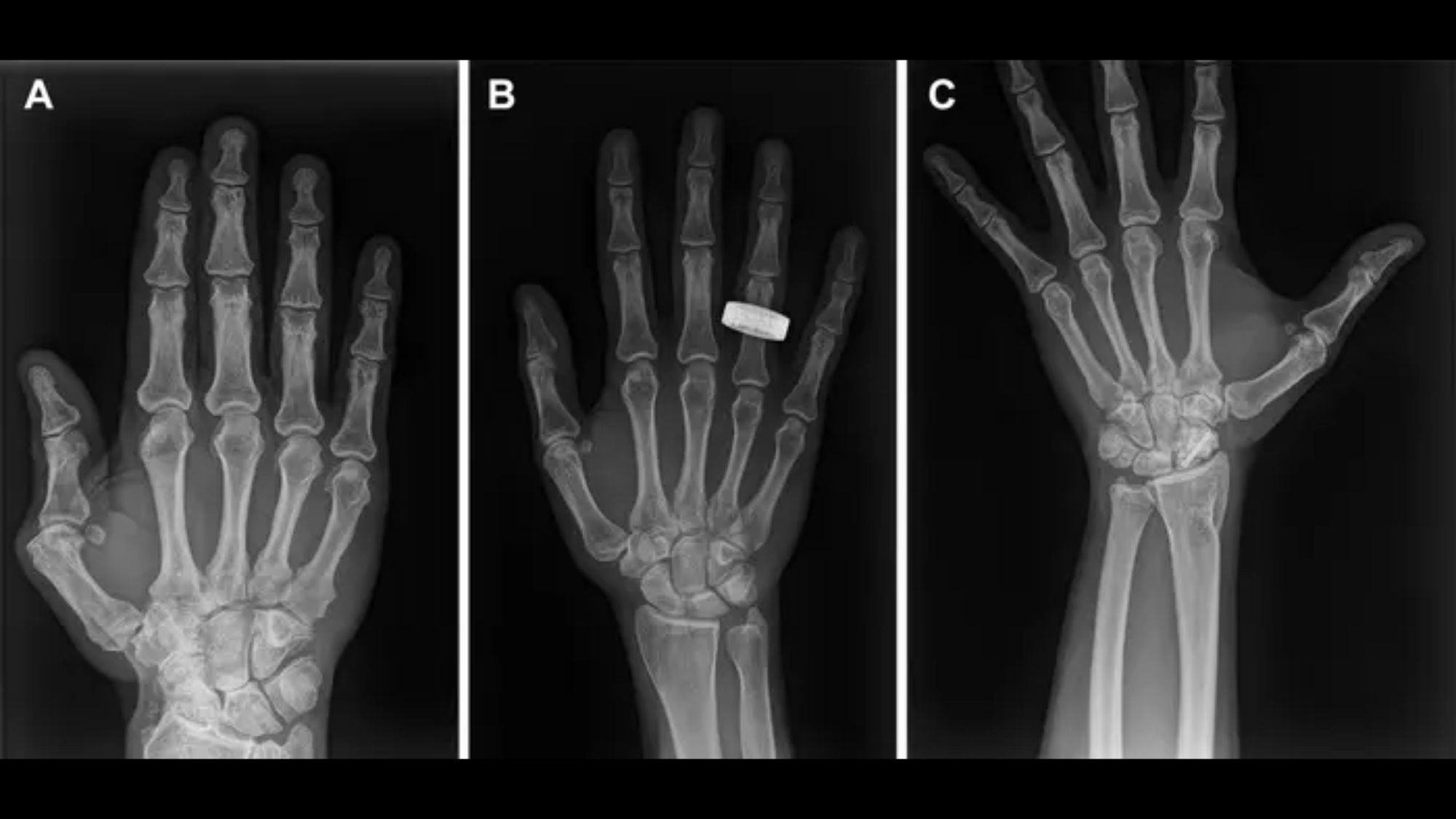
The test was led by Sheyna Gifford, a medical doctor and aerospace medicine researcher at Mayo Clinic. The team first simulated space use during a 2022 parabolic flight, then carried out the real experiment during the private Fram2 mission launched on March 31, 2025. Four first-time astronauts, trained for only four hours and with no medical background, used the device in orbit to image a smartwatch, hand, abdomen, pelvis, and chest. The digital images were reviewed immediately.
After the mission, three independent medical experts compared the space-based images with preflight X-rays. They found the in-orbit images were lower quality than those taken on the ground, but still good enough to diagnose injuries such as fractures. The device survived launch and reentry with only minor exterior damage, and crew members reported it was easy to use, though they suggested it should be better secured in the cabin.
Researchers say the technology could help diagnose injuries in future space missions, inspect equipment, and even support lunar exploration. On Earth, compact X-ray systems could improve care in rural, low-resource, and emergency settings. The findings were published July 14 in the journal *Radiology*.
Article timeline
Build this article’s timeline
Extract dated events, key actors, and open questions using the same timeline analysis available in Signal.
Log in to build
Timeline generation is available to signed-in community members.
Primary-source excerpts
Login to contribute excerpts from the source.
Five Ws
🤖 4 AI prefills · 1 still unanswered
Who
Sheyna Gifford, Mayo Clinic, SpaceX, and Radiological Society of North America
What
A miniature portable X-ray machine has been successfully tested in space, marking a major step forward for astronaut healthcare and remote medical imaging on Earth.
When
When did this happen, or what is the timeframe?
Where
Earth, moon, and Rochester, Minnesota
Why
Centers on portable X-ray machine, in-orbit radiography, and Fram2 mission
Login to answer and earn XP for each gap you fill.
Space Medical Imaging portable X-ray, astronauts, in-orbit radiography, microgravity, diagnose injuries Fram2 Mission Test Fram2, SpaceX Crew Dragon, orbit, first-time astronauts, training Device Performance Evaluation image quality, surviving launch, ruggedness, minimal damage, operational Earth Medical Access rural areas, remote rescue, low-resource, small towns, villages
Key Phrases:
portable X-ray machine99% in-orbit radiography96% Fram2 mission95% Crew Dragon91% microgravity90% astronaut health89% diagnostic capabilities86% parabolic flight84% lunar outpost82% digital images80%
People: Sheyna Gifford4
8
Manipulation Score: Low
How much this article uses emotional framing vs. straight reporting
Loaded Language
625%
Absolutist
515%
Threat/Panic
325%
Us vs Them
215%
Engagement Bait
2520%
Manipulation score look right?
Factual Claims (10)
medium
technology
A miniature portable X-ray machine successfully tested in orbit could improve astronauts' health prospects.
medium
technology
Astronauts have historically only had access to ultrasound machines for diagnosing injuries in space.
low
scientific
X-rays can be used in a vacuum, unlike ultrasound.
low
technology
Portable X-ray machines are now commonplace on Earth.
medium
technology
A parabolic flight in 2022 was used to simulate microgravity and test taking an X-ray in space-like conditions.
medium
space
The Fram2 mission launched on March 31, 2025, carrying four first-time astronauts on a 3.5-day orbit around Earth.
medium
technology
The astronauts received four hours of training on the portable X-ray device before launch.
medium
technology
In-orbit X-rays of a smartwatch, hand, abdomen, pelvis, and chest were taken and recorded digitally.
medium
health
Independent medical experts found the space-based X-rays were good enough to diagnose injuries such as broken bones.
low
other
The findings were reported on July 14 in the journal Radiology.
Comments
Login to view and post comments.