news
The Economic Times
How did Iran detect an ‘invisible’ F-35? Viral video points to a passive tracking system - The Economic Times
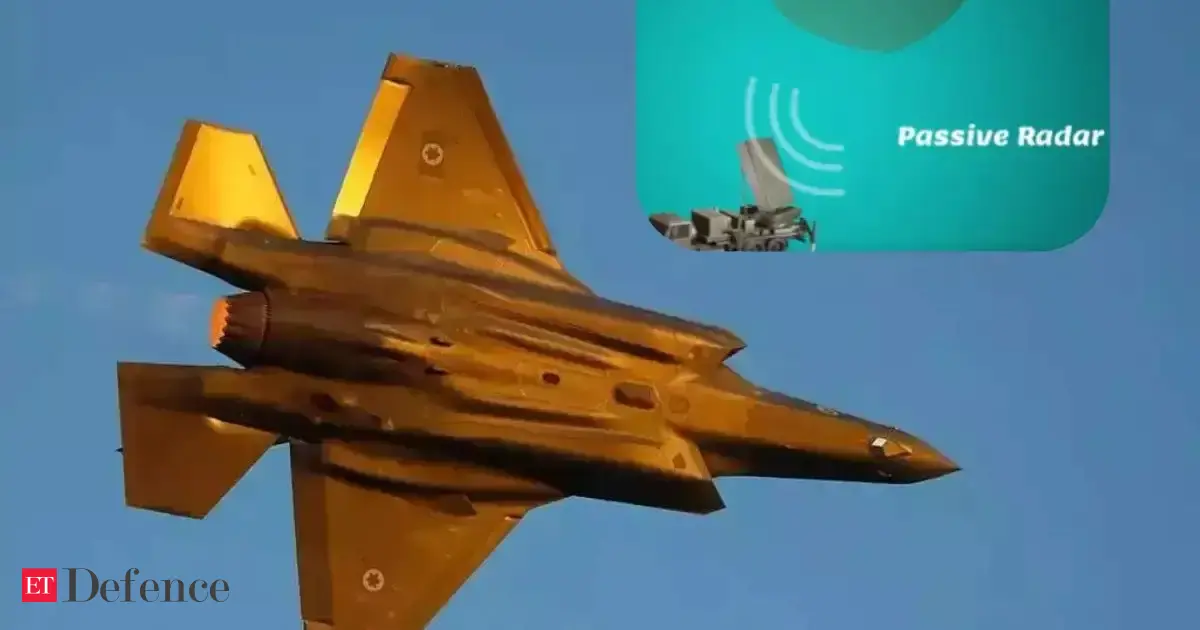
A viral 44-second animated clip has sparked debate over how Iran may have detected a US F-35 stealth fighter, a jet designed to evade radar. The video suggests Iran could have used passive infrared sensors, which do not emit signals like radar but instead detect heat signatures, especially from aircraft engines. Because these systems remain silent, the aircraft may not receive warning alerts, making them harder to notice even if they are being tracked.
The story gained attention after Iran’s Islamic Revolutionary Guard Corps (IRGC) claimed it struck a US F-35 in central Iran’s airspace early Thursday using “advanced, modern air defense systems.” The IRGC said the fate of the aircraft was unclear and suggested it may have crashed. Iranian media also reported targeting an F-16 and released an image of smoke in the sky, though details were limited.
US officials offered a more cautious account. They confirmed an F-35 was involved in an incident and made an emergency landing in the Middle East after being hit, but said the pilot was safe and the case was under investigation.
The F-35 matters because it is one of the most advanced and expensive fighter jets in the world, costing over $100 million each. If Iran’s claim is verified, it could be the first known combat hit on an F-35, a major development in modern air warfare.
Article timeline
Build this article’s timeline
Extract dated events, key actors, and open questions using the same timeline analysis available in Signal.
Log in to build
Timeline generation is available to signed-in community members.
Primary-source excerpts
Login to contribute excerpts from the source.
Five Ws
🤖 2 AI prefills · 3 still unanswered
Who
Who are the key actors in this story?
What
A viral 44-second animated clip has sparked debate over how Iran may have detected a US F-35 stealth fighter, a jet designed to evade radar.
When
When did this happen, or what is the timeframe?
Where
Where did this occur?
Why
Centers on passive infrared sensors, F-35 stealth fighter, and heat signatures
Login to answer and earn XP for each gap you fill.
F-35 Detection Theory F-35, passive infrared, heat signatures, stealth fighter, radar Iran Military Claims Iran, IRGC, strike, airspace, F-16 US Response Incident US defence officials, emergency landing, combat mission, pilot, investigation F-35 Strategic Importance F-35 Lightning II, advanced fighter, expensive, US air power, combat
Key Phrases:
passive infrared sensors98% F-35 stealth fighter97% heat signatures92% air defense systems90% IRGC89% Iran's Revolutionary Guards88% emergency landing84% stealth fighter jet83% radar systems81% jet engines77%
41
Manipulation Score: Medium
How much this article uses emotional framing vs. straight reporting
Loaded Language
3425%
Absolutist
2215%
Threat/Panic
3125%
Us vs Them
1815%
Engagement Bait
8220%
Manipulation score look right?
Factual Claims (10)
medium
technology
Iran may have detected a US F-35 using passive infrared sensors that track heat signatures instead of radar.
high
military
Iran claims it struck a US F-35 inside central Iran's airspace early Thursday.
high
military
The IRGC said the F-35 was targeted at 2:50 a.m. local time using advanced air defense systems.
high
military
The US confirmed an F-35 incident that required an emergency landing in the Middle East.
medium
military
The pilot landed safely and was in stable condition, according to a US defense official.
low
economic
The F-35 costs more than $100 million per unit.
medium
geopolitical
More than 19 countries either operate or plan to operate the F-35.
high
military
If verified, this would be the first known instance of a US F-35 being successfully targeted in combat.
high
military
Iran claimed it had earlier downed over 125 US-Israeli drones.
high
military
Three F-15 Eagle aircraft were accidentally shot down, though all crew members ejected safely.
Comments
Login to view and post comments.