news
Tom's Hardware
Japan is deploying ultra-cheap cardboard drones built for swarm warfare and expendable combat missions — $2,000 expendable combat drones cost less than some gaming PCs | Tom's Hardware
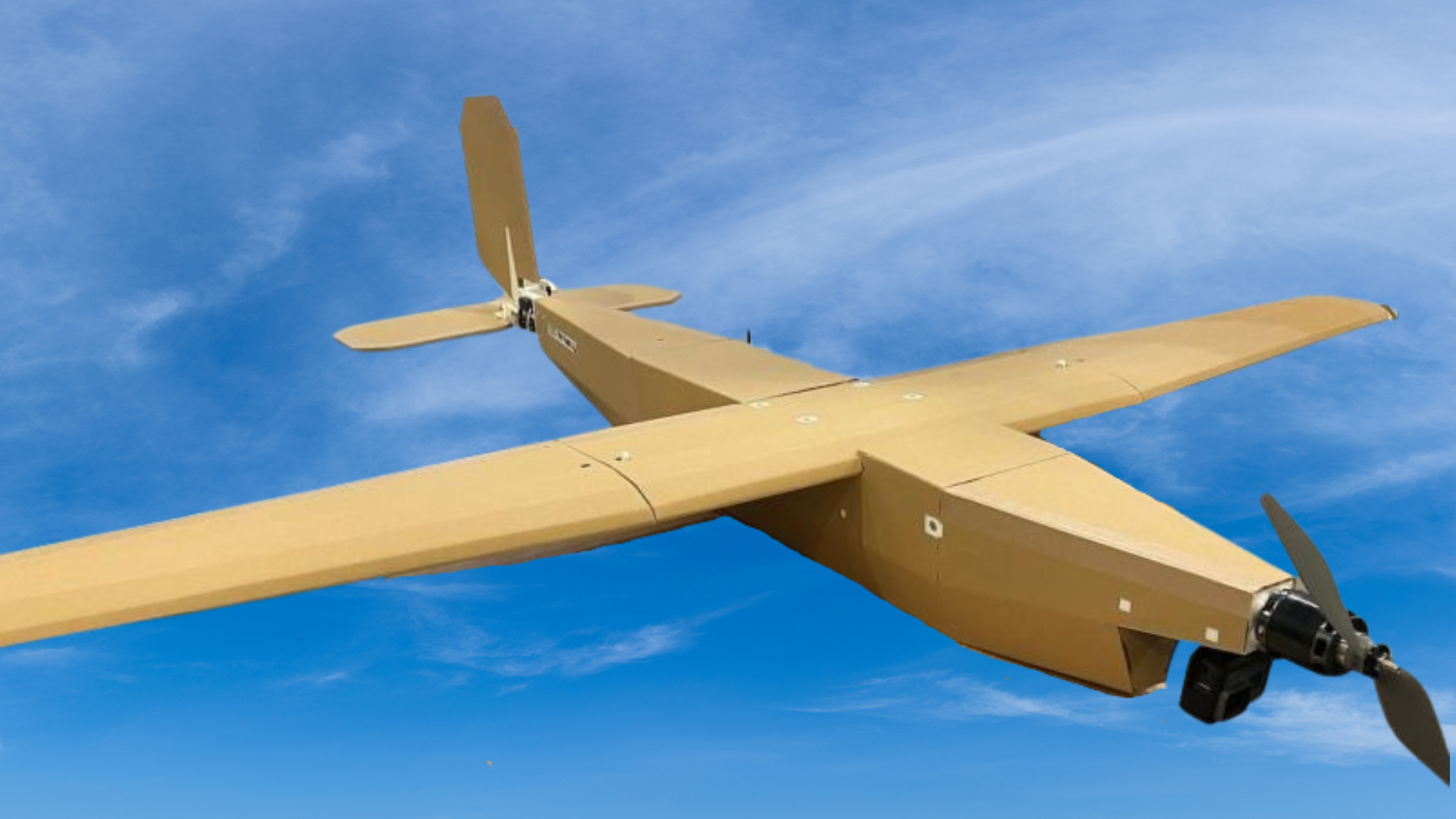
Japan has begun deploying ultra-low-cost expendable drones built by startup AirKamuy, signaling a shift toward swarm-based warfare and mass-produced unmanned systems. Defense Minister Shinjirō Koizumi said the Japan Maritime Self-Defense Force is already using the company’s AirKamuy 150 drones as aerial targets, with broader military applications under consideration.
The AirKamuy 150 is a lightweight fixed-wing drone made primarily from corrugated cardboard with a water-resistant coating, rather than expensive aerospace composites. This design keeps costs extremely low: each unit reportedly costs about $2,000 to $2,500, far below many military drones and even cheaper than some consumer gaming PCs. By comparison, Iranian Shahed drones are estimated at $20,000 to $50,000 each.
Despite its low price, the drone offers practical capabilities. It can fly about 50 miles, stay airborne for roughly 80 minutes, and carry payloads of up to three pounds. It is electric-powered, ships flat-packed, and can be assembled in five to ten minutes, with up to 500 units fitting in a standard shipping container.
AirKamuy says the drone could be mass-produced using ordinary cardboard manufacturing infrastructure, making it suitable for rapid wartime production. The company envisions uses such as counter-drone operations, swarm attacks, decoys, reconnaissance, electronic warfare, and one-way strike missions. Its lower radar reflectivity may also make it harder to detect. Overall, the AirKamuy 150 reflects a broader military trend toward cheap, expendable drones designed for large-scale attritional warfare.
Article timeline
Build this article’s timeline
Extract dated events, key actors, and open questions using the same timeline analysis available in Signal.
Log in to build
Timeline generation is available to signed-in community members.
Primary-source excerpts
Login to contribute excerpts from the source.
Five Ws
🤖 5 AI prefills · all filled
Who
Shinjirō Koizumi, Naoki Morita, Yamaguchi Takumi, and Japan Maritime Self-Defense Force
What
Japan has begun deploying ultra-low-cost expendable drones built by startup AirKamuy, signaling a shift toward swarm-based warfare and mass-produced unmanned systems.
When
April 27, 2026
Where
Japan, Iran, and Ukraine
Why
Centers on AirKamuy 150, cardboard drones, and swarm warfare
Login to answer and earn XP for each gap you fill.
Cardboard Drone Design cardboard, AirKamuy 150, fixed-wing, water-resistant coating, flat-packed Low-Cost Swarm Warfare swarm warfare, expendable, one-way attack, decoy, counter-drone Military Procurement Strategy Japan, Defense Minister, Maritime Self-Defense Force, startup, unmanned systems Radar Signature Advantages radar reflectivity, detectability, smaller radar signature, low-flying, tracking Modern Drone Warfare Ukraine, Middle East, low-cost drones, reconnaissance, attack missions
Key Phrases:
AirKamuy 150100% cardboard drones98% swarm warfare93% expendable combat missions90% low-cost drones89% mass production86% counter-drone system84% unmanned systems82% electronic warfare equipment80% radar signature78%
Organizations: Japan Maritime Self-Defense Force AirKamuy5 Royal Aeronautical Society NHK World-Japan
24
Manipulation Score: Low
How much this article uses emotional framing vs. straight reporting
Loaded Language
1825%
Absolutist
1215%
Threat/Panic
2225%
Us vs Them
815%
Engagement Bait
3520%
Manipulation score look right?
Factual Claims (10)
medium
military
Japan has begun using expendable cardboard drones developed by AirKamuy.
medium
military
The Japan Maritime Self-Defense Force is already using the drones as aerial targets.
medium
technology
The AirKamuy 150 is built primarily from corrugated cardboard with a water-resistant coating.
medium
economic
The AirKamuy 150 costs around $2,000 to $2,500 per unit.
medium
technology
The drone can travel roughly 50 miles or stay airborne for around 80 minutes.
medium
technology
It can carry payloads weighing up to three pounds.
medium
technology
The drones are prefab, can be assembled in five to ten minutes, and about 500 units fit in a standard shipping container.
medium
military
AirKamuy says the platform was primarily envisioned as a counter-drone system operating in large numbers.
high
military
The company says the drones could be used to overwhelm air defenses, force radar activation, or carry reconnaissance, EW, or limited munitions.
medium
technology
Cardboard may provide a smaller radar signature than many conventional aerospace materials under certain conditions.
Comments
Login to view and post comments.