news
DefenseScoop
Army’s 82nd Airborne Division supplying AI, C2 network support for Project Freedom | DefenseScoop
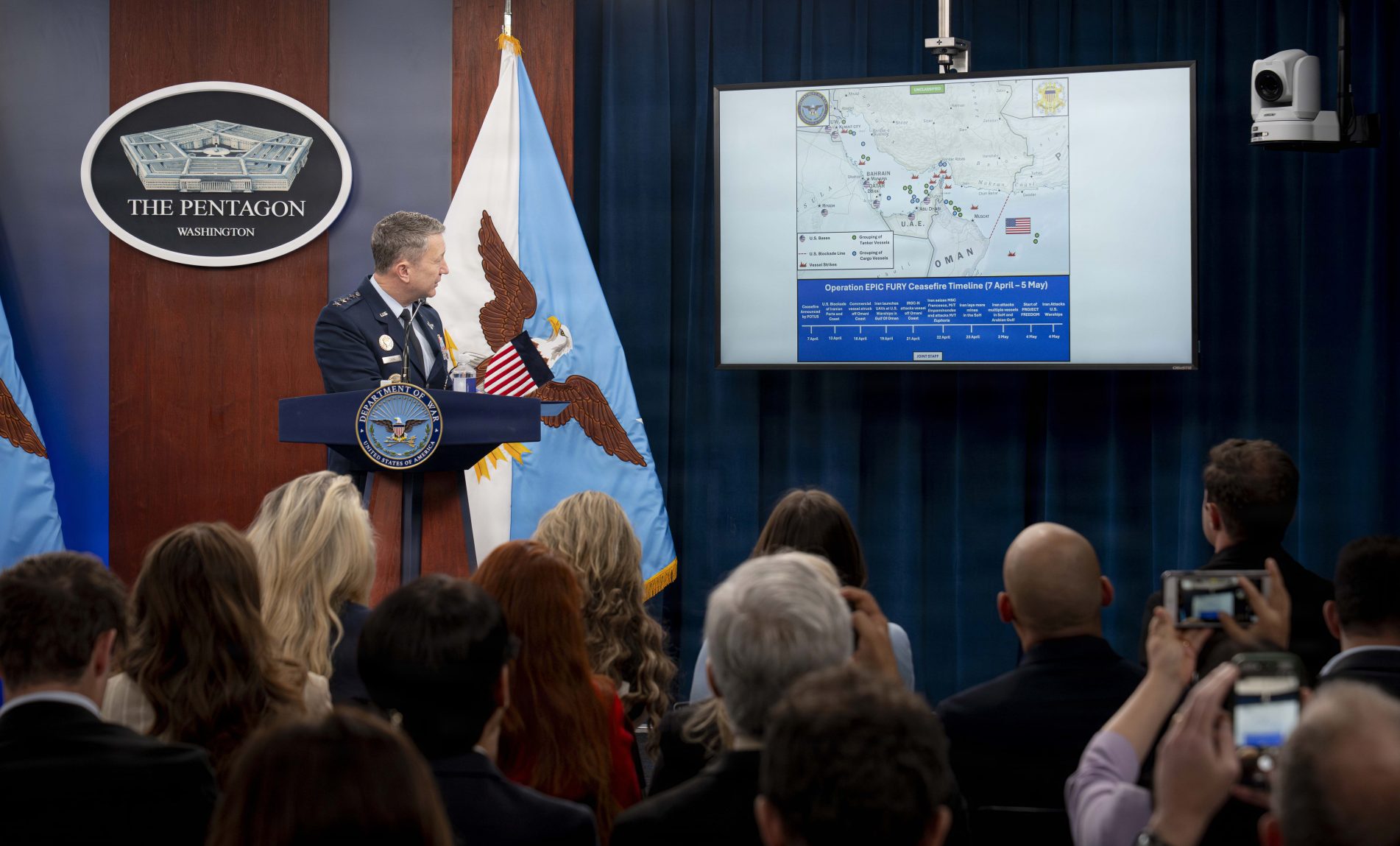
The U.S. military is using an AI-enabled, joint command-and-control network to support “Project Freedom,” a campaign aimed at restoring commercial shipping through the Strait of Hormuz and countering threats from Iran. According to Gen. Dan Caine, chairman of the Joint Chiefs of Staff, the effort combines sensors, surveillance systems, manned and unmanned aircraft, ships, and cyber capabilities into a real-time architecture that gives U.S. forces continuous awareness and localized control in the area.
Caine said the Army’s 82nd Airborne Division is serving as a command-and-control hub, coordinating land, air, sea, space, and cyber forces through next-generation tactical networks. He emphasized that the division is now doing more than traditional airborne assault missions, using AI-enabled systems to help synchronize operations and support decision-making.
Defense Secretary Pete Hegseth said the ceasefire with Iran remains in effect, but warned Tehran not to escalate. He also distinguished Project Freedom from Operation Epic Fury and from a separate U.S. blockade in the Gulf of Oman. Hegseth said U.S. Central Command and partner nations are communicating with hundreds of ships, shipping companies, and insurers to reopen the strait.
Caine reported that more than 22,500 mariners aboard over 1,550 commercial vessels are currently stuck in the Arabian Gulf. CENTCOM has created an enhanced security area near the strait, protected by U.S. land, naval, and air assets, while more than 100 fighter jets and other platforms are being coordinated to defend against drones, small boats, and other Iranian threats.
Article timeline
Build this article’s timeline
Extract dated events, key actors, and open questions using the same timeline analysis available in Signal.
Log in to build
Timeline generation is available to signed-in community members.
Primary-source excerpts
Login to contribute excerpts from the source.
Five Ws
🤖 4 AI prefills · 1 still unanswered
Who
Dan Caine, Pete Hegseth, Donald Trump, and United States military
What
The U.S.
When
When did this happen, or what is the timeframe?
Where
Strait of Hormuz, Pentagon, and Gulf of Oman
Why
Centers on Project Freedom, Strait of Hormuz, and 82nd Airborne Division
Login to answer and earn XP for each gap you fill.
Project Freedom Operations Project Freedom, Strait of Hormuz, shipping, commercial vessels, overwatch AI Command Networks AI-enabled, command and control, C2, tactical networks, joint all-domain 82nd Airborne Role 82nd Airborne Division, C2 hub, paratroopers, joint force, coordination Threat Defense Measures fighter jets, drones, small boats, security area, destroyers
Key Phrases:
Project Freedom100% Strait of Hormuz99% 82nd Airborne Division98% command and control architecture96% AI-enabled tactical networks94% joint all-domain command and control93% enhanced security area90% commercial shipping89% Iranian aggression88% surveillance platforms84%
Organizations: United States military Defense Department Joint Chiefs of Staff Pentagon2 Army3 82nd Airborne Division5 United States4 Iran8 U.S. Central Command3 CENTCOM2
52
Manipulation Score: Medium
How much this article uses emotional framing vs. straight reporting
Loaded Language
4625%
Absolutist
3815%
Threat/Panic
6125%
Us vs Them
4415%
Engagement Bait
7020%
Manipulation score look right?
Factual Claims (10)
medium
military
The U.S. military is fusing sensors, surveillance platforms, and manned/unmanned craft into an AI-enabled C2 architecture for Project Freedom.
medium
military
Gen. Dan Caine said the 82nd Airborne Division is operating as a C2 hub coordinating drones, fighters, ships, and sensors in real time.
medium
technology
The 82nd Airborne is using next-generation tactical networks that are AI-enabled to support Project Freedom.
high
geopolitical
Most transits across the Strait of Hormuz have been held up due to attacks and threats from Iran.
high
geopolitical
President Donald Trump initiated Operation Epic Fury to target Iran's leadership, nuclear infrastructure, and weapons arsenals.
high
geopolitical
The U.S. and Iran agreed to a temporary pause in major combat last month to allow negotiations to end the war.
medium
geopolitical
Project Freedom is separate and distinct from Epic Fury and the blockade in the Gulf of Oman.
medium
economic
CENTCOM is communicating with hundreds of ships, shipping companies, and insurers about reopening the strait.
high
economic
There are 22,500 mariners on more than 1,550 commercial vessels trapped in the Arabian Gulf.
medium
military
More than 100 fighter jets, attack aircraft, and other assets are being synchronized to defend the enhanced security area.
Comments
Login to view and post comments.