news
The War Zone
New Nuclear Bunker Buster Bomb Plans Revealed (Updated)
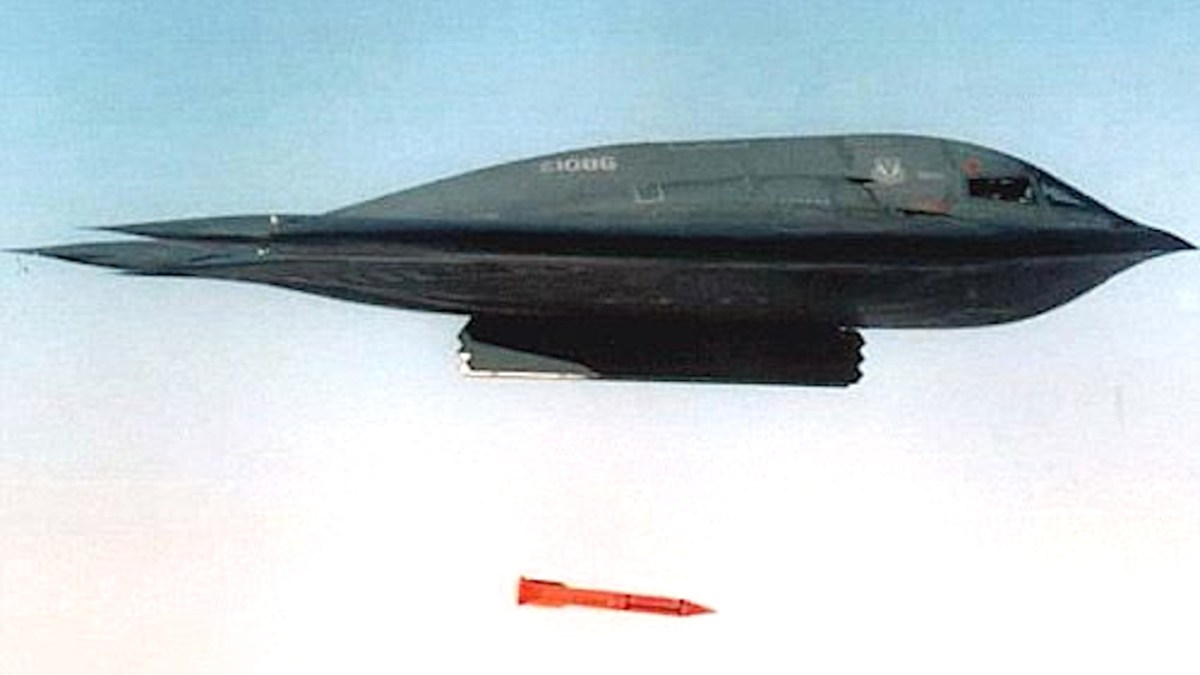
The U.S. Department of Energy is requesting nearly $100 million in its FY2027 budget to begin work on a new air-delivered nuclear bunker-buster weapon called the Nuclear Deterrent System-Air-delivered (NDS-A). The funding would launch a new Phase 6.X program and support related rapid capability projects. While details remain classified or undisclosed, the new weapon is intended to give the president additional options against hardened and deeply buried targets.
At present, the only specialized air-delivered nuclear penetrator in the U.S. stockpile is the B61-11 gravity bomb, a modified version of the B61-7 with a reinforced casing and penetrating design. It is believed to have a yield of roughly 340 to 400 kilotons, though exact figures are classified. For years, officials considered replacing it with the more accurate but lower-yield B61-12, but that plan was dropped. The newer B61-13, while more powerful than the B61-12, is not considered a direct replacement for the B61-11.
The push for a successor likely reflects growing concern over the spread of deeply buried military and nuclear facilities in countries such as Russia, China, North Korea, and Iran. These hardened targets are difficult to destroy with conventional weapons alone. The issue has gained urgency after U.S. strikes on Iranian nuclear sites highlighted the limits of conventional bunker-busting bombs. The NDS-A could eventually address those gaps, but it remains unclear whether it will be a bomb, missile-assisted weapon, or based on an existing design.
Article timeline
Build this article’s timeline
Extract dated events, key actors, and open questions using the same timeline analysis available in Signal.
Log in to build
Timeline generation is available to signed-in community members.
Primary-source excerpts
Login to contribute excerpts from the source.
Five Ws
🤖 2 AI prefills · 3 still unanswered
Who
Who are the key actors in this story?
What
The U.S.
When
When did this happen, or what is the timeframe?
Where
Where did this occur?
Why
Centers on Nuclear Deterrent System-Air-delivered, B61-11 gravity bomb, and deep-penetrating nuclear weapon
Login to answer and earn XP for each gap you fill.
Nuclear Weapon Funding Department of Energy, budget request, NNSA, Future Programs, Phase 6.X Bunker Buster Design B61-11, deep-penetrating, bunker buster, air-delivered, penetrating nose Nuclear Bomb Successors B61-12, B61-13, B83-1, replacement, precision guidance Hardened Target Threats deeply buried targets, Russia, China, North Korea, Iran Iran Strike Context Fordow, Natanz, GBU-57/B, Operation Midnight Hammer, B-2 bomber
Key Phrases:
Nuclear Deterrent System-Air-delivered100% B61-11 gravity bomb98% deep-penetrating nuclear weapon96% Phase 6.X process90% hard and deeply buried targets93% National Nuclear Security Administration89% Robust Nuclear Earth Penetrator87% B61-13 variant84% B83-1 nuclear gravity bombs82% Kosvinsky Kamen80%
29
Manipulation Score: Low
How much this article uses emotional framing vs. straight reporting
Loaded Language
1825%
Absolutist
2215%
Threat/Panic
3425%
Us vs Them
1615%
Engagement Bait
5520%
Manipulation score look right?
Factual Claims (10)
medium
economic
The Department of Energy is seeking $99.794 million for work on a new bunker-busting nuclear weapon called NDS-A.
medium
military
The U.S. stockpile currently has only one specialized air-delivered deep-penetrating nuclear weapon: the B61-11.
low
economic
The FY2027 DOE budget includes a new line for Future Programs under Weapons Activities.
medium
technology
NDS-A is described as a Phase 1 Nuclear Deterrent System-Air-delivered program within the Phase 6.X process.
medium
military
The B61-11 is based on the earlier B61-7 and is designed for deeply buried targets.
medium
military
The B61-11 yield is classified, but sources estimate it at roughly 340-400 kilotons.
medium
military
There are reportedly fewer than 100 B61-11 bombs in the stockpile.
medium
military
The B61-12 was once considered as a successor to the B61-11 but that plan was abandoned.
medium
military
The B61-13 was developed to provide additional options against harder and large-area military targets.
high
military
During Operation Midnight Hammer in June 2025, U.S. B-2 bombers struck Iranian nuclear sites with GBU-57/B bunker buster bombs.
Comments
Login to view and post comments.