news
The War Zone
LUCAS Kamikaze Drones Lauded As "Indispensable" By U.S. Admiral In Charge Of Iran War
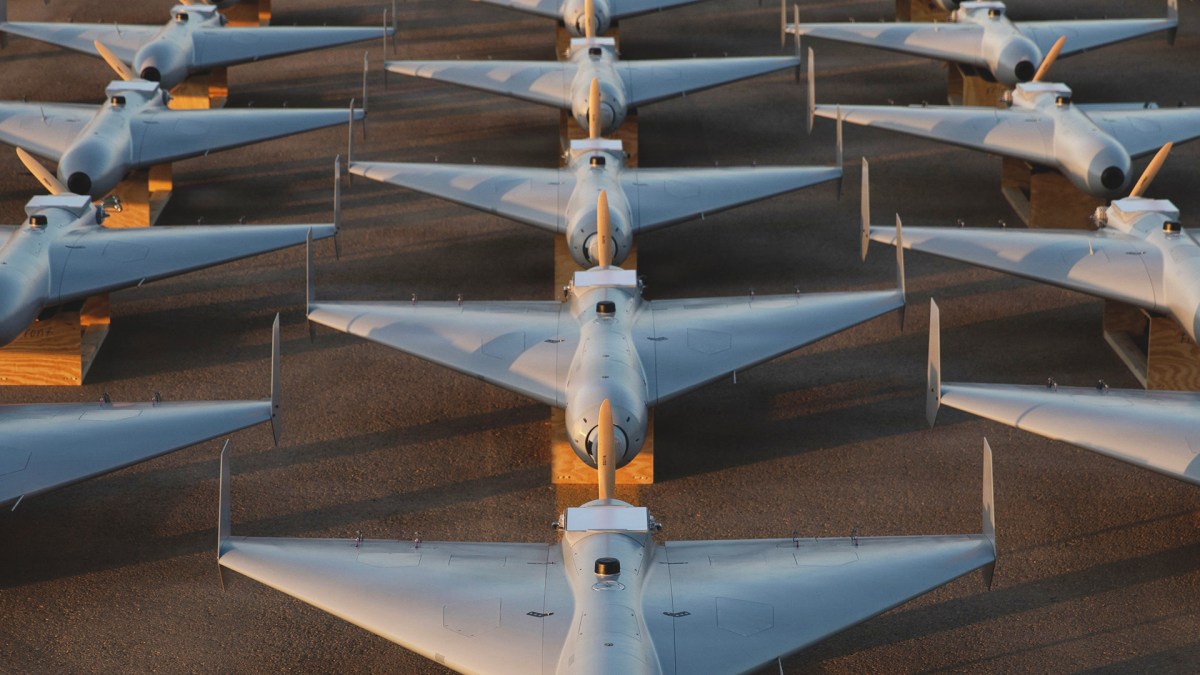
U.S. Central Command commander Adm. Brad Cooper praised the Low-Cost Uncrewed Combat Attack System (LUCAS), a U.S.-made kamikaze drone modeled on Iran’s Shahed-136, calling it “indispensable” during the ongoing Operation Epic Fury against Iran. The drones were used in combat for the first time only days earlier and have since been fired repeatedly at Iranian targets. Cooper said LUCAS helps preserve U.S. missile stockpiles because it is far cheaper and easier to produce than traditional long-range strike weapons such as Tomahawk cruise missiles or air-launched cruise missiles, which can cost well over $1 million each. By contrast, CENTCOM previously described LUCAS as costing about $35,000 per platform.
The drone is designed for long-range, beyond-line-of-sight operations and can support autonomous coordination, swarm tactics, and networked strikes. Some versions may use Starlink terminals, enabling advanced cooperative targeting while keeping humans in the loop. Cooper also emphasized that the U.S. adapted the Iranian design by recovering one, reverse-engineering it, and producing an American version for use against Iran.
The discussion came amid broader concerns about U.S. stockpile depth during a prolonged conflict. While Defense Secretary Pete Hegseth insisted there is “no shortage of munitions,” Cooper acknowledged the military is trying to move past the old cost imbalance of using expensive interceptors against cheap drones. He said the U.S. is now increasingly using lower-cost weapons to counter drone threats, and that more LUCAS drones can be built quickly if needed.
Article timeline
Build this article’s timeline
Extract dated events, key actors, and open questions using the same timeline analysis available in Signal.
Log in to build
Timeline generation is available to signed-in community members.
Primary-source excerpts
Login to contribute excerpts from the source.
Five Ws
🤖 2 AI prefills · 3 still unanswered
Who
Who are the key actors in this story?
What
U.S.
When
When did this happen, or what is the timeframe?
Where
Where did this occur?
Why
Centers on Low-Cost Uncrewed Combat Attack System, LUCAS kamikaze drone, and Operation Epic Fury
Login to answer and earn XP for each gap you fill.
LUCAS Drone Combat LUCAS, Shahed-136, kamikaze drone, one-way attack, CENTCOM Cost-Effective Munitions low-cost, magazine depth, Tomahawk, cruise missile, production Iran Conflict Operations Iran, missile barrages, drone attacks, launchers, defensive strikes Air Defense Procurement Patriot, interceptors, Shahed interceptors, defense, Gulf allies
Key Phrases:
Low-Cost Uncrewed Combat Attack System100% LUCAS kamikaze drone99% Operation Epic Fury97% Shahed-13696% CENTCOM92% swarm tactics89% network-centric strikes87% magazine depth84% beyond-line-of-sight satellite datalink83% one-way attack drones82%
41
Manipulation Score: Medium
How much this article uses emotional framing vs. straight reporting
Loaded Language
2825%
Absolutist
3415%
Threat/Panic
3925%
Us vs Them
1815%
Engagement Bait
6720%
Manipulation score look right?
Factual Claims (10)
medium
military
Adm. Brad Cooper said LUCAS drones are "indispensable" in the campaign against Iran.
medium
military
LUCAS drones are based on the Iranian Shahed-136 design.
high
military
The drones were used in combat for the first time six days before the article.
high
military
The drones were fired against unspecified Iranian targets in the opening salvos of Operation Epic Fury.
medium
economic
A LUCAS platform costs approximately $35,000.
medium
economic
Tomahawk cruise missiles cost roughly $2 million to $2.5 million each.
medium
economic
Air-launched cruise missiles in service cost over $1 million each.
medium
technology
LUCAS has extensive range and can operate beyond line of sight.
high
technology
LUCAS includes autonomous coordination features suitable for swarm tactics and network-centric strikes.
high
military
Iran still possesses thousands of missiles and drones despite six days of attacks.
Comments
Login to view and post comments.