justinmc.substack.com
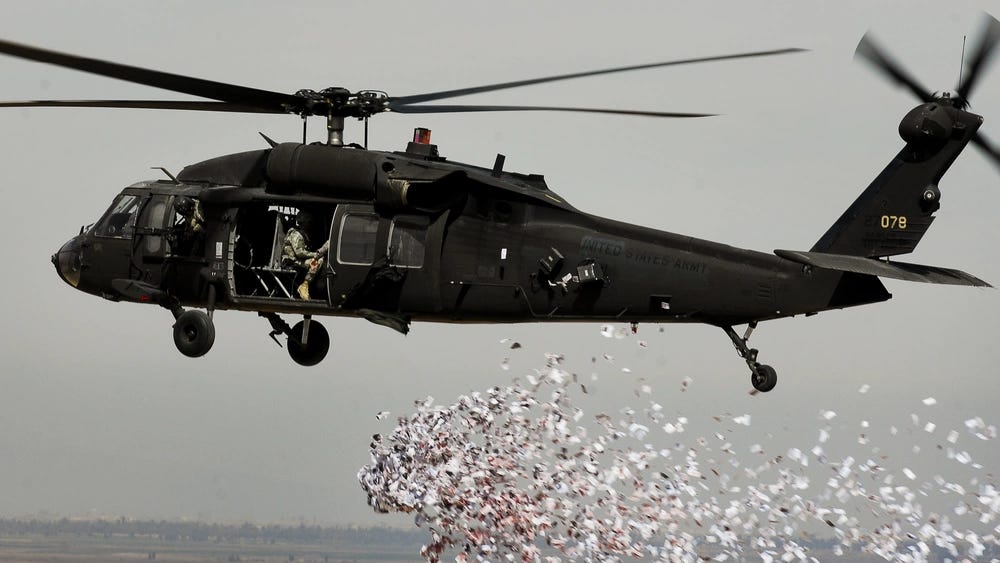
The article argues that messaging is a major strategic weakness for the United States, especially in war and foreign policy. It opens with a story from Iraq in 2007, when U.S. psychological operations dropped one million leaflets telling villagers to “clean up your litter” and “keep Iraq beautiful,” illustrating how poorly aligned messaging can be ineffective or even absurd.
The author says messaging is not just about saying the right words, but about matching words, actions, timing, and audience perception. In a democracy like the U.S., unified messaging is difficult because free speech, dissent, opposition parties, media figures, and citizens all offer competing narratives. This makes it harder for presidents to maintain a single strategic message.
Several historical examples show the consequences of misalignment. Obama’s “red line” on Syrian chemical weapons was undermined when the U.S. failed to respond decisively. Woodrow Wilson’s call to “make the world safe for democracy” conflicted with the Sedition Act. Nixon’s Vietnam promises, later expansion into Cambodia, also damaged credibility.
Using the Iran conflict as a current example, the author explains that presidential messaging usually serves three goals: providing a moral framework, building coalitions, and preserving decision space. He argues that Trump’s messaging on Iran has tried to justify the conflict morally and politically, but has struggled because of inconsistent framing and overly absolute claims, such as demanding unconditional surrender or saying Iran’s nuclear program was “obliterated.” These statements reduce flexibility and credibility.
Overall, the piece concludes that U.S. leaders often struggle with messaging because audiences judge legitimacy based on whether words match actions.
Article timeline
Build this article’s timeline
Extract dated events, key actors, and open questions using the same timeline analysis available in Signal.
Log in to build
Timeline generation is available to signed-in community members.
Primary-source excerpts
Login to contribute excerpts from the source.
Five Ws
🤖 4 AI prefills · 1 still unanswered
Who
George Washington, Henry Lee, Barack Obama, and U.S. military
What
The article argues that messaging is a major strategic weakness for the United States, especially in war and foreign policy.
When
When did this happen, or what is the timeframe?
Where
United States, Iraq, and America
Why
Centers on messaging, psychological operations detachment, and target audiences
Login to answer and earn XP for each gap you fill.
Military Messaging psychological operations, leaflets, Iraq, target audiences, propaganda Strategic Communication messaging, alignment, actions, perception, timing Democracy and Dissent democracy, speech, debate, dissent, opposition Presidential War Framing president, moral framing, coalitions, decision space, Iran Messaging Failures red line, Vietnam, Cambodia, legitimacy, unconditional surrender
Key Phrases:
messaging99% psychological operations detachment96% target audiences92% alignment of action and perception91% strategic weakness90% moral framing89% decision space88% coalition building87% Syrian red line86% Iran War85%
People: George Washington Henry Lee Barack Obama John Kerry Woodrow Wilson Richard Nixon Donald Trump
34
Manipulation Score: Medium
How much this article uses emotional framing vs. straight reporting
Loaded Language
2225%
Absolutist
2815%
Threat/Panic
1825%
Us vs Them
1415%
Engagement Bait
5220%
Manipulation score look right?
Factual Claims (10)
medium
military
In 2007, a PSYOPS detachment in Iraq planned a leaflet drop to reduce roadside trash and help spot explosives.
medium
military
1,000,000 leaflets were dropped on a small Iraqi village with messages telling people to clean up litter.
medium
other
The U.S. military and government have a major strategic weakness in messaging.
medium
social
U.S. democracy makes unified wartime messaging harder because internal dissent and debate are protected.
low
other
George Washington wrote to Henry Lee in 1788 about not seeking popularity at the expense of duty or virtue.
medium
geopolitical
Obama warned Syria about a chemical-weapons 'red line,' but after Assad used chemical weapons, John Kerry explained away U.S. strikes.
medium
legal
Wilson said the world must be made safe for democracy and then administered the Sedition Act during World War I.
medium
geopolitical
The current Iran war has been framed by Trump as a conflict tied to Iran's support for terror groups and nuclear ambitions.
medium
geopolitical
Trump said Iran's nuclear program was obliterated and that Iran had 'no cards.'
high
geopolitical
Iran is a state sponsor of terror and murdered 30,000 protesters.
Comments
Login to view and post comments.