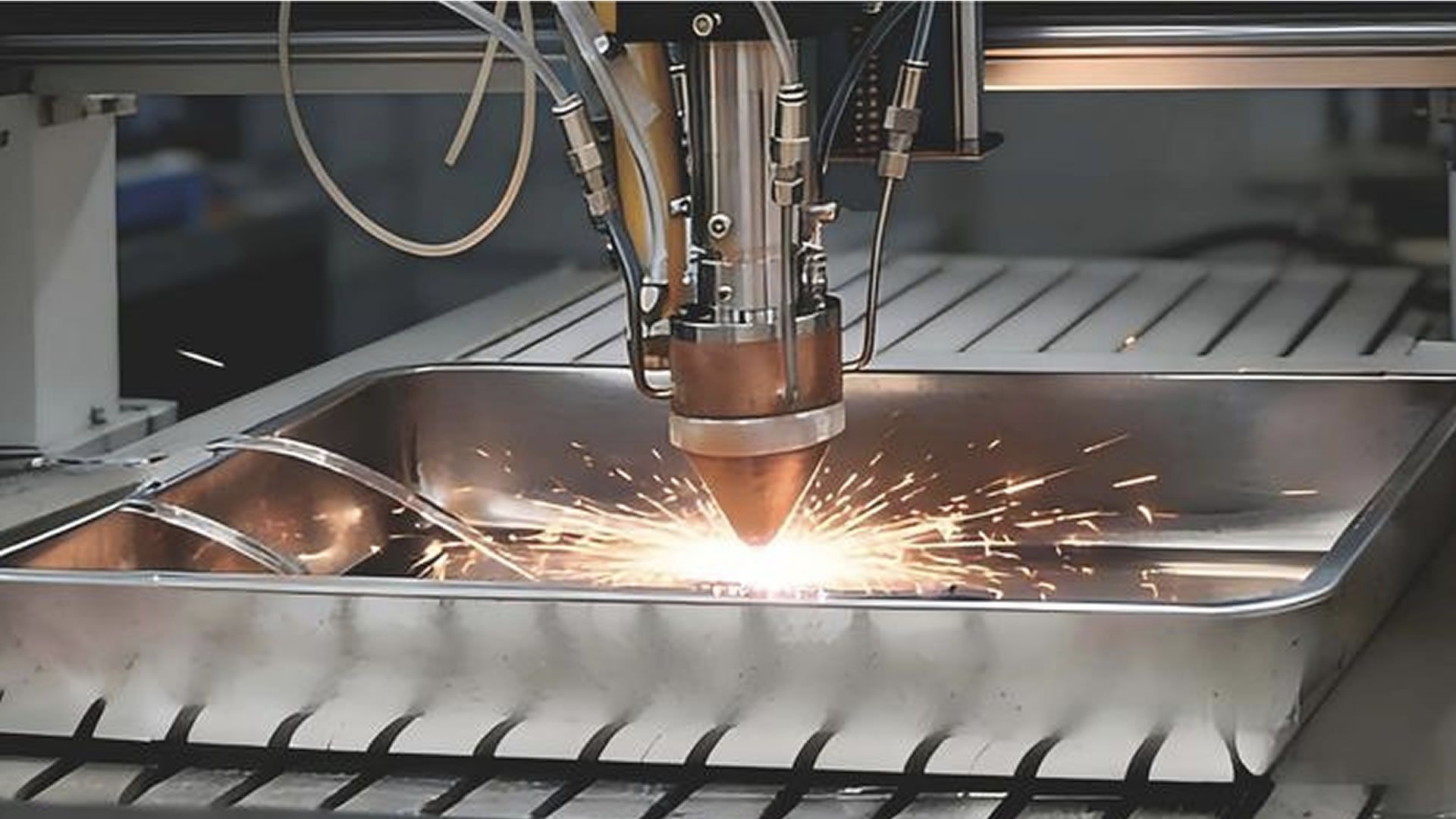
AI helps create ultra-strong steel that resists rust, cuts production time
Researchers from the University of South China and Purdue University have developed a new high-strength, ductile, and rust-resistant form of 3D-printable steel using artificial intelligence (AI). This innovative steel overcomes the traditional trade-off between strength and ductility—typically, stronger steel is more brittle, while ductile steel tends to be weaker. The AI analyzed 81 physical properties of metals, including atomic size and electron behavior, to identify patterns that enable the production of this new alloy, which comprises iron, chromium, and small amounts of other affordable metals such as nickel and copper.
The manufacturing process utilizes a Laser Directed Energy Deposition (LDED) technique, which allows for rapid part creation with only about six hours of treatment, significantly reducing the time and cost associated with traditional high-performance steel production. The resulting alloy boasts an impressive strength of approximately 1,730 MPa and a ductility of 15.5%, a notable 30% improvement over its original state.
Key features of this new steel include thin nano-particles that inhibit crack propagation and designated "shock absorber" zones that allow for deformation under stress. Moreover, its corrosion resistance rivals that of stainless steel due to an even distribution of chromium. This material is poised for impactful applications in industries such as aerospace, military, energy, and heavy engineering, potentially enhancing the performance of aircraft parts and infrastructure like offshore wind turbines and pipelines.
Article timeline
Build this article’s timeline
Extract dated events, key actors, and open questions using the same timeline analysis available in Signal.
Log in to build
Timeline generation is available to signed-in community members.
Primary-source excerpts
Login to contribute excerpts from the source.
Five Ws
🤖 4 AI prefills · 1 still unanswered
Who
University of South China, Purdue University, and International Journal of Extreme Manufacturing
What
Researchers from the University of South China and Purdue University have developed a new high-strength, ductile, and rust-resistant form of 3D-printable steel using artificial intelligence (AI).
When
When did this happen, or what is the timeframe?
Where
Uzbekistan, China, and Iran
Why
Centers on high-strength steel, 3D-printable alloy, and artificial intelligence
Login to answer and earn XP for each gap you fill.
AI in Steel Production artificial intelligence, 3D printing, high-strength steel, ductility, alloy Material Properties rust-resistant, corrosion, physical properties, strength, ductility Industrial Applications aerospace, military, energy, engineering, applications
Key Phrases:
high-strength steel95% 3D-printable alloy92% artificial intelligence90% ductility88% corrosion resistance87% Laser Directed Energy Deposition85% nano-particles83% physical properties of metals80% aerospace applications78% shock absorber zones76%
10
Manipulation Score: Low
How much this article uses emotional framing vs. straight reporting
Loaded Language
525%
Absolutist
1015%
Threat/Panic
025%
Us vs Them
015%
Engagement Bait
520%
Manipulation score look right?
Factual Claims (10)
medium
technology
Researchers from the University of South China and Purdue University have successfully employed artificial intelligence to create a new high-strength, ductile 3D-printable form of steel.
medium
economic
The new metal is also rust-resistant, cheap to make, and faster to produce.
medium
scientific
The new steel has a strength of around 1,730 MPa and a ductility of 15.5% stretch before breaking.
medium
scientific
The alloy is rust-resistant thanks to some of its included metals.
medium
military
The new alloy could help produce lighter and more durable aircraft parts.
medium
scientific
The new steel manages to combine both strength and ductility, which is a very rare achievement.
medium
technology
The AI was tasked with looking for patterns that could help make strong yet flexible steel.
medium
scientific
The printing process only needed 6 hours of treatment, which is significantly less than typical high-performance steels.
medium
scientific
The alloy's improved corrosion resistance could rival stainless steel.
medium
scientific
The new alloy includes iron, chromium, and small amounts of other metals like nickel, manganese, copper, silicon, aluminum, and carbon.
Comments
Login to view and post comments.