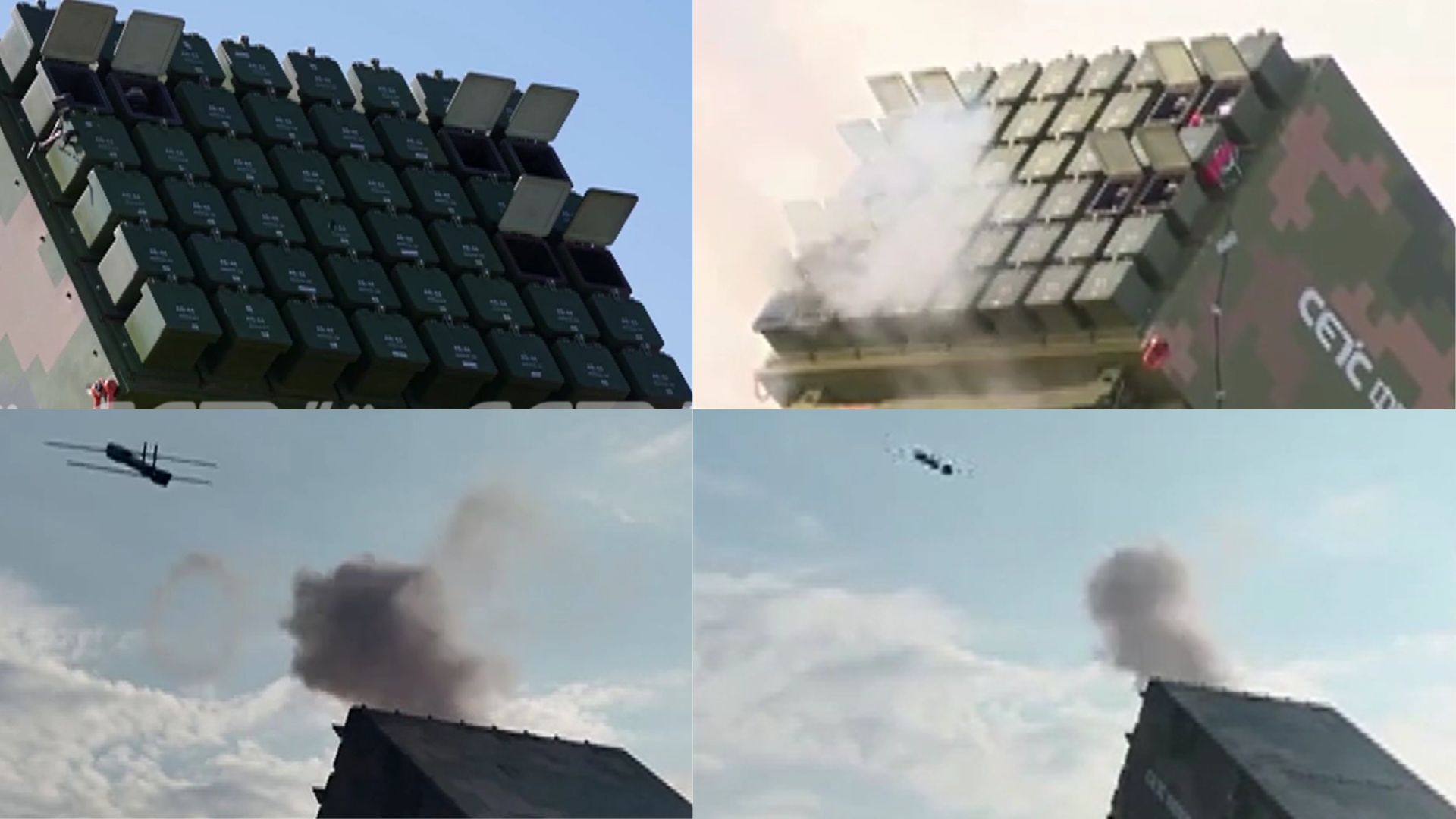
China tests 96-unit Atlas drone swarm with 3-second launch speed
China recently demonstrated its Atlas drone swarm operations system, showcasing a significant advancement in automated warfare. During the March 25 test, the system integrated reconnaissance, target selection, launch control, and strike execution into a seamless operational chain, marking a shift toward algorithm-driven combat. The Atlas system, primarily utilizing the Swarm-2 ground vehicle, can simultaneously control up to 96 drones, each capable of carrying various payloads, including sensors and munitions. Drones launched at a rapid pace of one every three seconds, allowing for dynamic reassignment based on mission needs and real-time battlefield conditions.
The demonstration illustrated a complete "kill chain," where the drones conducted reconnaissance, identified targets, and executed precision strikes autonomously. This capability emphasizes how China is evolving its military strategy to leverage software and coordination over traditional hardware advantages. The drones can respond to environmental factors and quickly form precise formations, showcasing their adaptability.
Experts suggest that the Atlas system could enhance battlefield applications, enabling saturation attacks and deep-strike missions. As military operations increasingly rely on networked, autonomous systems, this development highlights the importance of counter-drone defenses and electronic warfare resilience. Overall, the Atlas drone swarm represents a comprehensive approach to modern combat, where swarms operate as unified forces, highlighting a potential shift in future warfare paradigms.
Article timeline
Build this article’s timeline
Extract dated events, key actors, and open questions using the same timeline analysis available in Signal.
Log in to build
Timeline generation is available to signed-in community members.
Primary-source excerpts
Login to contribute excerpts from the source.
Five Ws
🤖 5 AI prefills · all filled
Who
Wang Yunfei and Global Times
What
China recently demonstrated its Atlas drone swarm operations system, showcasing a significant advancement in automated warfare.
When
March 25 and 2024
Where
China, U.S., and Iran
Why
Centers on Atlas drone swarm, swarm combat chain, and autonomous coordination
Login to answer and earn XP for each gap you fill.
Drone Swarm Technology drone swarm, Atlas system, autonomous, combat, reconnaissance Military Strategy Evolution software-driven, algorithm-led, modern warfare, networked systems, combat tactics Operational Capabilities precision strikes, kill chain, dynamic reassignment, mission needs, scalable operations
Key Phrases:
Atlas drone swarm95% swarm combat chain90% autonomous coordination88% kill chain87% AI-assisted control85% reconnaissance drones84% precision strikes83% dynamic reassignment81% software-driven warfare80% Scalable drone command system79%
25
Manipulation Score: Low
How much this article uses emotional framing vs. straight reporting
Loaded Language
1025%
Absolutist
515%
Threat/Panic
1525%
Us vs Them
1015%
Engagement Bait
520%
Manipulation score look right?
Factual Claims (10)
medium
military
China has unveiled its Atlas drone swarm operations system in a full-process demonstration.
medium
military
The system integrates reconnaissance, target selection, launch control, and strike execution into one operational chain.
low
military
The Swarm-2 vehicle can carry and launch 48 fixed-wing drones.
low
military
A separate command vehicle can control up to 96 drones at once.
medium
military
The system allows operators to respond to changing battlefield conditions in real time.
medium
military
Drones can independently carry out tasks such as target recognition, task allocation, and route planning.
medium
military
The Atlas system represents a doctrine where drone swarms operate as a unified combat force.
medium
military
The demonstration showcases a shift toward software-driven warfare and autonomous coordination.
medium
military
The drones can adjust to airflow disturbances and form dense, precise formations quickly.
medium
military
Modern warfare is shifting toward networked, autonomous systems.
Comments
Login to view and post comments.