thefuriousopposites.com
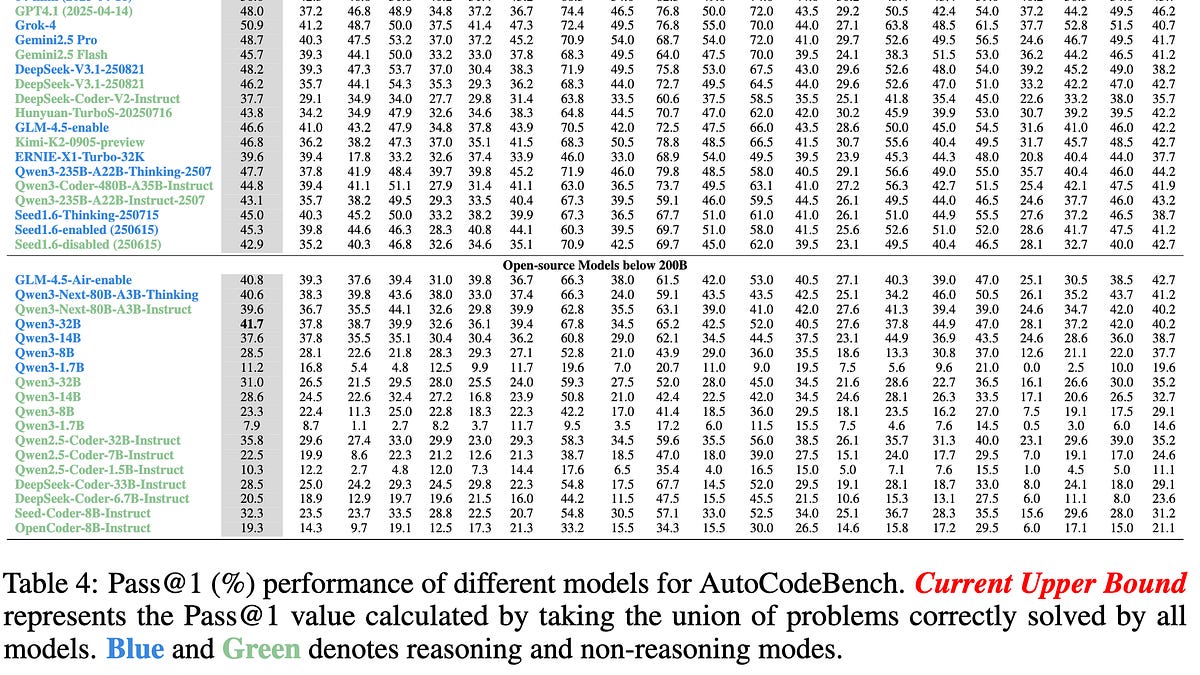
In "Grace Hopper's Revenge," Greg Olsen discusses the evolving relationship between software development and artificial intelligence, particularly focusing on how language design impacts coding efficiency. He highlights Kernighan’s Law, which states that debugging is more complex than writing code, emphasizing the necessity for simplicity in coding. While many developers have expressed dissatisfaction with AI-driven coding workflows, benchmarks such as SWEBench and TerminalBench primarily evaluate Python, leaving other languages underexplored. However, AutoCodeBench tests across 20 languages, revealing that Elixir, Kotlin, Racket, and C# outperform languages like PHP, JavaScript, and Python.
Olsen argues that the effectiveness of programming languages isn't solely dependent on the volume of training data but rather on their structural design. He draws parallels between Tesla's approach to autonomous vehicles and the design of programming languages, asserting that both should align with human-centric infrastructure. He posits that code should prioritize verification over mere execution, echoing Grace Hopper's vision of a direct translation from English to machine code.
The article concludes by asserting that while LLMs (Large Language Models) can generate code across various languages, functional programming languages, particularly Elixir, excel in producing code that is easier for both machines and humans to understand. As LLMs become more integrated into software development, the focus should shift to optimizing language design for enhanced readability and verifiability, marking a significant evolution in programming practices.
Article timeline
Build this article’s timeline
Extract dated events, key actors, and open questions using the same timeline analysis available in Signal.
Log in to build
Timeline generation is available to signed-in community members.
Primary-source excerpts
Login to contribute excerpts from the source.
Five Ws
🤖 4 AI prefills · 1 still unanswered
Who
Grace Hopper, Abelson, Sussman, and Tesla
What
In "Grace Hopper's Revenge," Greg Olsen discusses the evolving relationship between software development and artificial intelligence, particularly focusing on how language design impacts coding efficiency.
When
December 18, 2025
Where
Where did this occur?
Why
Centers on Kernighan’s Law, Elixir, and functional programming
Login to answer and earn XP for each gap you fill.
Programming Language Design Elixir, functional programming, language design, object-oriented, immutable data AI in Software Development AI-driven coding, LLMs, machine learning, coding workflows, automation Debugging Challenges Kernighan’s Law, debugging, complexity, code readability, error handling Human-Machine Interaction human interface, robots, infrastructure, design, human-scale
Key Phrases:
Kernighan’s Law95% Elixir93% functional programming90% AutoCodeBench88% SWEBench87% language design85% load-bearing interfaces84% immutable data82% pattern matching80% human verification78%
25
Manipulation Score: Low
How much this article uses emotional framing vs. straight reporting
Loaded Language
1025%
Absolutist
2015%
Threat/Panic
525%
Us vs Them
1515%
Engagement Bait
520%
Manipulation score look right?
Factual Claims (10)
low
technology
Kernighan’s Law states that debugging is twice as hard as writing the code.
low
technology
SWEBench is focused on Python.
medium
technology
AutoCodeBench tests across 20 different programming languages.
medium
technology
Models are only as good as their training data.
medium
technology
Elixir is the top performing language in benchmarks.
medium
technology
Tesla bet on vision instead of LIDAR for their vehicles.
medium
technology
Programming with functions and immutable data are easier to verify.
medium
technology
LLMs can write brilliant Elixir and Racket.
medium
technology
Functional languages are optimized for machine generation and human verification.
medium
technology
Humans are not very good at writing code; machines are better.
Comments
Login to view and post comments.