news
The Atlantic
The Atlantic
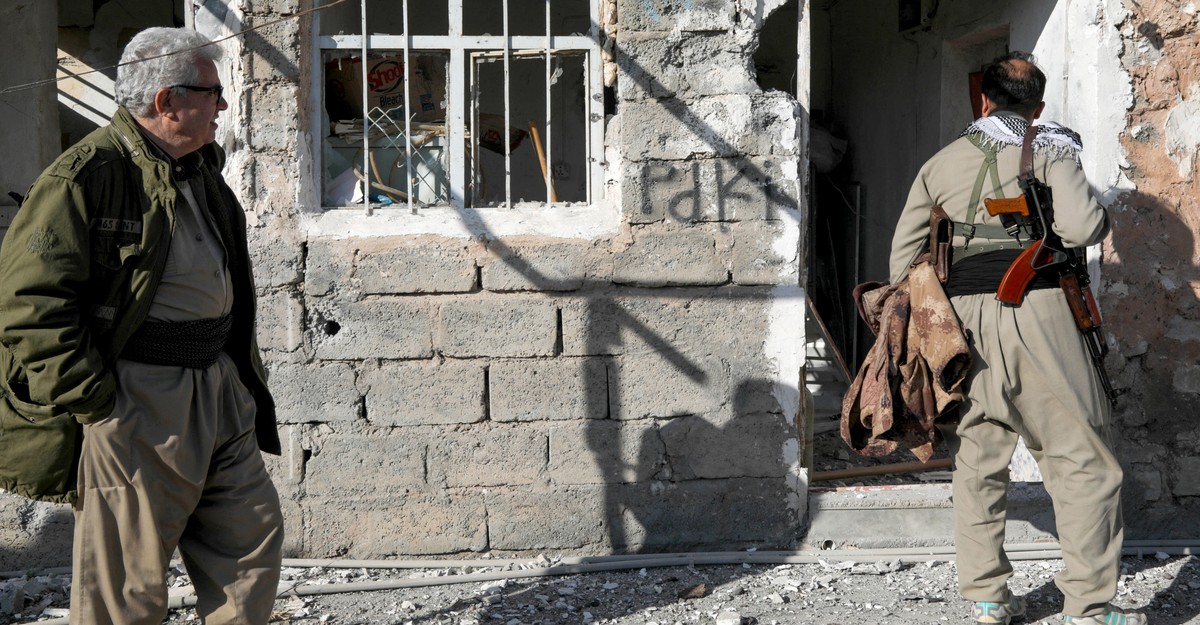
Following the assassination of Iran's leader by the U.S. and Israel, a significant military operation against Iran is emerging, spearheaded by Iranian Kurdish militants who are gathering in Iraqi Kurdistan. These groups, including the Mojahedin-e-Khalq (MEK) and Baloch militias, are reportedly set to receive substantial financial and military support from the U.S. and Israel. The Coalition of Political Forces of Iranian Kurdistan, formed by five Kurdish political parties, aims to unify their efforts against the Iranian regime, with the PDKI leading the initiative.
While these Kurdish parties enjoy support in their regions, the operation is likely to provoke strong resistance from various Iranian factions, including fears of a civil war. Many Iranians perceive the MEK and other ethnic militias as potential threats, given their past associations and ideologies. The Kurdish groups, however, advocate for a democratic Iran rather than outright separation, despite the presence of more radical factions like the Army of Justice, which has jihadist ties.
The Iranian regime remains a formidable opponent, capable of mobilizing a significant military force. As the situation develops, tensions are escalating, with the IRGC conducting drone strikes against Kurdish positions in Iraq. The future of this conflict could reshape the landscape of Iranian politics, with potential ramifications for regional stability, as ethnic and political loyalties collide amidst the ongoing struggle against the Islamic Republic.
Article timeline
Build this article’s timeline
Extract dated events, key actors, and open questions using the same timeline analysis available in Signal.
Log in to build
Timeline generation is available to signed-in community members.
Primary-source excerpts
Login to contribute excerpts from the source.
Five Ws
🤖 4 AI prefills · 1 still unanswered
Who
Mustafa Hijri, Khalid Azizi, Shukriya Bradost, and Mojahedin-e-Khalq (MEK)
What
Following the assassination of Iran's leader by the U.S.
When
When did this happen, or what is the timeframe?
Where
Iran, Iraqi Kurdistan, and Kurdistan Region
Why
Centers on Iranian Kurdish militants, Mojahedin-e-Khalq (MEK), and Coalition of Political Forces of Iranian Kurdistan
Login to answer and earn XP for each gap you fill.
Iranian Kurdish Militancy Kurdish, militants, Iran, Iraq, support U.S. and Israeli Involvement U.S., Israel, support, military, financial Ethnic Tensions in Iran ethnic, Iranians, civil war, Kurdish, Azeri Opposition Dynamics opposition, MEK, political, coalition, Iran
Key Phrases:
Iranian Kurdish militants95% Mojahedin-e-Khalq (MEK)90% Coalition of Political Forces of Iranian Kurdistan88% Kurdistan Freedom Party (PAK)85% Islamic Revolutionary Guard Corps83% Baloch militias80% ethnic insurgency78% civil war76% Iraqi Kurdistan75% separatist agendas73%
People: Mustafa Hijri Khalid Azizi Shukriya Bradost2 Behnam Ben Taleblu2 Amir Hossein Ganjbakhsh2 Nesan Nodinian2 Ali Larijani Reza Pahlavi
Organizations: Mojahedin-e-Khalq (MEK)2 Coalition of Political Forces of Iranian Kurdistan People's Democratic Party of Iran (PDKI) Socialist International2 Komala Party of Iranian Kurdistan Foundation for Defense of Democracies Islamic Revolutionary Guard Corps Worker-Communist Party of Iran Army of Justice (Jaish al-Adl) Popular Fighters Front
68
Manipulation Score: High
How much this article uses emotional framing vs. straight reporting
Loaded Language
7025%
Absolutist
4015%
Threat/Panic
8025%
Us vs Them
6015%
Engagement Bait
3020%
Manipulation score look right?
Factual Claims (10)
medium
geopolitical
Thousands of Iranian Kurdish militants are gathering in Iraqi Kurdistan.
medium
geopolitical
The U.S. and Israel have set aside significant funds for arms and logistical support.
low
social
The MEK was once designated a terrorist organization before it was delisted in 2012.
medium
geopolitical
The operation is likely to face fierce opposition from many non-Kurdish Iranians.
medium
military
Iran can muster up to 1 million people in military uniform.
medium
military
The Islamic Revolutionary Guard Corps staged attacks on bases in Iraqi Kurdistan.
low
social
The Kurdish parties advocate federalism rather than independence.
medium
geopolitical
The fear among many Iranians is that ethnic militias could lead to civil war.
medium
geopolitical
The Kurdish attitude toward Pahlavi will change only if the U.S. and Israel pressure him.
medium
geopolitical
The American president remains a wild card in the situation.
Comments
Login to view and post comments.