news
rferl.org
As Ukraine War Enters Fifth Year, Europe Faces Hard Truth On China
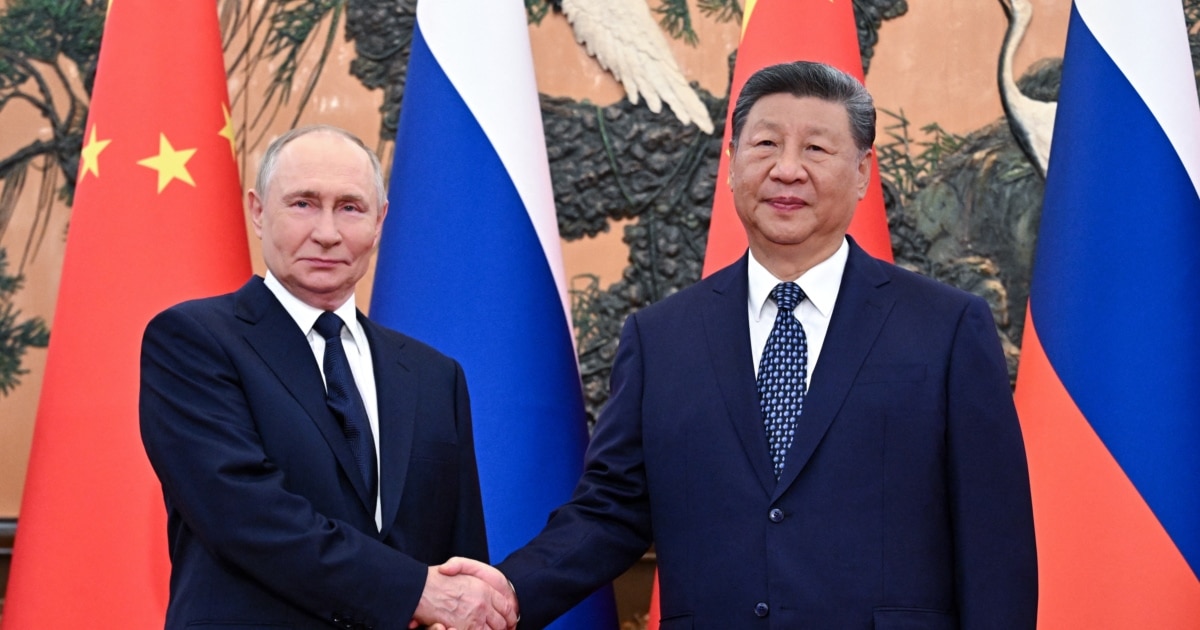
As the Ukraine War approaches its fifth year, European officials confront the challenge of China's growing support for Russia. Since Russia's invasion of Ukraine in February 2022, China has significantly deepened its economic ties with Moscow, supplying energy, critical minerals, and dual-use goods, despite not providing direct military aid. This support has become crucial for Russia, with China now accounting for over 40% of its oil exports.
Western sanctions aimed at curbing China's assistance have largely failed to change its stance, as the economic impact on China has been minimal. European diplomatic efforts continue, with EU leaders urging China to leverage its influence over Russia, yet economic ties complicate these sanctions. In 2024, EU-China trade reached approximately $785 billion, prompting caution from European leaders regarding sweeping sanctions.
China's strategic position reflects a desire to maintain a balance: it does not want a defeated Russia but neither does it want a triumphant one. Chinese officials assert their support for Ukraine's territorial integrity while simultaneously fostering deeper relations with Russia. As diplomatic engagements between European leaders and China increase, the ongoing conflict reveals a complex interplay of economic dependency and geopolitical maneuvering, leaving Europe grappling with its strategic approach towards both China and the conflict in Ukraine.
Article timeline
Build this article’s timeline
Extract dated events, key actors, and open questions using the same timeline analysis available in Signal.
Log in to build
Timeline generation is available to signed-in community members.
Primary-source excerpts
Login to contribute excerpts from the source.
Five Ws
🤖 2 AI prefills · 3 still unanswered
Who
Who are the key actors in this story?
What
As the Ukraine War approaches its fifth year, European officials confront the challenge of China's growing support for Russia.
When
When did this happen, or what is the timeframe?
Where
Where did this occur?
Why
Centers on China's support for Russia, economic lifeline, and dual-use goods
Login to answer and earn XP for each gap you fill.
China-Russia Relations China, Russia, support, economic, diplomatic Western Sanctions Policy sanctions, EU, policy, enforcement, China Europe's Strategic Dilemma Europe, China, trade, diplomacy, dependence Ukraine's Position Ukraine, territorial integrity, trade, cooperation, China
Key Phrases:
China's support for Russia95% economic lifeline90% dual-use goods88% sanctions enforcement85% energy purchases83% EU-China trade80% strategic Chinese neutrality78% Brussels sanctions package76% diplomatic pressure75% high-priority dual-use goods73%
Comments
Login to view and post comments.