news
twz.com
Hunt For Container Launchers Packed With Drones Kicked-Off By Pentagon
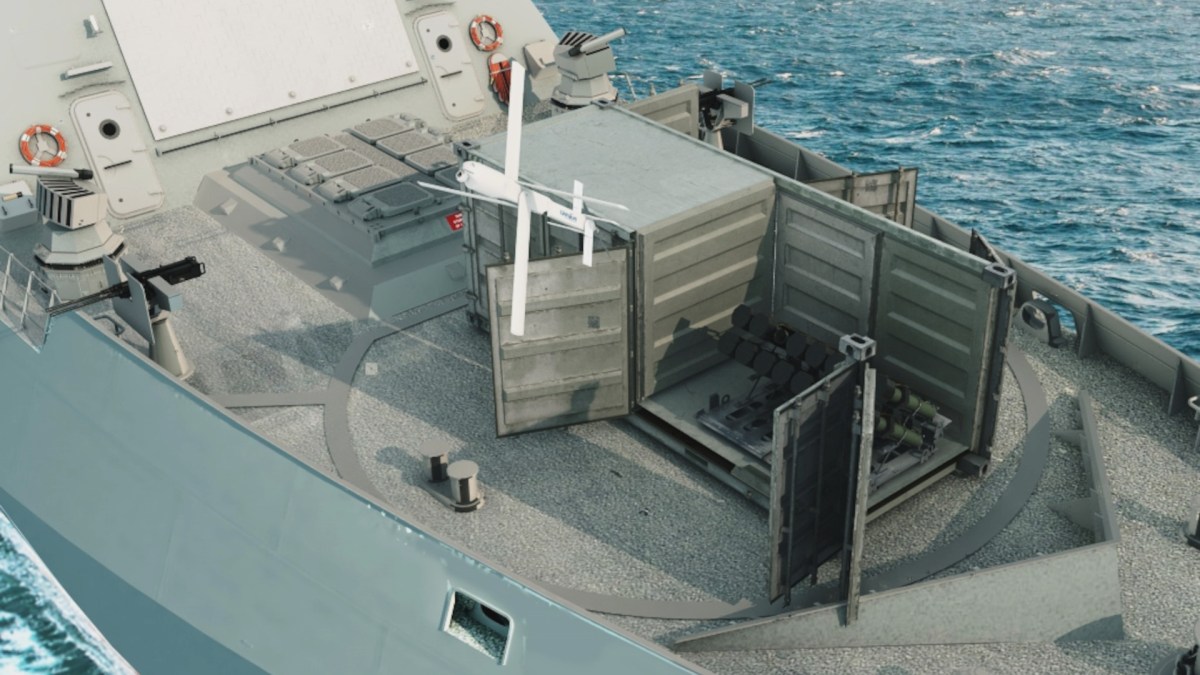
The U.S. military is pursuing a significant expansion of drone capabilities, particularly smaller unmanned aerial systems (UAS), leading to a rising demand for containerized drone launch systems. The Pentagon's Defense Innovation Unit (DIU) has unveiled requirements for a Containerized Autonomous Drone Delivery System (CADDS) aimed at enhancing deployment efficiency while reducing risks to operators. This system should enable rapid storage, deployment, and management of multiple UAS, which are essential for various military operations in contested environments.
Key features required for the CADDS include rapid setup and breakdown capabilities, automated functions for launching and recovering drones, and adaptability for operations from both land and maritime platforms under various weather conditions. The system should also accommodate a mix of government-directed UAS, maintain a small operational footprint, and ideally require only two personnel for operation.
The market for containerized launchers is expanding globally, with numerous companies, including Northrop Grumman and Mitsubishi Heavy Industries, developing similar systems. While existing solutions often focus solely on launching drones, the CADDS aims to incorporate recovery and recharging functionalities. The operational flexibility of such systems could significantly enhance military efficacy, allowing for diverse mission requirements—ranging from surveillance to kinetic strikes—using a heterogeneous mix of drones. This trend reflects a growing recognition of the strategic advantages offered by drone swarms in modern warfare.
Article timeline
Build this article’s timeline
Extract dated events, key actors, and open questions using the same timeline analysis available in Signal.
Log in to build
Timeline generation is available to signed-in community members.
Primary-source excerpts
Login to contribute excerpts from the source.
Five Ws
🤖 4 AI prefills · 1 still unanswered
Who
Adeline Witherspoon, Roman Sheremeta, Pentagon, and Defense Innovation Unit
What
The U.S.
When
When did this happen, or what is the timeframe?
Where
United States, Japan, and Germany
Why
Centers on Containerized Autonomous Drone Delivery System, uncrewed aerial systems, and Defense Innovation Unit
Login to answer and earn XP for each gap you fill.
Containerized Drone Launch Systems containerized, drone, launch, system, military Military Drone Strategy UAS, military, strategy, Pentagon, innovation Global Drone Market Trends global, market, trends, development, technology Operational Challenges challenges, deployment, operators, risk, environment
Key Phrases:
Containerized Autonomous Drone Delivery System95% uncrewed aerial systems93% Defense Innovation Unit90% robotic mass challenge88% autonomous decision-making processes87% multi-agent systems85% Modular Payload System84% manned-unmanned teaming82% kinetic and non-kinetic operations80% containerized launchers78%
Comments
Login to view and post comments.