news
militarytimes.com
US base commanders to have more say in defeating drone intrusions
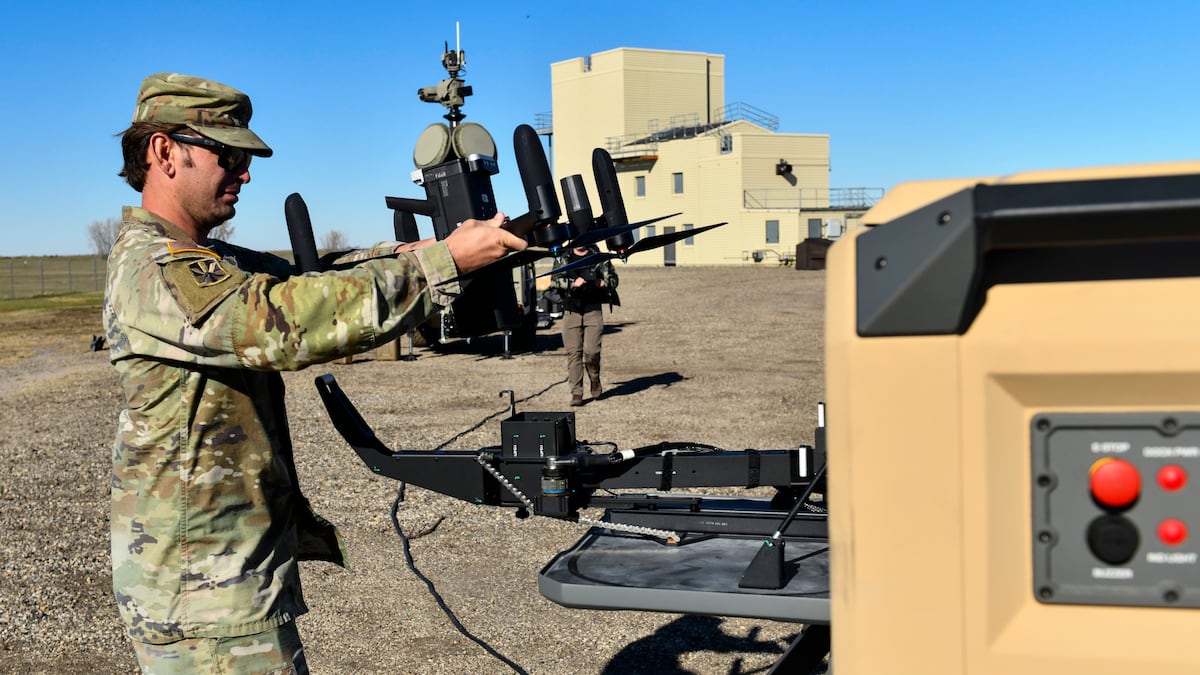
U.S. military base commanders are set to gain increased authority in countering unauthorized drone intrusions, as outlined in new guidance from the Joint Inter-Agency Task Force 401. This updated policy classifies all unauthorized drone flights near military installations as a surveillance threat, allowing commanders greater flexibility in responding to such incidents. Notably, the guidance eliminates previous "fence-line" restrictions, broadening the definition of protected areas around bases.
Installation commanders are now required to develop and submit counter-drone defense plans within 60 days, conduct regular drills, and assess vulnerabilities that adversarial drone operators could exploit. The guidance also permits commanders to share drone tracking information with federal law enforcement and engage contractors to operate counter-drone systems. This policy shift comes in response to rising concerns over drone surveillance, highlighted by a recent incident where a drone was shot down near American troop barracks in Estonia.
The initiative underscores the need for proactive measures in safeguarding military installations, emphasizing that counter-drone efforts should extend beyond established perimeters. Additionally, JIATF-401 has awarded contracts for advanced drone interception systems, such as the DroneHunter 4700, which employs artificial intelligence to neutralize threats.
Article timeline
Build this article’s timeline
Extract dated events, key actors, and open questions using the same timeline analysis available in Signal.
Log in to build
Timeline generation is available to signed-in community members.
Primary-source excerpts
Login to contribute excerpts from the source.
Five Ws
🤖 4 AI prefills · 1 still unanswered
Who
Joey Frey, Matt Ross, Vladimir Putin, and U.S. Drug Enforcement Administration
What
U.S.
When
When did this happen, or what is the timeframe?
Where
Minot Air Force Base, North Dakota, and Estonia
Why
Centers on drone intrusions, counter-drone systems, and Joint Inter-Agency Task Force 401
Login to answer and earn XP for each gap you fill.
Drone Intrusion Policy drone, intrusions, military, guidance, surveillance Counter-Drone Technology DroneHunter, AI, interceptor, systems, capture Military Operations and Exercises exercises, EOD, training, operations, NATO Veteran Affairs Issues VA, disability, regulations, veterans, compensation
Key Phrases:
drone intrusions95% counter-drone systems90% Joint Inter-Agency Task Force 40188% unmanned aerial systems87% military installation commanders85% surveillance threat84% DroneHunter 4700 system83% counter-drone defense plans80% base security assessments78% drone tracking information76%
Comments
Login to view and post comments.